
Temples & Culture
Wat Chiang Man Chiang Mai Visitor Guide
See Wat Chiang Man with practical advice on its history, important features, respectful temple etiquette, and a simple Chiang Mai Old City route.
12 min read
By Daniel Calleja, founder of The Chiang Mai Brief and Chiang Mai resident.
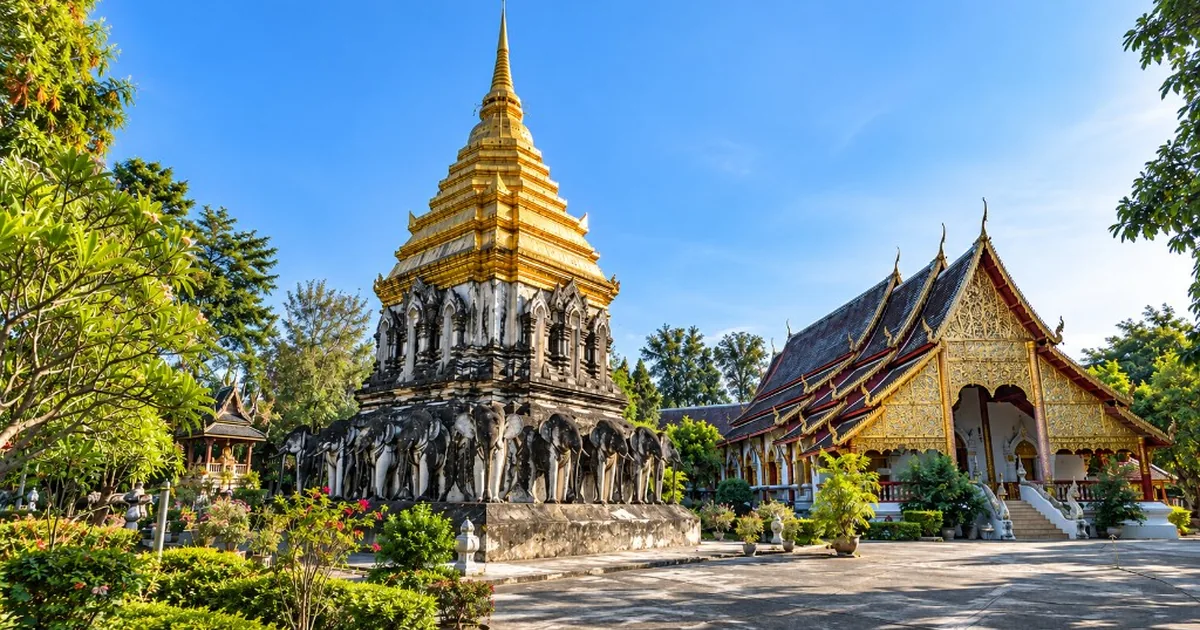
Wat Chiang Man Chiang Mai is the city’s oldest temple, founded in 1296 by King Mengrai as his first royal temple. Tucked inside the old city, it offers a quieter, more intimate visit than Chiang Mai’s headline sights, with an elegant Lanna chedi, ancient Buddha images and richly carved details to discover. This guide highlights what to see and how to explore the grounds at your own pace.
Key takeaways
- Founded by King Mangrai in 1296, Wat Chiang Man is Chiang Mai’s oldest surviving temple.
- See the distinctive elephant-supported Chedi Chang Lom, a defining example of early Lanna design.
- Wat Chiang Man is known for two revered images: the crystal Phra Setang Khamani and the Phra Sila Buddha.
- Allow 30–45 minutes; early morning offers cooler temperatures, softer light and fewer visitors.
- Dress modestly, remove shoes in sacred halls, speak quietly and avoid pointing feet toward Buddha images.
- Combine your visit with nearby Wat Lam Chang, the Three Kings Monument, Wat Chedi Luang or Chang Phuak Gate.
Wat Chiang Man Chiang Mai: the oldest temple and first royal temple
Wat Chiang Man Chiang Mai is where the story of the city begins. Founded in 1296 by King Mangrai soon after he established Chiang Mai, it is widely regarded as the city’s very first temple and the oldest temple still standing within the old city. Its setting, on a quiet lane north of the Tha Phae area, feels notably calmer than the busier temple compounds nearby, a useful reminder that Chiang Mai’s most important places are not always its most theatrical.
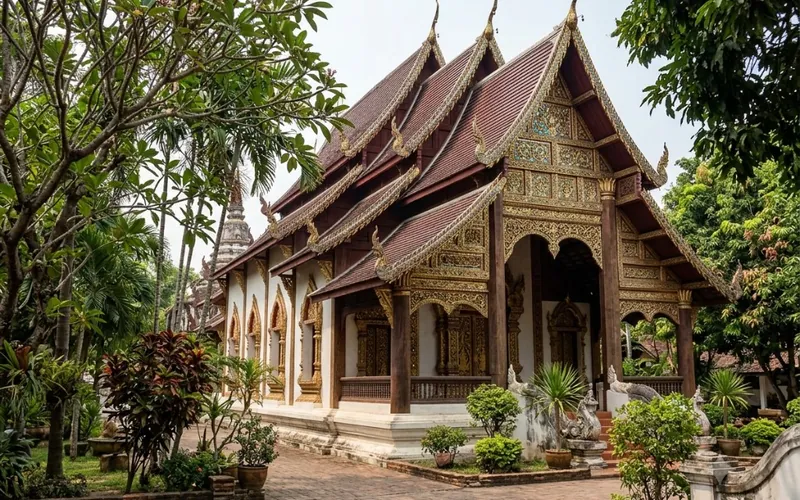
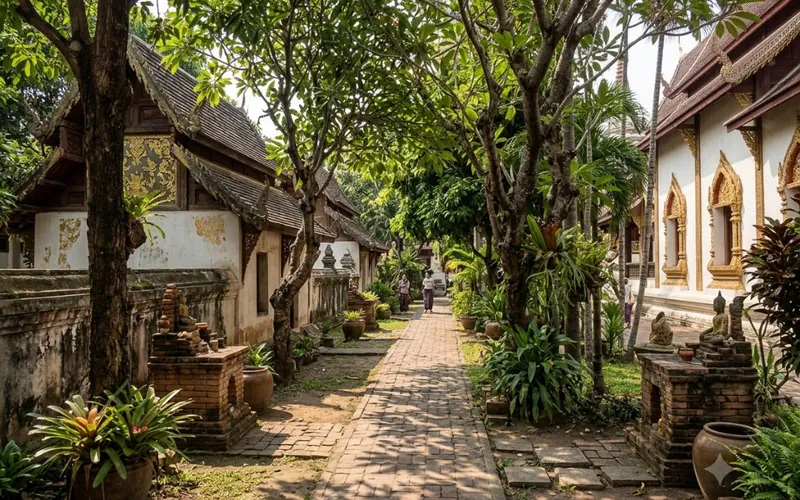
Wat Chiang Man is often described as the first royal temple because it was built under King Mangrai’s patronage and served as his residence while the new city was taking shape. The present buildings reflect centuries of repair and renewal, but the compound still conveys an early Lanna sensibility: low, graceful roofs, weathered brick, shaded courtyards and a pace that invites close looking rather than a rushed stop between sights.
- Founded: 1296, under King Mangrai
- Signature sight: the elephant-supported chedi
- Look for: the Crystal Buddha and Marble Buddha inside the viharn
- Best time to visit: early morning, when the grounds are quiet
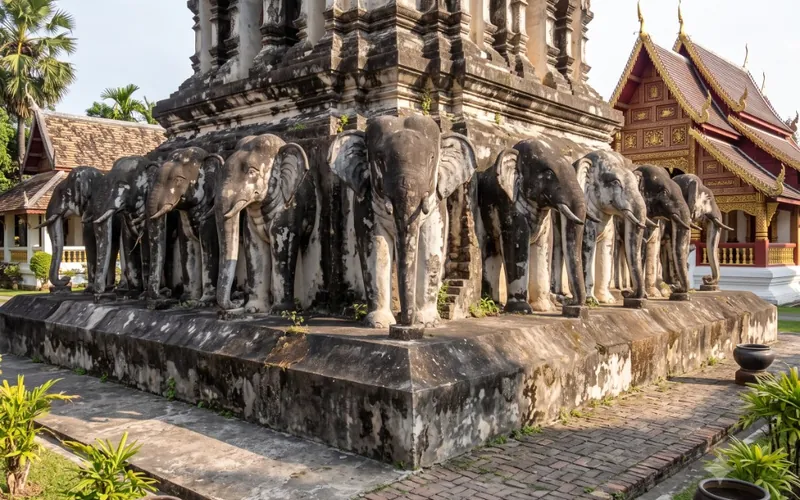
The temple’s focal point is Chedi Chang Lom, whose square base is ringed by sculpted elephants that appear to carry the structure on their backs. It is Wat Chiang Man’s most recognisable feature, though the smaller details are equally rewarding: painted timber, gilded Buddha images, monk quarters and the everyday rhythm of local worship. The temple is also known for two especially revered images, the crystal Phra Setang Khamani and the Phra Sila Buddha.
For visitors interested in Chiang Mai culture, this is more than a box to tick on an old city temple walk. Arrive early, when the grounds are quiet and the light falls softly across the chedi, and dress respectfully as you would at any of the city’s temples. Wat Chiang Man is compact enough to visit in under an hour, yet it offers a particularly clear introduction to Lanna history: a royal foundation, a living place of worship and the oldest temple at the heart of a city that grew around it.
Wat Chiang Man highlights
- Visit Chiang Mai’s oldest surviving temple, founded by King Mangrai in 1296.
- Look for the elephant-supported chedi, one of the compound’s most distinctive features.
- See the revered Crystal Buddha and Marble Buddha inside the viharn.
- Arrive early for quieter courtyards, softer light and a more reflective atmosphere.
- Allow around an hour to explore the compact grounds without rushing.
- Notice Lanna details: low roofs, painted timber, weathered brick and shaded spaces.
- Dress respectfully and remember the temple remains an active local place of worship.
What to see at Wat Chiang Man
Wat Chiang Man is Chiang Mai’s oldest temple, founded by King Mengrai in 1296 as the city took shape around it. Tucked inside the Old City’s northeast quarter, the compound feels more intimate than some of Chiang Mai’s larger temple complexes and rewards unhurried attention. Start in the main viharn, where carved wooden details and red-and-gold ornament create the hushed atmosphere of a living place of worship. The standout is Chedi Chang Lom, a square-based stupa ringed by sculpted elephants whose raised heads and trunks make the structure especially distinctive in the softer morning light.
Wat Chiang Man is also known for two revered Buddha images: the Phra Sila Buddha and the crystal Phra Setang Khamani. They are devotional objects rather than museum pieces, so approach quietly and leave space for worshippers making offerings. Access to individual halls can vary around ceremonies, so do not assume every image will always be on public view. Look, too, for the refined rooflines, guardian figures and aged brickwork that reveal the temple’s long history. Early morning is an excellent time to visit, when temperatures are cooler and the grounds are usually quieter. Cover shoulders and knees and remove shoes before entering sacred halls.
Wat Chiang Man: What to Look For
| Feature | Where to find it | What to notice |
|---|---|---|
| Main wihan | Within the temple grounds | Carved wooden columns, red-and-gold ornament and a calm central Buddha image. |
| Chedi Chang Lom | In the temple complex | A square-based stupa supported by rows of sculpted elephants with raised heads and trunks. |
| Phra Sila Buddha | Inside the smaller Phra Sila chapel | A revered marble Buddha image traditionally associated with Sri Lanka. |
| Phra Satang Man Buddha | Inside the smaller Phra Sila chapel | A diminutive, revered crystal Buddha image. |
| Rooflines, guardian figures and brickwork | Across the temple grounds | Refined rooflines, protective figures and aged brickwork that reflect the temple’s long history. |
A self-guided walk through Wat Chiang Man
Set within Chiang Mai’s old city, Wat Chiang Man is an easy, rewarding stop for travellers who prefer to explore at their own pace. Founded in 1296 by King Mangrai, it is widely regarded as the city’s oldest temple: a compact but richly layered introduction to early Lanna architecture, Buddhist devotion and the quieter rhythms of local worship. Arrive in the softer light of early morning or late afternoon, when the courtyards feel especially calm and the carved details are easier to appreciate.
Begin at the main gate and take a slow circuit of the grounds rather than heading straight for the principal hall. The first landmark to seek out is the distinctive chedi, supported by a lower tier of sculpted elephants that appear to carry the structure on their backs. Look closely at their weathered forms and the interplay of brick, stucco and gilded ornament: this is one of Wat Chiang Man’s most recognisable images, and a fine example of the artistic language that shaped later temples across northern Thailand.
From here, visit the viharn, or assembly hall, where residents and visitors come to make offerings and pray. Inside are two highly revered Buddha images, including the Crystal Buddha and the Marble Buddha, both associated with long-standing local belief and ceremonial importance. Keep your voice low, remove shoes before entering sacred buildings, and avoid pointing your feet towards Buddha images or monks. A modest donation in the offering boxes is welcome, though the experience does not require a formal ticket or guided tours.
Allow 30 to 45 minutes for the visit, longer if you enjoy photographing architectural detail or simply sitting in the shaded courtyard. Wat Chiang Man is close to other old-city sights, cafés and small lanes, making it a natural first stop on a day of independent travel. Yet it is worth resisting the urge to rush: this temple’s appeal lies less in spectacle than in its sense of continuity, where a landmark of Chiang Mai’s founding era remains an active, deeply local place of worship.
Wat Chiang Man walking checklist
- Visit early morning or late afternoon for softer light, cooler temperatures and a quieter courtyard atmosphere.
- Enter through the main gate and follow a slow circuit before approaching the principal hall.
- Pause at the elephant-supported chedi; notice its weathered stucco, brickwork and gilded decorative details.
- Remove shoes before entering the viharn, keep voices low and dress respectfully within sacred spaces.
- Look for the revered Crystal Buddha and Marble Buddha, observing worshippers without interrupting prayers or offerings.
- Avoid pointing your feet towards Buddha images or monks, especially when seated inside temple buildings.
- Allow 30–45 minutes, and consider a small donation before continuing through Chiang Mai’s old-city lanes.
Opening hours, entrance fee and best time to visit
Wat Chiang Man is open daily from 6:00 am to 5:00 pm according to the Tourism Authority of Thailand. Entry is free, with donations welcome. Access to individual halls can vary during ceremonies or religious events. For cooler temperatures, fewer visitors and softer light, aim for early morning; the final hour before closing can also be pleasant for photography. Allow around 30–45 minutes for a relaxed visit.
Last checked: September 2026. Temple hours and access arrangements can change, particularly on Buddhist holy days and during ceremonies.
How to get to Wat Chiang Man
Wat Chiang Man is at 171 Ratchapakhinai Road, Si Phum, in the northeast quarter of Chiang Mai’s Old City. From Tha Phae Gate it is roughly a 1 km walk, typically around 15 minutes; the Three Kings Monument is about 8–10 minutes away on foot. If you are already exploring inside the moat, walking is usually the easiest option. From elsewhere in the city, use Grab, a red songthaew or a tuk-tuk and ask for “Wat Chiang Man.” Parking in the Old City can be limited, so walking, riding a motorbike or being dropped nearby is generally simpler than arriving by car.
Visit Wat Chiang Man respectfully
Wat Chiang Man is not simply one of Chiang Mai’s oldest sights; it is a working Buddhist temple whose quiet courtyards, resident monks and revered images remain central to local religious life. Founded in 1296 by King Mengrai, the first ruler of the Lanna kingdom, this graceful wat offers a more intimate encounter with northern Thailand’s spiritual and artistic culture than a quick photograph can convey.
Begin with the practical courtesies:
- Dress modestly, covering shoulders, chest and knees, and remove shoes before entering any temple hall or shrine room.
- Keep your voice low, silence your phone and avoid stepping over people who are seated in prayer.
- When you sit near a Buddha image, tuck your feet to one side or behind you rather than pointing the soles of your feet towards the altar; in Thailand, feet are considered the least respectful part of the body.
- Do not climb on platforms, touch sacred objects or pose in ways that make the Buddha a backdrop for playful images.
Take time to notice the details that make Wat Chiang Man distinctive. Chedi Chang Lom, with its brick-and-stucco base ringed by elephant sculptures, is the temple’s signature structure, while the prayer halls are associated with revered images including the crystal Phra Setang Khamani and the Phra Sila Buddha. Visitors may see worshippers leaving flowers, candles or incense, particularly on Buddhist holy days. A small donation is welcome but not required.
If monks are present, give them space and follow their lead. Women should not touch a monk or hand an object directly to him; place it on a tray or pass it through a male companion where appropriate. Photography is generally acceptable in outdoor areas, but check for signs and avoid taking pictures during prayer, ceremonies or private moments of devotion. A respectful visit lets the temple remain what it has always been: a living place of faith, history and community.
Respectful temple visit checklist
- Wear clothing that covers shoulders, chest and knees before entering the temple grounds.
- Remove shoes before entering shrine rooms or halls, and keep your phone silent.
- Speak quietly, give worshippers space and avoid interrupting prayers or ceremonies.
- Sit with feet tucked aside or behind you; never point soles towards Buddha images.
- Do not climb platforms, touch sacred objects or use Buddha images as playful photo backdrops.
- Photograph outdoor areas discreetly, checking signs and avoiding private devotional moments.
- Offer donations quietly, and give monks space; women should not touch monks directly.
What to see near Wat Chiang Man
Wat Chiang Man sits in the quieter northern part of the Old City, making it an easy starting point for exploring on foot. Wat Lam Chang is only a few minutes away, while the Three Kings Monument is roughly an 8–10 minute walk south. Wat Chedi Luang is around a 15–20 minute walk from Wat Chiang Man and works particularly well as part of the same Old City temple circuit.
Wat Phra Singh lies farther west in the Old City. It is still practical to combine with Wat Chiang Man on a longer walking route, but it is not a five-minute stroll. If you would rather mix temples with food, Chang Phuak Gate is a convenient option to the north and becomes especially lively in the evening when the street-food stalls are operating.
Sunday Walking Street runs along Ratchadamnoen Road through the centre of the Old City, so a late-afternoon temple visit can also work well before the market begins. Wat Chiang Man is compact enough to fit naturally into a wider Old City day without rushing the visit itself.
Nearby Old City Highlights
- Begin at Wat Chiang Man early, allowing 30–45 minutes for its elephant chedi, viharns and historic details.
- Walk a few minutes to nearby Wat Lam Chang for a quieter small-temple stop.
- Continue roughly 8–10 minutes south to the Three Kings Monument and the Old City’s museum district.
- Allow around 15–20 minutes on foot to reach Wat Chedi Luang and its immense, partly ruined brick chedi.
- Continue farther west to Wat Phra Singh if you want to build a longer Old City temple walk.
- Head north toward Chang Phuak Gate for casual evening street food.
- Time a late-afternoon visit with Sunday Walking Street if you are in the Old City on Sunday.
Stay updated
Get the Chiang Mai Brief
Useful local updates, new guides, openings and practical information for living in or visiting Chiang Mai.