
Living in Chiang Mai
Living in Chiang Mai
What living in Chiang Mai is really like: costs, housing, transport, healthcare, visas, the smoky season and the everyday trade-offs from a local resident.
By Daniel Calleja · Founder, The Chiang Mai Brief
Living in Chiang Mai works for a remarkable range of people. Remote professionals, retirees, teachers, families and slow travellers all maintain long-stay communities here, and the reasons are practical rather than romantic. The city pairs low day-to-day costs, fast internet, strong private hospitals and an established international community with a manageable size and mountains on the doorstep. The trade-offs are just as real: weeks of smoke each year, dangerous roads, thin public transport and steady immigration upkeep. Whether it suits you depends less on the city than on your tolerance for those four things. This page covers what daily life in Chiang Mai actually involves across each part of the experience, with links to more detailed guides wherever you need to go deeper.
What Is Life in Chiang Mai Actually Like?
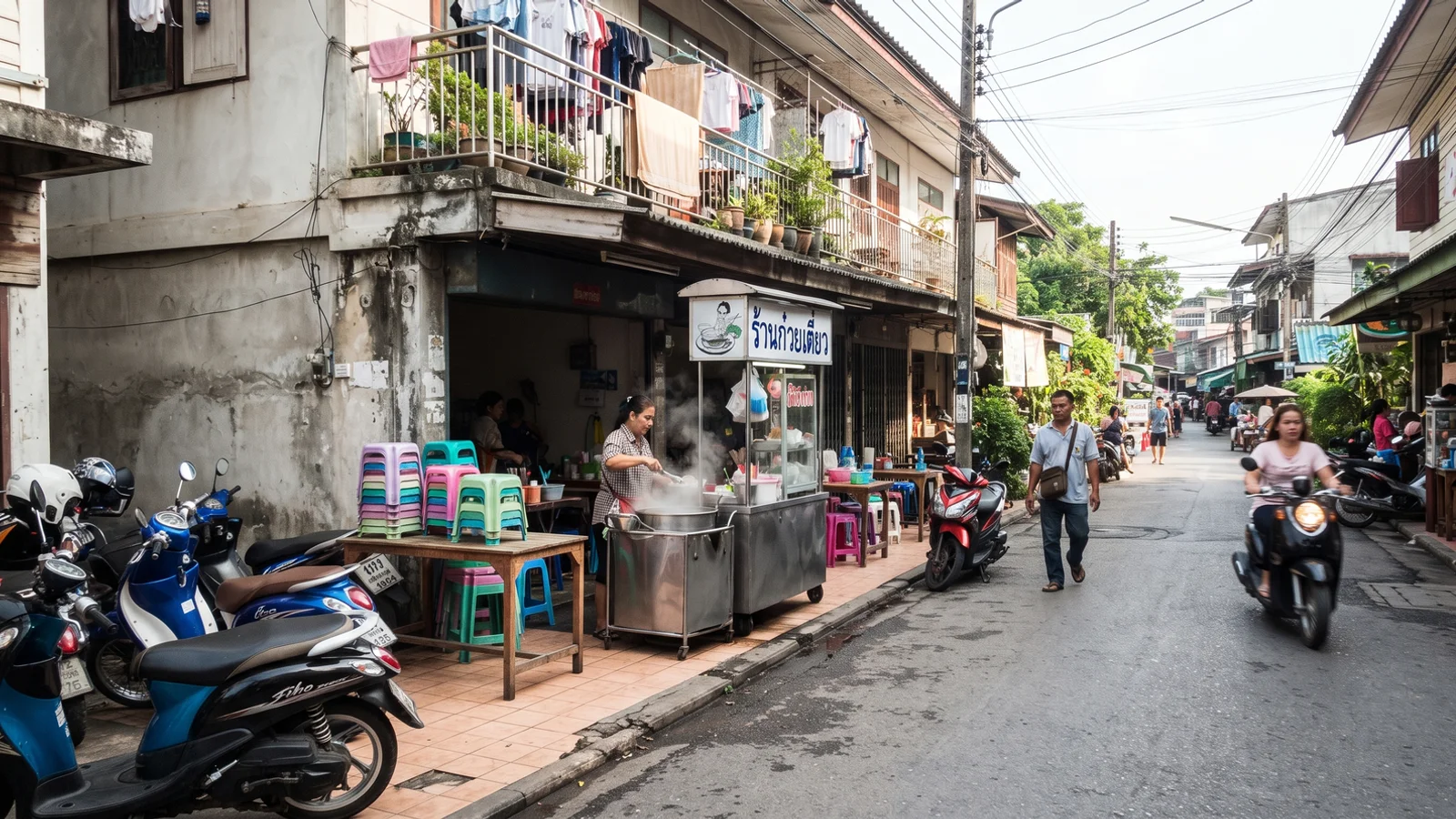
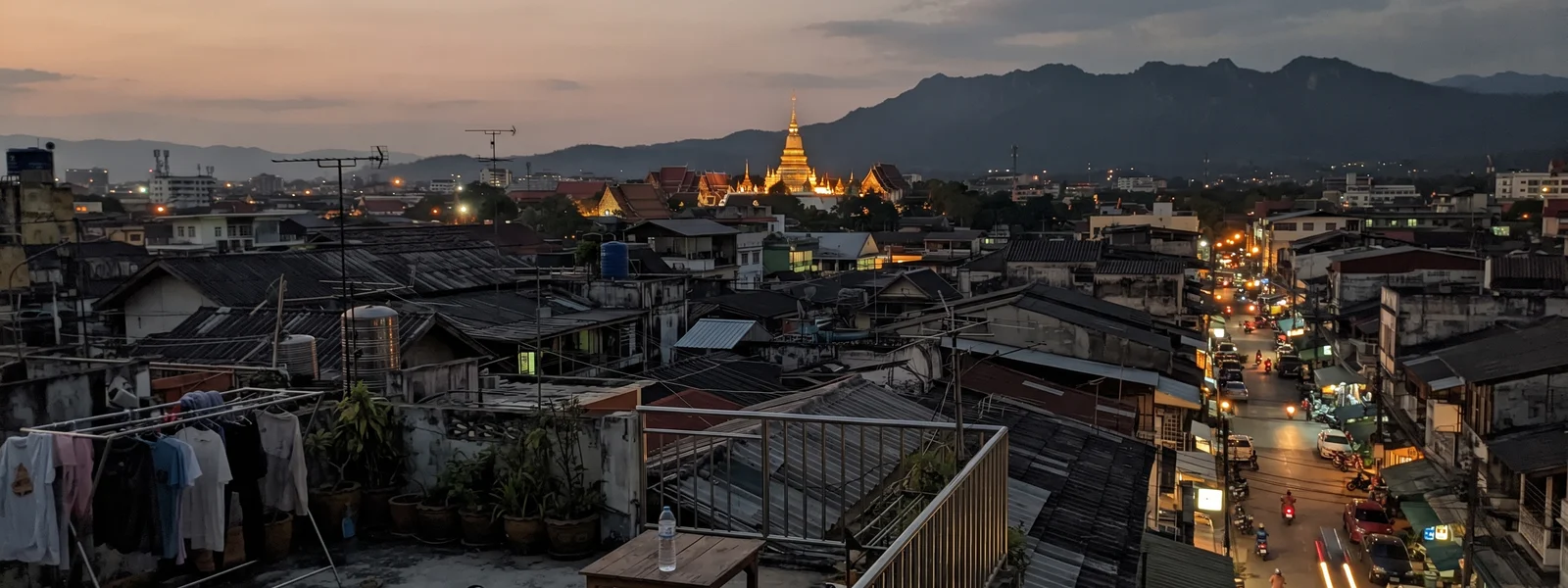
Day to day in Chiang Mai, the experience is defined by ease. Most routine tasks take minutes rather than hours: ride-hailing cars and motorbikes arrive quickly almost everywhere, food delivery covers the urban area, supermarkets stock imported ingredients, and pharmacies, laundries, phone shops and 24-hour convenience stores are dense. The city is compact enough that nowhere central is more than about twenty minutes away, and Doi Suthep's mountain roads, trails and viewpoints are roughly thirty minutes from most neighbourhoods.
The social texture is unusually open. The foreign community is large and well established, so newcomers find recurring meetups, sports clubs, classes and volunteering rather than having to build a social life from nothing. The pace is slower than Bangkok, the coffee and food culture is strong, and daily interactions are warm most of the time. Set against that are the harder realities covered honestly below: smoke in the late dry season, serious road danger, and heat and humidity that not everyone adjusts to.
Why People Choose to Live Here
Chiang Mai's attractions hold up under scrutiny rather than relying on brochure language:
- Value for money. Comfortable housing, local food and everyday services cost far less than in Western cities, without dropping to a rough standard of living.
- Convenience. Everyday logistics, from deliveries to digital payments at street stalls, simply work.
- Healthcare. Accredited private hospitals with English-speaking staff handle routine and elective care at prices many residents pay out of pocket.
- Nature. Waterfalls, national parks, viewpoints and hiking are genuinely close, not a weekend expedition.
- Community. Decades of foreign settlement mean ready-made social infrastructure for almost any age or interest.
None of these makes the city perfect, and the drawbacks section below is equally real. But together they explain why so many people who come for a month stay for years.
Moving to Chiang Mai
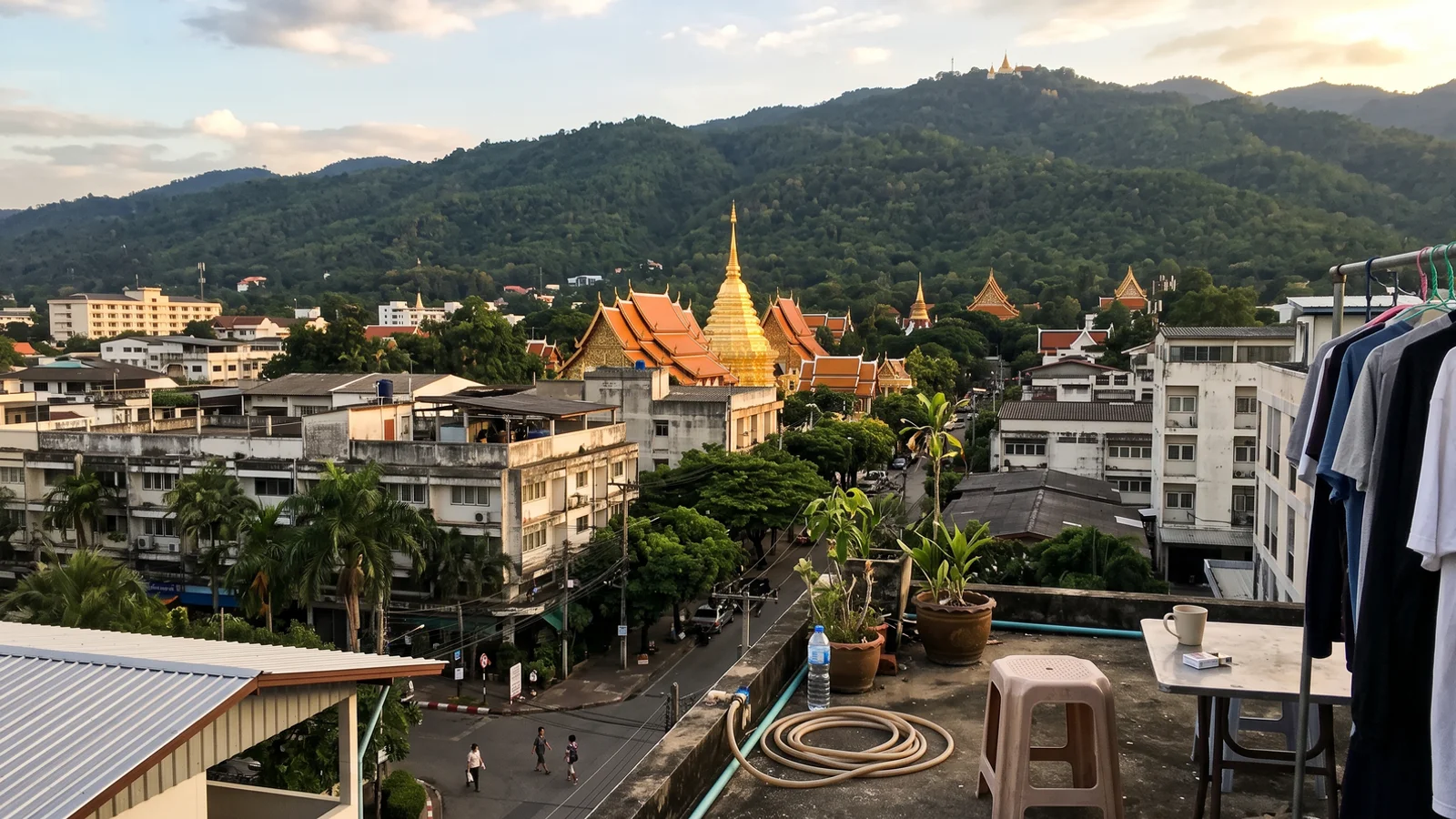
The practical transition matters more than the move itself. Most people moving abroad for the first time are surprised by how little physical preparation the city demands: you will find furnished condominiums the norm, household goods inexpensive, and a soft landing is realistic with two or three weeks of scouting. The sensible sequence is straightforward. Sort your immigration route before arrival in Thailand, since your visa shapes everything from lease length to banking. Book a few weeks of flexible accommodation first, then view yearly rentals in person before signing. Listing photos can make rooms look larger than they really are and are often not recent. Issues such as past flooding or signs of mould may also not be obvious from the description or photographs. Set up a local SIM and banking early, since both make daily life noticeably easier. And arrive with realistic expectations about the smoke months, so your first year includes a plan for them rather than a surprise.
Give yourself a full season before committing to an extended lease or an area. Chiang Mai changes character across the year, and the neighbourhood that charms you in December may feel different in April.
Living in Chiang Mai as an Expat
The lived experience for foreign residents is defined by community and low friction. The expats here are not a single scene: retirees, teachers, entrepreneurs, remote professionals and families each have their own circles, and they overlap in the same cafes, markets and weekend events. Building a social circle within weeks is entirely realistic if you make an effort to socialise, which is rare for a city of Chiang Mai's size.
Cultural adjustment is gentle by regional standards. The local expats are generally generous with practical advice, English is widely understood in central districts, and learning basic Thai pays off quickly in markets, government offices and neighbourhood shops. The expats who settle most happily tend to be those who engage with local life rather than orbiting only foreign venues. Services are the quiet luxury: cleaning, laundry, repairs, tailoring and delivery are all cheap and reliable, which frees up time in a way that is hard to appreciate until you live with it. Most find the main adjustment frictions bureaucratic rather than cultural: immigration reporting, licence paperwork and occasional rule changes.
Cost of Living
Costs vary enormously by lifestyle, so treat any single monthly figure with suspicion. What can be stated reliably: a modern one-bedroom condominium in Nimmanhaemin rents for roughly THB 15,000 a month on current listings, comfortable older buildings ask far less, and a plate of khao soi at a local shop still costs around 50 to 70 baht. A frugal single person can get by well on a modest budget, while an international-school family with a house, a car and imported groceries spends several times more. The honest summary is that Chiang Mai rewards both ends: it is possible to live cheaply without hardship, and possible to live very comfortably for what a middling lifestyle costs in a Western city. Imported goods, wine and electricity-heavy months with constant air conditioning narrow the gap. You will find detailed figures in the cost of living guide.
Where People Live: Areas and Housing
Chiang Mai's broad geography is simple. The Old City suits those who want temples, markets and walkable streets. Nimmanhaemin and Santitham, west of the centre, concentrate cafes, coworking and younger foreign residents. Riverside areas such as Wat Ket offer a quieter, older character. The southern suburbs, particularly Hang Dong and Nam Phrae, attract families with houses, gardens and school access. Each trade-off is different: centrality against space, character against convenience. The guide to where most expats live compares the principal areas properly.
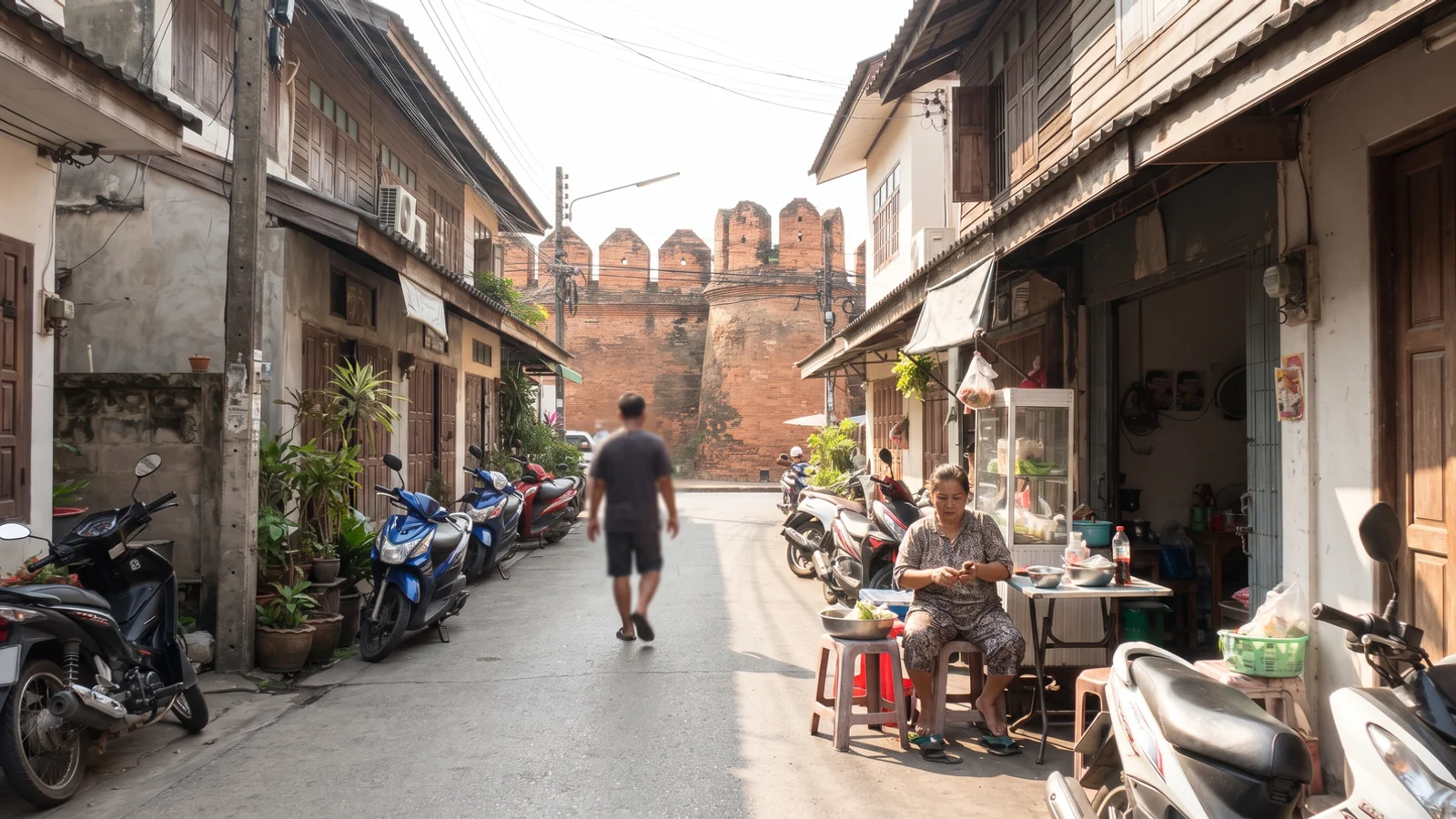
On housing itself, renting is the default and the practical choice for almost everyone at first. Foreigners generally cannot own Thai land directly, though buying a condominium within the building's foreign ownership quota is straightforward, and extended registered leases exist for houses. The specifics sit in the guide to buying property as a foreigner. Whatever the tenure, check a property's flood history before signing; some low-lying districts flooded seriously in October 2024.
Getting Around
Transport is a mix rather than a system. There is no metro or conventional bus network worth relying on; the shared red songthaew trucks run loosely fixed routes, and ride-hailing fills most gaps. In practice, buses are not part of daily life for most residents I know, since Grab, songthaews, scooters and private cars are cheap and convenient. Many long-stay residents eventually use a scooter or motorcycle because it is one of the most practical ways to get around, and the guide to renting a scooter covers licences and insurance properly.
Walking deserves a fair description. Much of the centre, particularly the Old City and Nimmanhaemin, is very walkable for an able-bodied person, and imperfect footpaths are usually manageable. The genuine problem is consistency: pavements vary from smooth to broken or obstructed within a single street, which matters far more for wheelchair users, older residents and anyone who needs step-free routes.
Healthcare and Insurance
Private healthcare is a genuine strength. Bangkok Hospital Chiang Mai has held Joint Commission International accreditation continuously since 2015, with its current cycle running to 2027, and Chiang Mai Ram is a well-established alternative; both have English-speaking staff and international patient desks. Consultations, dental work, scans and minor procedures cost a fraction of Western private prices, so many residents pay out of pocket for routine care and hold health insurance mainly for major events. For routine treatment this works extremely well; the gap is depth rather than quality, since rare specialities are thinner on the ground and highly specialised treatment is occasionally referred to Bangkok. The international hospitals guide compares facilities, and the health insurance options guide explains what foreign residents typically carry.
Weather and the Burning Season
The Chiang Mai year has three distinct phases, and they shape daily life more than any other factor. Our Chiang Mai seasons guide walks through each phase month by month for visitors and new residents.
| Season | Months | What living through it means |
|---|---|---|
| Cool and dry | Roughly November to February | Clear skies, low humidity, afternoons in the high twenties; the most pleasant stretch of the year |
| Hot | Roughly March to May | April peaks around 36 degrees on Thai Meteorological Department averages; life shifts to mornings and evenings |
| Wet | Roughly May to October | Short heavy downpours and persistent humidity; overnight humidity often sits above 80 to 90 per cent, which many find more wearing than the heat |
The smoke is the one climatic issue that must not be sanitised. Roughly between February and April, though timing shifts year to year, crop burning, forest fires and still air trap fine particulate pollution over the valleys of northern Thailand, and on bad days PM2.5 readings climb far past World Health Organization guidelines. Conditions vary considerably by year and by day, and individual extreme days stand apart from the general seasonal haze. In my experience, the smoky season is also the single biggest reason some long-stay residents leave, temporarily or permanently. Most who stay manage it with air purifiers, sealed rooms and, where possible, a few weeks away. The air quality and burning season guide covers monitoring and coping in depth.
Visas and Staying Long Term
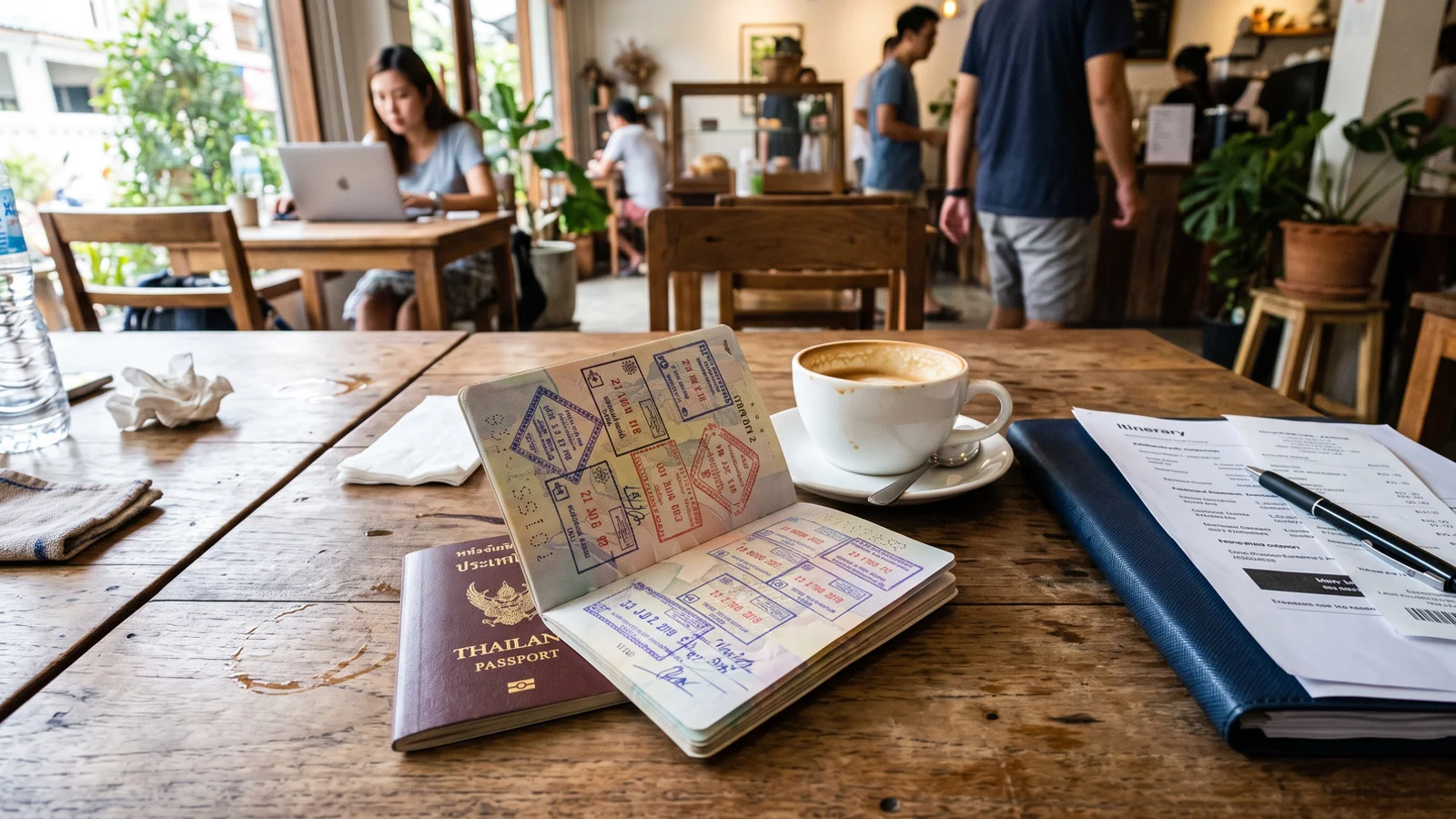
Foreigners need an appropriate immigration route; being a remote worker does not by itself grant any right to stay. The main options are workable but each involves upkeep. Tourist entries are short by design. The Destination Thailand Visa (DTV) gives eligible remote professionals 180-day stays per entry with a straightforward application. Retirement visa routes serve over-50s who can show the required funds or income, and the LTR and Thailand Privilege schemes exist for those who qualify or can pay. Depending on the route, staying on can involve renewals, reporting requirements, re-entry formalities and occasional rule changes. Expect the process to take time, and treat immigration as an ongoing administrative task rather than a one-off. Rules and financial thresholds do change, so verify current requirements with Thai immigration or an official consular source before making plans. The DTV visa guide covers the most common new route.
Working Remotely
Chiang Mai's reputation for remote work rests on solid infrastructure rather than hype. Thailand's fixed broadband ranks among the fastest globally in Ookla's Speedtest Global Index, gigabit home fibre costs around 600 baht per month, and 5G is a reliable backup. Coworking spaces and laptop-friendly cafes are dense across the main residential areas, and the time zone overlaps both Asia-Pacific mornings and European afternoons. A remote professional can land on a Monday and be fully productive by Tuesday, without hunting for a signal or a desk. The community dimension matters too: remote professionals arriving today plug into established networks rather than a scene being built from scratch. The working remotely from Chiang Mai guide covers spaces, internet and the practical setup.
Families, Schools and Retirees
Chiang Mai is viable and increasingly family friendly. Numerous international schools operate in and around the urban area, housing with space is affordable by international standards, and the southern suburbs in particular have grown around family life. School fees are the one large expense that changes the arithmetic for families, and popular schools can run waiting lists, so early applications matter; the international schools guide lists the main options. Retirees form one of the largest groups of expats in Thailand, drawn by affordable healthcare, the cooler months and an unhurried pace. Both profiles share the same caveats as everyone else: the smoke months matter more with young children or older lungs, and specialised needs occasionally mean a trip to Bangkok.
The Main Drawbacks
Balance requires stating the cons plainly. The smoke described above is the most serious and the most often underestimated by newcomers. Road danger follows: Thailand's roads kill around 25 people per 100,000 each year on World Health Organization estimates, one of the highest rates in Asia, and most of those killed are on motorbikes, which is exactly what daily transport pushes residents towards. Heat and wet-season humidity wear some people down. Public transport is thin, and pedestrian infrastructure is inconsistent outside the centre. Flooding affects specific low-lying areas, as October 2024 showed when the Ping River peaked at 5.30 metres, the worst flooding in half a century. And immigration upkeep never fully disappears. The full pros and cons breakdown weighs each of these in detail.
Is Chiang Mai a Good Place to Live?
For people whose income is portable and whose health tolerates the smoke months, yes, and by a clear margin. The fundamentals, costs, convenience, healthcare, community and nature, are structural rather than cosmetic, and the drawbacks are mostly seasonal, mitigable or matters of personal fit. The honest answer for anyone else is conditional: those with respiratory conditions, those who need smooth step-free streets, and those who fly intercontinental constantly should weigh the cons heavily. The city is not paradise and does not need to be; it is one of the most practical, liveable bases in Thailand, and it rewards those who choose it with open eyes.
Frequently Asked Questions
How much money do you need to live comfortably in Chiang Mai?
It depends heavily on lifestyle. A single person in a modest condominium, eating local food and using ride-hailing, can live comfortably on a budget that would barely cover rent in a Western city; families with international schooling and a house spend several times more. The cost section above gives verified reference points, and the budget guide linked there models specific monthly figures.
Can foreigners stay in Thailand long term?
Yes, through several established routes: the DTV for eligible remote professionals, retirement visas for over-50s meeting the financial requirements, and the LTR or Thailand Privilege schemes for those who qualify or can pay. None is permanent residence, all involve some upkeep, and requirements change, so check official sources before planning.
What is the biggest drawback of living here?
The smoke season, without close competition. For several weeks most years, particulate pollution reaches levels the World Health Organization classifies as hazardous, which is a health issue rather than an inconvenience, here as in much of northern Thailand. Road danger is the second most serious drawback and the most relevant day to day.
Sources
- Official e-visa portal: DTV applications and requirements
- Board of Investment: LTR programme
- Thailand Privilege Card official site
- Immigration Bureau: extensions, reporting and re-entry formalities
- Pollution Control Department: Air4Thai air quality monitoring
- World Health Organization: ambient air quality and health
- World Health Organization: road traffic injuries
- Meteorological Department (TMD): climate data
- Joint Commission International: accredited organisations directory
- Bangkok Hospital Chiang Mai: JCI accreditation 2015 to 2027
- Ookla Speedtest Global Index: fixed broadband rankings
- Department of Lands: land and condominium ownership rules
- CMU School of Public Policy: lessons from the 2024 flood crisis
Newsletter
Occasional emails with useful Chiang Mai updates, new openings and guides worth knowing about.
The Chiang Mai Brief
Occasional emails with useful Chiang Mai updates, new openings and guides worth knowing about.