
Temples & Culture
Wat Pha Lat Chiang Mai
Wat Pha Lat is a forest monastery on Doi Suthep with Lanna origins, Burmese-influenced architecture and a stream-side waterfall shrine — what to see and how to visit by road.
6 min read
By Daniel Calleja, founder of The Chiang Mai Brief and Chiang Mai resident.
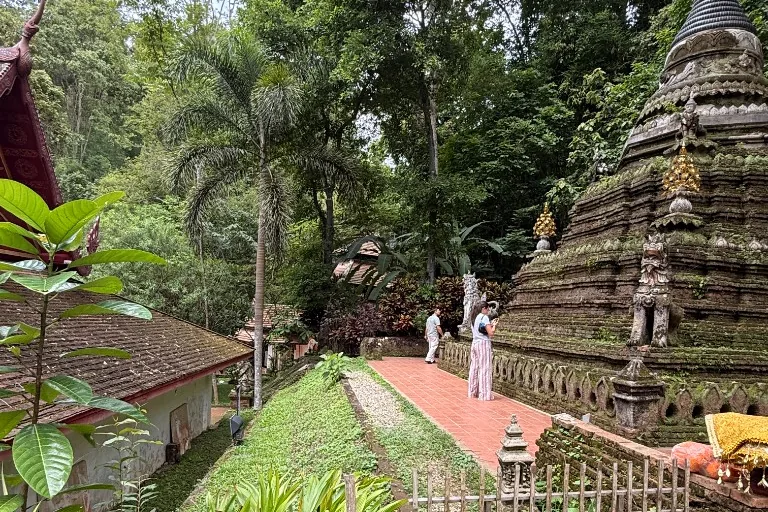
Wat Pha Lat is a Buddhist monastery on the forested slopes of Doi Suthep above Chiang Mai. It is also written Wat Pa Lat and known as Wat Sakadagami. Its name is usually translated as “monastery at the sloping rock”. The name refers to the steep stone and water-shaped ground around the site. A stream, a small waterfall, shrines and Buddha images sit within the forest rather than around one formal courtyard.
The temple is closely linked with the pilgrimage route to Wat Phra That Doi Suthep. Its history combines Lanna tradition, later Burmese patronage and modern restoration. Wat Pha Lat is therefore more than a stop on the way to a better-known mountain temple. It is a place where architecture, monastic life and the natural setting explain one another. It forms a distinctive part of Chiang Mai’s temple and cultural heritage.
King Kuena and the temple’s Lanna origins
Temple accounts place the origins of Wat Pha Lat in the reign of King Kuena of Lanna. He ruled during the late fourteenth century. He is also associated with the establishment of Wat Phra That Doi Suthep, usually dated to 1383. This relationship explains why the history of Wat Pha Lat is often told through the founding story of Wat Phra That Doi Suthep.
According to the white-elephant tradition, a sacred Buddha relic was placed on an elephant. The animal was expected to show where the relic should be enshrined. The elephant stopped at several places on Doi Suthep, including the sloping ground at Pha Lat, before reaching the summit. Temple accounts say that Kuena later ordered religious monuments to be built at these stopping places. This is a founding legend and religious tradition, not an eyewitness record of the temple’s construction.
Many modern listings give Wat Pha Lat a foundation date of 1355. That year marks the beginning of Kuena’s reign. It does not, by itself, prove when this temple was founded. Local accounts connect its establishment with the Doi Suthep project instead. The safest description is therefore a Lanna-era origin associated with Kuena, followed by many later changes. The present compound should not be described as an intact temple from 1355.
A resting place on the Doi Suthep pilgrimage route
Wat Pha Lat’s position had a practical religious purpose. Before a motor road climbed the mountain, pilgrims and monks travelled to Wat Phra That Doi Suthep on foot. Pha Lat offered a place to pause, find shelter and use water beside the stream. The waterfall shrine formed part of this wider cultural landscape rather than standing as an isolated monument.
The historic Monk’s Trail to Wat Pha Lat preserves this approach to the temple. It explains the close relationship between the monastery and the forest path. Even so, the trail is only one way to understand or reach the site. Wat Pha Lat can also be entered from the mountain road.
Burmese influence and the buildings visitors see
The buildings visible today reflect several periods, not one construction campaign. Burmese and Shan patrons and craftsmen played an important role during the late nineteenth and early twentieth centuries. Mong Panyo, also known as Luang Yonakarn Phichit or Phaya Taka, is especially associated with this phase. He was a Burmese teak trader and a major supporter of temple construction in northern Thailand.
Popular accounts often give 1934 as the date when he restored Wat Pha Lat. The documentary timeline is less certain. Archival research places important building work earlier and records Mong Panyo’s death in 1927. It is therefore better to describe successive phases of construction, decline and repair. The whole surviving compound should not be attached to one restoration date.
The chedi and viharn
The chedi is the temple’s principal stupa, a sacred Buddhist monument. The local municipal account describes it as Burmese work built by Burmese craftsmen. Its inverted bell-shaped form and decorative stucco distinguish it from the gilded central chedi at Wat Phra That Doi Suthep. Damage, repairs and later rebuilding have changed its appearance over time. It should be understood as a restored monument rather than a secure survivor from Kuena’s reign.
The viharn is an assembly or worship hall. It belongs to the same broad Burmese-connected building tradition. Its carved gable details are especially useful for identification. Local accounts describe a peacock on one side and a rabbit on the other. These small features reward close attention and show that the temple’s character lies in specific details, not only in its forest atmosphere.
Together, the chedi and viharn show why a simple “Lanna temple” label is incomplete. Wat Pha Lat stands within the religious history of Lanna. Its visible architecture also records the later movement of people, money and craft skills across the region.
Ho Phra Chao Rim Nam Tok
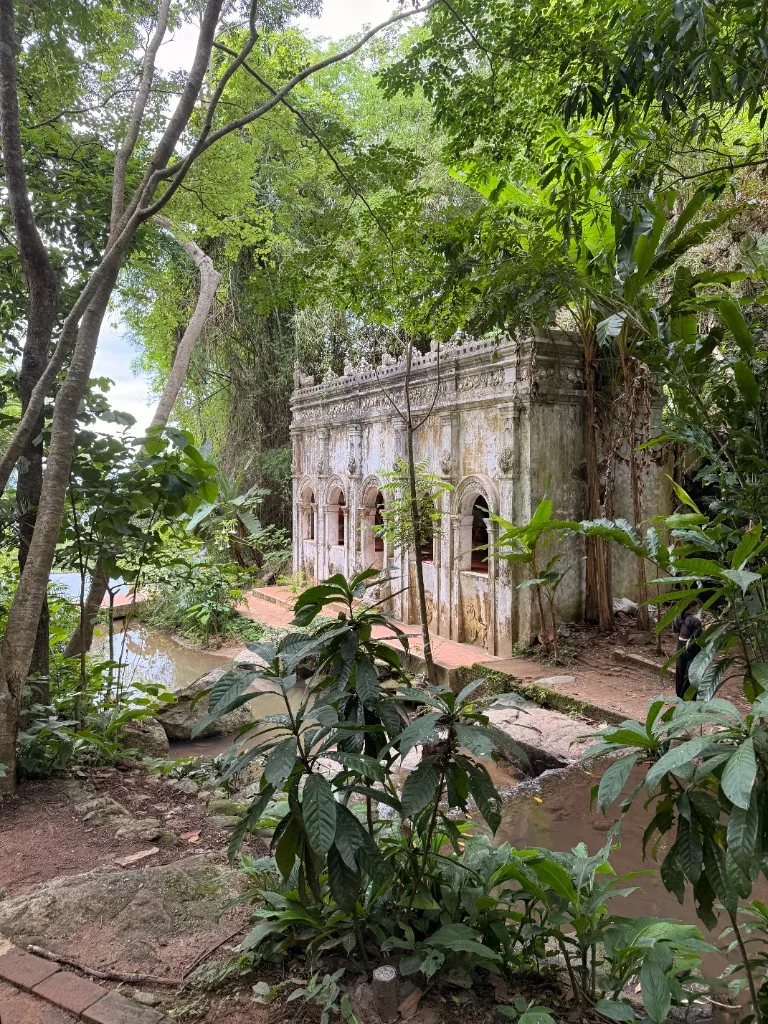
The most distinctive structure is Ho Phra Chao Rim Nam Tok, usually translated as the “House of Buddha Images by the Waterfall”. It stands below a rock overhang beside the water. Architectural research describes a masonry shrine with five arches. Its Burmese colonial style combined Burmese and Western design elements.
The building once housed a reclining Buddha and four seated Buddha images. These seated figures used the Maravijaya posture, which represents the Buddha overcoming Mara. The reclining image later disappeared. Subsequent damage, repairs and new images made the shrine’s archaeological record complicated. Visitors should therefore be cautious about assigning every feature or image to the same early date.
The earlier shrine eventually collapsed. The present building is a modern reconstruction informed by historic photographs, completed in 2019. Its reconstruction recovered an important part of the pilgrimage landscape. Even so, it does not make the building an untouched original. Knowing this distinction helps explain both its appearance and its significance.
Forest, rock and water
Wat Pha Lat’s grounds follow the sloping terrain. Paths, steps and bridges connect separate shrines rather than leading around a single flat enclosure. The stream runs through the grounds and drops over rocks to form the small waterfall. The flow changes with rainfall, so the water may appear much stronger after wet periods than during the dry season.
Rock, tree cover, ferns and moss are part of the temple’s physical character. They also affect how the buildings are experienced. A shrine may appear beside the water or beneath a rock face rather than behind a formal gate. Some openings in the trees frame views towards Chiang Mai, although vegetation and weather determine how much of the city is visible.
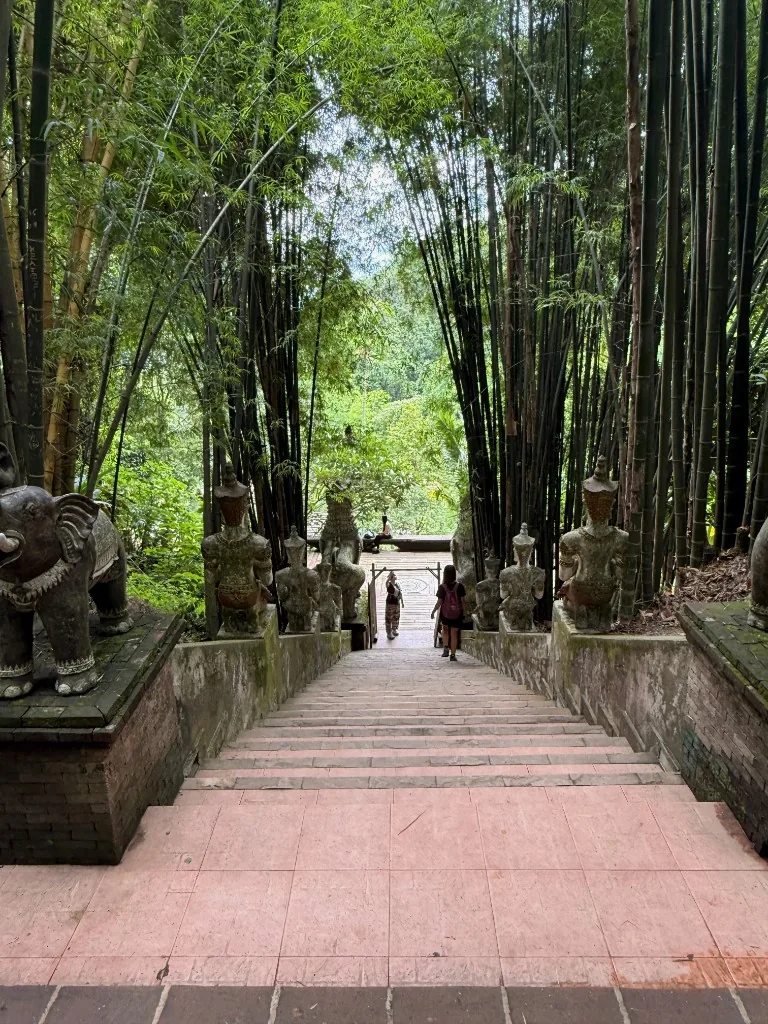
Buddha images and guardian figures appear along paths, beside rocks and at small shrines. Their placement within the landscape is part of Wat Pha Lat’s identity. These are not merely decorative objects in a garden. They remain sacred images within a working religious site. Their different styles and conditions reflect different periods of devotion and repair.
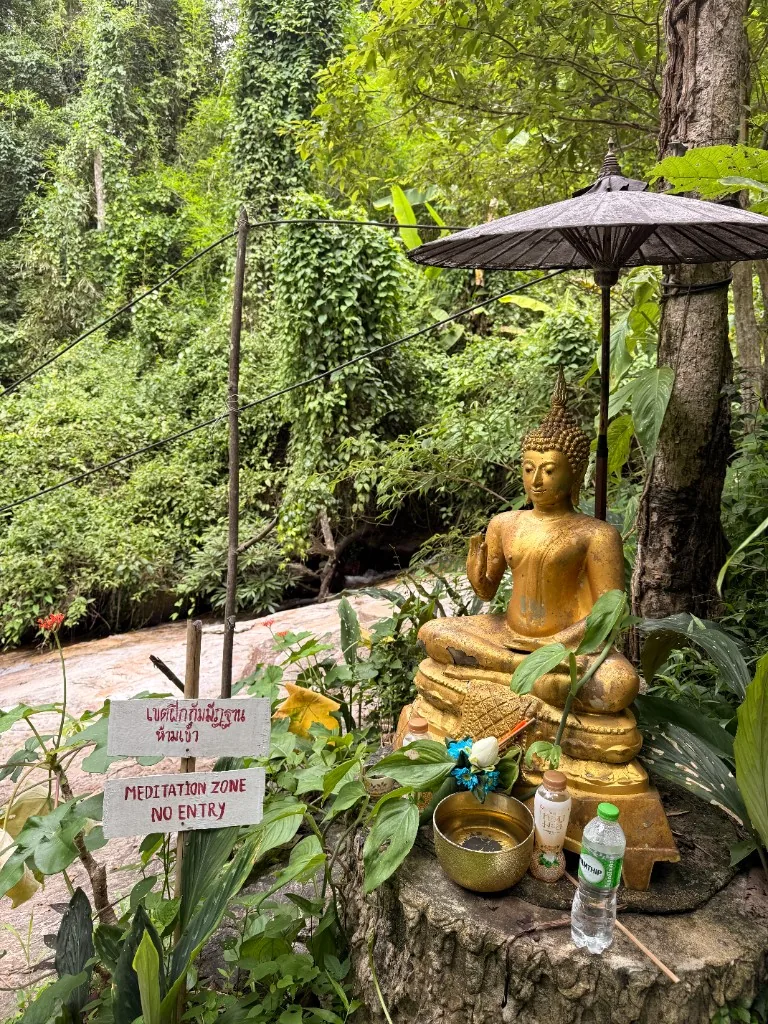
The rock overhang also has a long religious history. Oral and written accounts describe the area as a place used by hermits and monks during Lanna history. Such accounts support the site’s long religious meaning. They do not provide a precise construction date for every surviving image or structure.
A living monastery
Wat Pha Lat remains an active Theravada Buddhist temple with resident monks, worship and meditation. Its present religious life followed a period of decline. The mountain road changed the old pilgrimage journey. Later accounts describe the site as neglected or abandoned for parts of the twentieth century.
The site lost its formal status as a temple with monks in 1981. Thai accounts describe its revival as a temple and meditation centre in 1991. Subsequent conservation and rebuilding helped establish the compound visitors see today. Wat Pha Lat is thus neither an ancient ruin nor a newly created attraction. It is a revived monastery with several historical layers.
Meditation is part of this religious role. Some visitor accounts also mention informal conversations with monks. These should not be treated as guaranteed daily tourist services. Anyone hoping to join a programme should confirm arrangements directly with the temple.
Visiting Wat Pha Lat
Wat Pha Lat is in the Suthep area on the forested slope of Doi Suthep. Around an hour is enough to see the main chedi, viharn, waterfall shrine and nearby forest paths at a comfortable pace. The site is best understood slowly because its important features are spread across different levels.
The temple itself does not charge an entrance fee when visitors arrive by the main road, although donations support the monastery. A separate Doi Suthep-Pui National Park charge applies to the Pha Lat Nature Trail. Introduced in October 2025, it is a park fee rather than a temple admission charge. Current published rates are 20 baht for Thai adults and 100 baht for foreign adults, with lower rates for children.
Published opening hours differ. A temple sign has been reported as 7:00 to 17:30, while some current listings give 6:00 to 18:00. Confirm the latest notice before planning an early-morning or late-afternoon visit. Temporary religious activities may also affect access to particular halls.
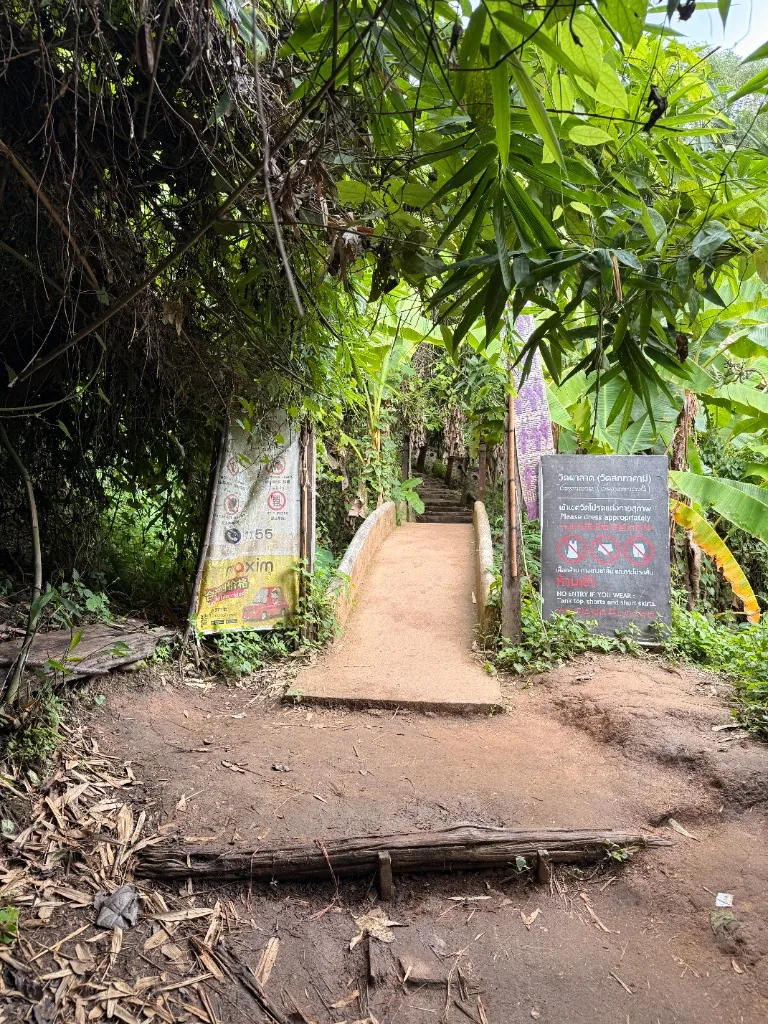
Visitors should remember that the shrines, images and meditation spaces belong to an active monastery. Quiet behaviour and modest dress are appropriate. Wat Pha Lat rewards attention because its buildings, religious traditions and forest setting still form one connected place. It does not need to be called hidden or secret.
Visitor information last checked: November 2026.
Stay updated
Get the Chiang Mai Brief
Useful local updates, new guides, openings and practical information for living in or visiting Chiang Mai.