
Festivals & Events Calendar
Songkran Chiang Mai: Dates & Schedule
Songkran Chiang Mai dates and schedule, plus the main water-fight zones around the moat, traditional celebrations, safety and what to expect.
6 min read
By Daniel Calleja, founder of The Chiang Mai Brief and Chiang Mai resident.
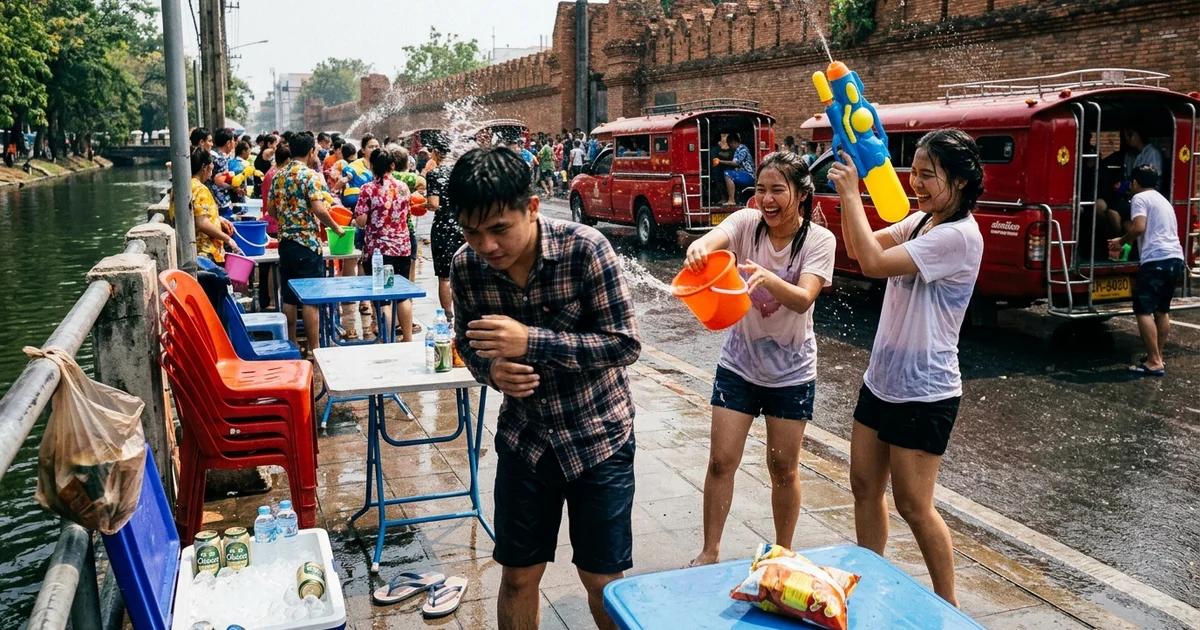
Songkran is Thai New Year, marked across the country with water. Chiang Mai does it more intensely, for longer, and with more commitment than almost anywhere else, and for a few days in April the entire city becomes a water fight.
It is genuinely joyful and completely inescapable. Understanding both halves of that is the point here. The page sits under our festivals and events hub.
Songkran dates & schedule
The official Songkran dates are 13–15 April. In practice, Chiang Mai usually starts earlier and finishes later. Expect some water play from around the 11th or 12th, with the main water fights concentrated on 13–15 April and activity sometimes continuing into the 16th.
- 11–12 April: the build-up begins, with some early water play and festival activity.
- 13–15 April: the official festival days and the main period for water fights, temple activity, processions and celebrations.
- 16 April: some water fighting can continue, although activity varies by area and year.
Note the overlap with the tail of burning season. April is both the water festival and often still hazy and extremely hot. See our burning season timing page before planning an April trip.
Where the Songkran water fights happen
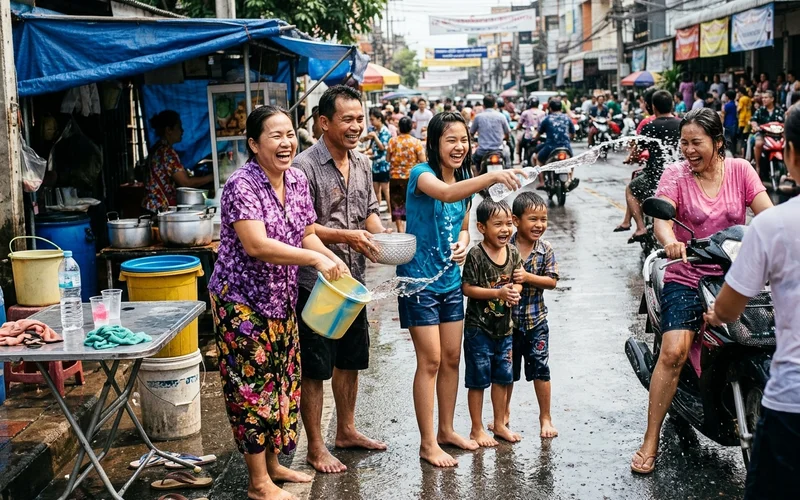
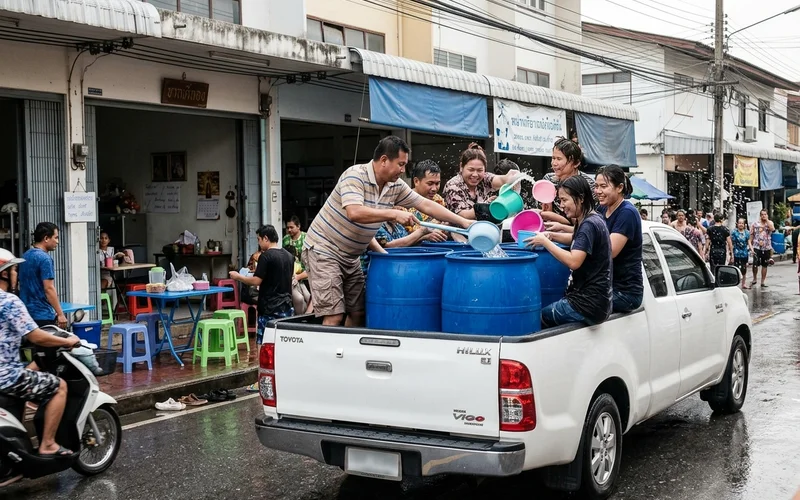
The water is everywhere, from everyone, using everything: buckets, hoses, water guns, and pickup trucks carrying drums of water. Ice water is also common and can be a shock when it arrives unexpectedly.
The Old City moat is the main event, especially the eastern side around Tha Phae Gate. Vendors set up along the moat road, music plays, and thousands of people move slowly around the loop throwing water at each other and at passing vehicles. It becomes the centre of Chiang Mai’s biggest street party for several days.
Nimman and parts of the Nawarat Bridge area also become busy, but the city moat remains the classic place to experience the largest water fights.
Traditional Songkran celebrations & parades
Underneath the water fights is the traditional festival. Songkran marks Thai New Year, and the quieter customs remain an important part of the celebrations.
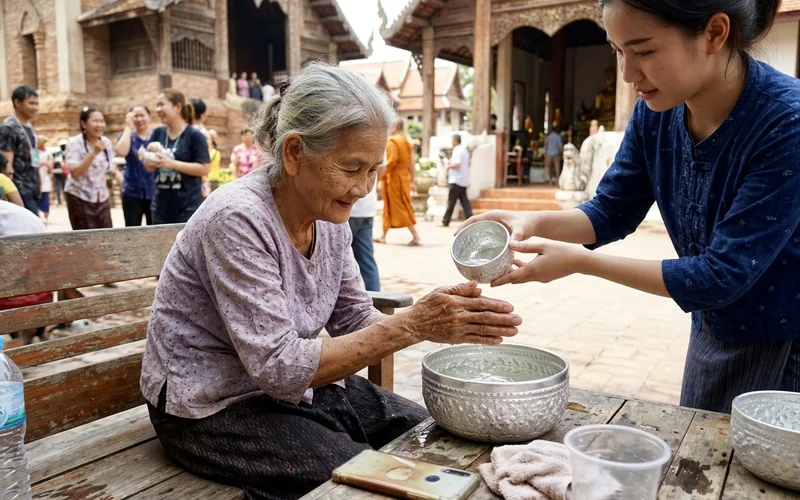
Temple visits, sand chedi building, the washing of Buddha images, and rot nam dam hua, pouring scented water over the hands of elders as a mark of respect, are still widely observed. These traditions are most visible in the mornings and around temples.
Processions of Buddha images also move through the city, particularly the revered Phra Singh image, with people respectfully pouring water as it passes.
Songkran is one of Chiang Mai’s defining annual festivals, alongside the February Chiang Mai Flower Festival. The other major festival period falls in November; see our Chiang Mai Lantern Festival page for the Yi Peng side of that season.
Joining the Songkran water fights
Waterproof everything. Use a sealed pouch for your phone and assume your wallet, bag and clothing will get wet. Leave anything valuable at home.
Dress for it. Quick-dry clothes and footwear with grip make the day much easier. Avoid clothing that becomes transparent when soaked.
Buy a water gun if you want to participate. They are sold throughout the city during the festival and are the simplest way to join in.
Use sunscreen. April sun plus a full day outside is a serious combination, and repeated soaking removes sunscreen quickly.
Protect your eyes. Sunglasses or simple protective glasses help when water is being thrown from every direction.
Know when not to throw water. Do not target monks, elderly people, babies, or people who are clearly trying to avoid the water. Never throw water at motorcyclists travelling at speed.
Stay hydrated. April heat is intense. Drink plenty of water throughout the day rather than relying on alcohol or soft drinks.
Avoiding the wet zones
If you would rather avoid the water fights, that is entirely reasonable. Plenty of residents leave the city or change their routine for the festival period.
- Stay farther from the Old City moat. Outer neighbourhoods and suburban areas are generally much quieter.
- Travel early. Streets are usually far easier before the water activity builds later in the morning.
- Stock up beforehand. Some shops close or become difficult to reach once the busiest celebrations begin.
- Plan indoor time. Malls, cinemas and other enclosed venues are useful when you want a break from the water.
- Plan airport trips carefully. Road congestion and water activity can make a normally simple journey considerably slower.
Songkran safety
Songkran is one of Thailand’s most dangerous periods on the roads. Wet surfaces, reduced visibility, water thrown at riders and drink driving combine to create a serious annual risk.
Practical precautions:
- Do not ride a scooter during peak water activity if you can avoid it. If you must ride, go slowly and expect to be hit with water.
- Never ride or drive after drinking.
- Watch your footing around the moat, where roads and pavements become slippery.
- Keep valuables secure in dense crowds.
- Use common sense around children and families, particularly where water guns and traffic mix.
Is Songkran in Chiang Mai worth it?
If the idea of a citywide water fight lasting several days appeals, Chiang Mai during Songkran is one of the city’s most distinctive experiences. If it does not, book accommodation away from the moat, avoid the busiest wet zones and treat the festival period as a time to plan quieter days.
Stay updated
Get the Chiang Mai Brief
Useful local updates, new guides, openings and practical information for living in or visiting Chiang Mai.