
Festivals & Events Calendar
Loy Krathong Chiang Mai: A Practical Guide to Yi Peng, Dates and Festival Night
Plan Loy Krathong in Chiang Mai with clear advice on Yi Peng, dates, riverside celebrations, crowds, transport, safety and respectful participation.
12 min read
By Daniel Calleja, founder of The Chiang Mai Brief and Chiang Mai resident.
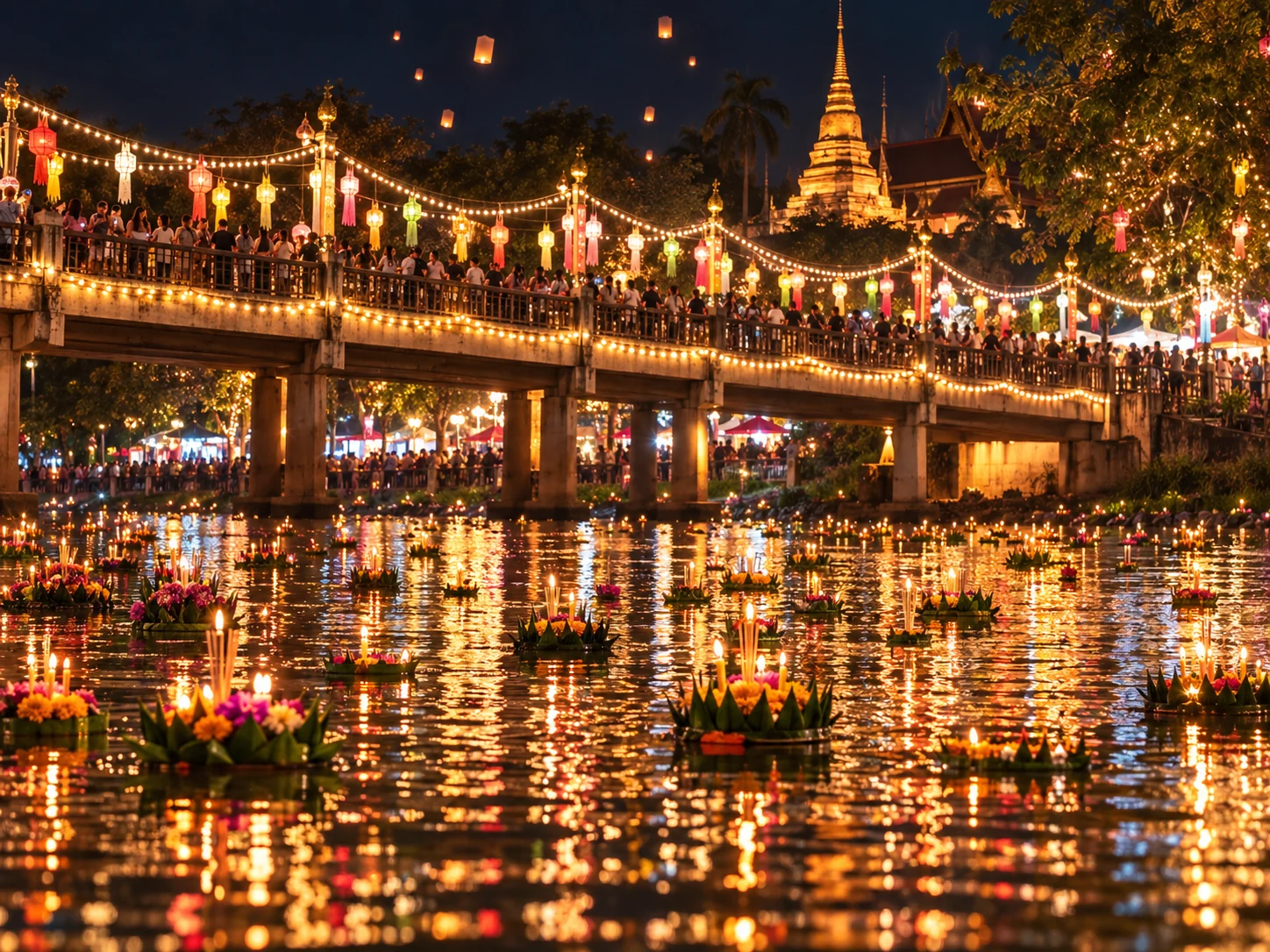
Loy Krathong Chiang Mai is one of Thailand’s most atmospheric festival nights: candlelit krathongs drift along the Ping River while the city’s Lanna traditions give the celebration a character all its own. It is also easy to confuse with Yi Peng, the northern lantern festival that often overlaps but follows different customs and schedules.
Before you go, know the dates, choose your riverside viewing spot, and plan for major crowds and road closures. This guide explains what happens where, how to celebrate respectfully, and how to make the most of the evening. It sits under our festivals and events hub.
Key takeaways
- Loy Krathong involves floating krathongs; Yi Peng is Chiang Mai’s distinct northern lantern tradition.
- In 2026, Loy Krathong falls on Tuesday, 24 November; official city programmes and road closures should be confirmed closer to the date.
- Mass sky-lantern releases are controlled, often ticketed, and not permitted casually across the city.
- Ping River and Nawarat Bridge offer peak atmosphere, but expect severe crowds and traffic delays.
- Choose temples or Old City lanes for calmer observances; dress modestly and check individual programmes.
- Use small natural-material krathongs, designated launch points, and plan your return transport before dark.
Loy Krathong Chiang Mai: What Makes It Special
Loy Krathong Chiang Mai is one of Thailand’s most visually arresting annual celebrations, but its appeal runs deeper than the photographs suggest. The Loy Krathong festival centres on floating a small, decorated raft, known as a krathong, on water as a gesture of respect, release and renewal. In Chiang Mai, it coincides with Yi Peng, the northern Thai tradition associated with lanterns, giving the city a distinctive two-part festival atmosphere: waterways shimmer with candlelit offerings while lantern displays and temple events illuminate the evenings.
As a Chiang Mai resident and founder of The Chiang Mai Brief, I recommend looking beyond the single image of sky lanterns. The real highlights are spread across several days: merit-making at temples, Lanna cultural performances, neighbourhood markets, riverside observances and the changing rhythm of the Old City after dark. The krathong festival is celebrated across Thailand, yet Chiang Mai’s northern customs, historic setting and active local participation make it feel especially layered. It is also a busy, highly regulated period, so knowing which traditions are public, where crowds gather and how to celebrate respectfully makes a meaningful difference to the experience.
Loy Krathong and Yi Peng: Know the Difference Before You Go
Visitors often use Loy Krathong and Yi Peng interchangeably, but they are distinct traditions that happen around the same full-moon period, usually in November, and are especially visible in Chiang Mai. Treat them as two related but separate celebrations. Loy Krathong is observed across Thailand: people place a small floating offering, or krathong, on the water as a symbolic act of gratitude and release. Yi Peng is the northern Lanna festival associated with Chiang Mai, where decorative lanterns and, in certain organised settings, a sky lantern are central to the imagery. The famous mass release of sky lanterns is not a casual, citywide free-for-all; it is generally tied to ticketed events, temple programmes, or controlled releases. A Chiang Mai Lantern Festival visit therefore requires a little planning: enjoy the riverside Loy Krathong atmosphere, look for local lantern displays, and do not assume you can send a lantern into the sky anywhere you like. Local safety rules, fire risk, and aviation restrictions matter.
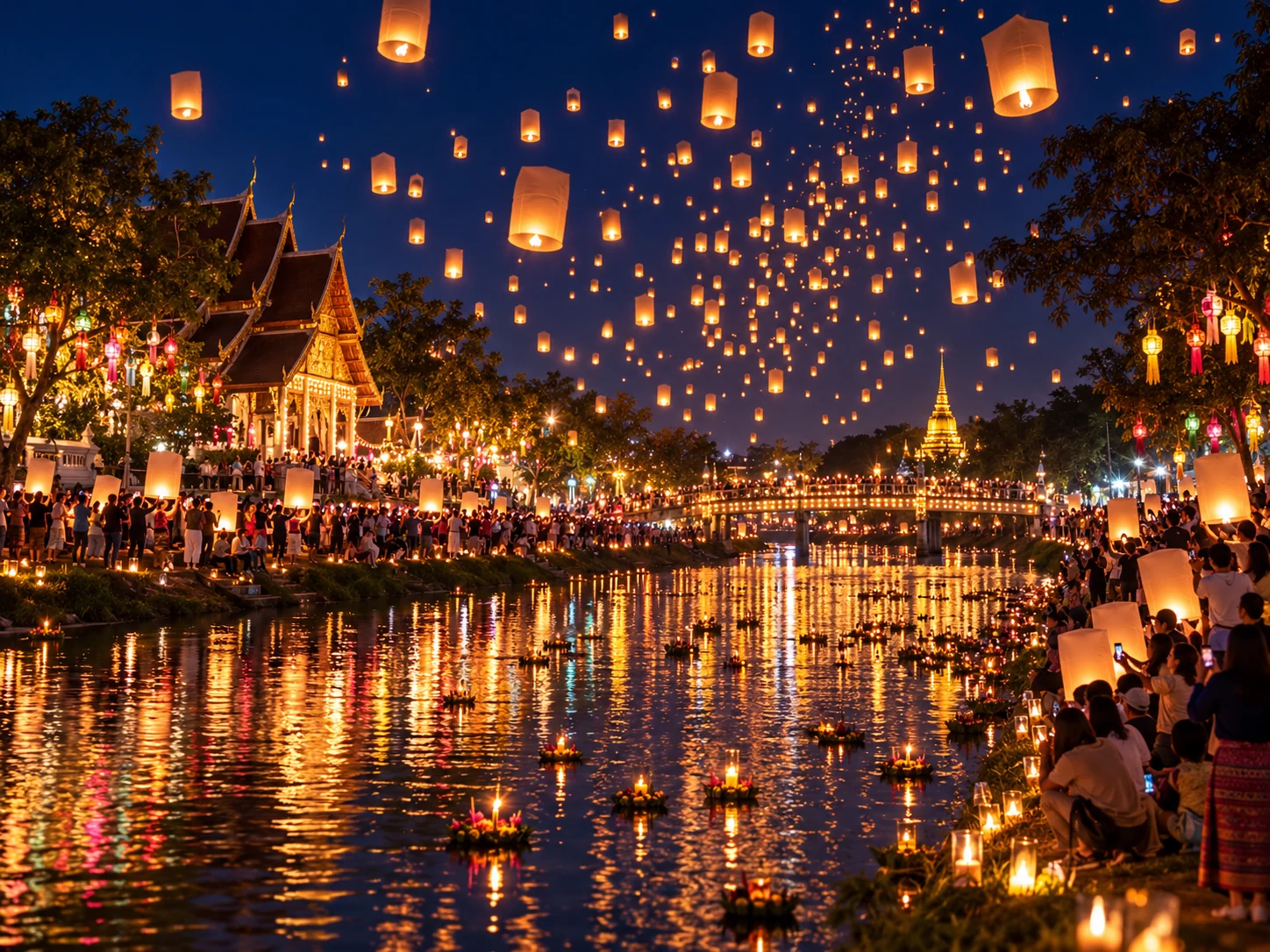
Loy Krathong Dates and the Festival Schedule This Year
In 2026, Loy Krathong falls on Tuesday, 24 November, timed to the full moon of Thailand’s 12th lunar month. In Chiang Mai, the festival atmosphere usually builds over several days rather than beginning and ending on one night. Expect riverfront activity, temple events, markets and decorative displays around the main festival period, while privately organised lantern-release events can follow their own calendars and ticketing. Treat the full-moon night as the date to protect in your itinerary, then leave room around it for announced city events. November is one of Chiang Mai’s most popular travel periods, and central hotels, flights and transport tend to fill early. Confirm the final municipal festival schedule closer to your visit: road closures, parade routes and river access arrangements are typically published only in the weeks before the festival. Plan evenings with extra travel time, particularly around the Old City, Nawarat Bridge and the Ping River.
Choose Your Chiang Mai Festival Experience
For Loy Krathong celebrations in Chiang Mai, location shapes the entire evening: crowds, transport, viewing space and how easily you can leave. Whether your loy krathong Chiang Mai plans involve a guided tour or independent travel, The Chiang Mai Brief recommends choosing one main area rather than attempting to cross town during peak hours.
Ping River and Nawarat Bridge: The Classic Crowded Route
The Ping River around Nawarat Bridge delivers the postcard version of the festival: illuminated boats, floating krathongs, dense promenades and a constant flow of people toward the water. It is the right choice for visitors who want atmosphere over ease, but plan for slow movement and limited space along the riverside.
Arrive well before the evening peak, choose a restaurant or hotel on the Ping with a reserved table if comfort matters, and set a meeting point before separating from your group. The bridge becomes a natural bottleneck after dark, while traffic around the river can be at a standstill. Walking is usually more reliable than relying on a car or ride-hailing pickup.
Temples, Tha Phae and Quieter Local Celebrations
For a more measured evening, look beyond the riverfront. Temples across the Old City often host respectful, community-scale observances, with opportunities to make a krathong, light candles and observe local customs without the pressure of the central crowds. Check each temple’s programme and dress modestly, particularly when entering worship spaces.
Tha Phae Gate is useful for visitors interested in public festivities, street activity and any scheduled parade, though it can still become busy. It is best treated as a stop rather than an all-night base: see the lantern displays and performances, then walk into nearby lanes or toward a temple for a calmer finish. Avoid assuming every lantern release is public or permitted; organised releases follow specific rules and locations.
Loy Krathong Evening Options: What to Expect
| Option | Best for | Typical atmosphere | Planning note |
|---|---|---|---|
| Old-city temples | A more measured evening and observing local customs | Respectful, community-scale observances away from central crowds | Check each temple’s programme, dress modestly for worship spaces, and note that lantern releases may have specific rules and locations. |
| Tha Phae Gate | Public festivities, street activity and any scheduled parade | Busy public setting with lantern displays and performances | Treat it as a stop rather than an all-night base, as it can become busy. |
| Nearby quieter lanes | A calmer finish after visiting Tha Phae Gate | Less pressured than the central public areas | Walk into nearby lanes after seeing displays or performances at Tha Phae Gate. |
What Festival Night Looks Like, From Krathong to Return Trip
In Chiang Mai, festival night is best approached as an unfolding evening rather than a single spectacle. Begin before sunset, when the Old City, Tha Phae area and river approaches are still navigable and vendors are setting out food, flowers and small floating offerings. As darkness settles, the atmosphere changes quickly: temples glow, streets thicken with families and visitors, and a formal parade or krathong parade may slow traffic along key central routes.
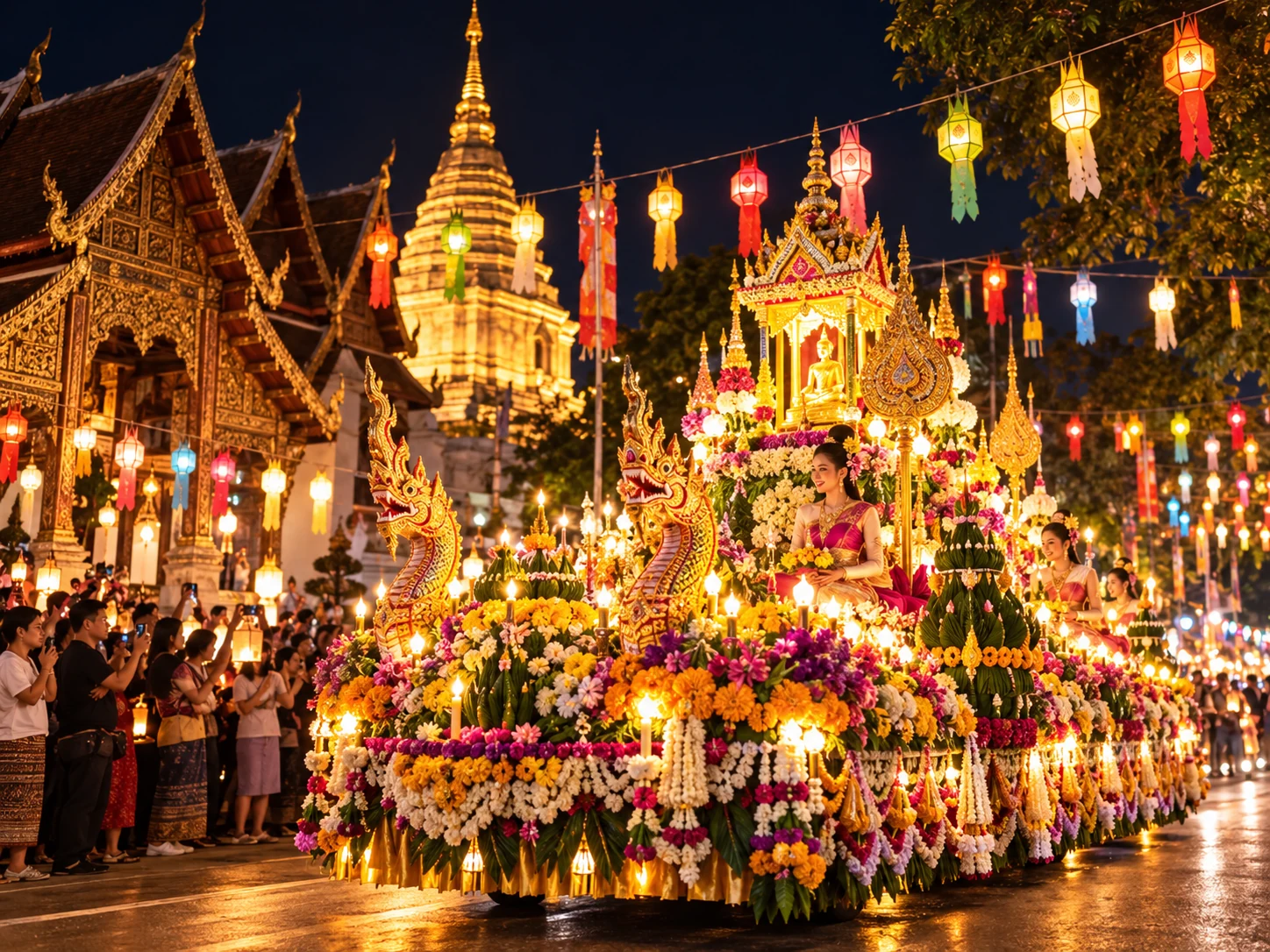
A krathong is traditionally floated on the river or another designated waterway as a gesture of release and respect. Choose an official launch point where available, follow staff directions, and avoid treating bridges or crowded riverbanks as places to linger indefinitely. The most photogenic moments often arrive later in the night, but they also bring the heaviest congestion.
Plan your return before you set out. Road closures, limited ride-hailing availability and dense pedestrian crowds can turn a short journey into a long one. Keep your accommodation address saved in Thai, carry a little cash, and be ready to walk several blocks away from the busiest festival zone before arranging transport.
Festival night essentials
- Arrive before sunset to explore the Old City, Tha Phae area and river approaches while routes remain easier to navigate.
- Buy food, flowers and a small krathong early, before evening crowds and parade-related traffic restrictions build.
- Use official krathong launch points, follow staff guidance and respect designated waterways, temples and surrounding public spaces.
- Expect central routes to slow during formal parades; avoid relying on precise travel times between festival areas.
- Take photos later if desired, but anticipate the densest crowds around bridges, riverbanks and popular viewing areas.
- Save your accommodation address in Thai, carry some cash and keep your phone charged for navigation.
- Plan the return journey in advance; walk beyond the busiest zone before requesting a ride when transport is scarce.
Choose an Eco-Friendly Krathong and Float It Respectfully
For Loy Krathong, I recommend choosing a small, eco-friendly krathong made from natural materials rather than a large, elaborate float. In Chiang Mai, the best options are typically a simple banana-trunk base decorated with folded banana leaves and a few flowers. These break down far more readily than foam, plastic, glitter-coated decorations, or items with metal pins that can remain in the water long after the festival.
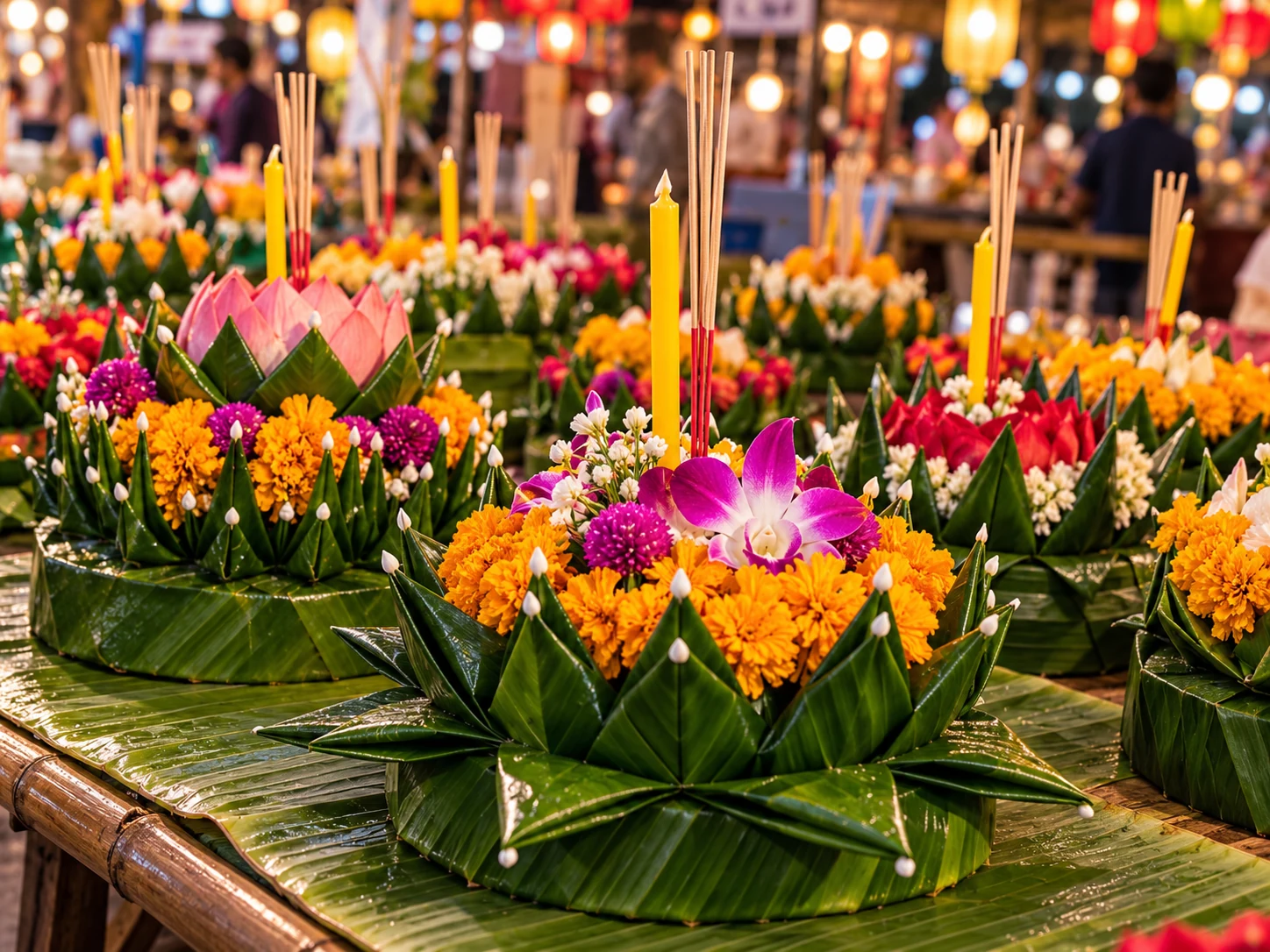
Keep the gesture modest. A krathong is a symbolic offering, not a display piece, and a smaller float creates less waste while still honouring the occasion. Avoid adding coins, packaged snacks, or personal objects: they do not belong in the river and can complicate the clean-up. If you buy from a street vendor, take a moment to check the base and decorations before paying; foam can be disguised beneath leaves.
Where floating is permitted, follow local instructions and use designated access points along the Ping River or other managed waterways. Do not climb over barriers, crowd narrow banks, or release a krathong into fast-moving water. Respect for the water is central to Loy Krathong, and choosing thoughtfully is the most practical way visitors can take part.
Sky Lantern Rules, Safety and Meaningful Alternatives
As a Chiang Mai resident and founder of The Chiang Mai Brief, my practical advice is simple: treat every sky lantern, or cad khomloy, as a fire-bearing object, not a harmless souvenir. A lantern release can look magical in photographs, but sky lanterns create real risks for homes, dry vegetation, power lines, aircraft and livestock. Rules may also change around Yi Peng, particularly near airports, dense neighbourhoods and protected areas, so visitors should check current provincial notices and follow their hotel or event organiser’s guidance before planning a release.
Even where lanterns are permitted, safety depends on calm conditions, adequate open space and responsible handling. Never release lanterns from a balcony, street, temple compound or crowded gathering, and do not assume that vendors are confirming legality simply because they sell lanterns. Officially managed events are the more considerate choice when available: they typically coordinate timing, site access and safety procedures. If a release is not appropriate, you can still mark the occasion meaningfully. Attend a lantern-making workshop, offer flowers or candles at a temple where permitted, enjoy public light displays, or choose a reusable lantern for a private dinner. The most memorable Chiang Mai moments do not require sending debris into the sky.
Festival Transport: Arrivals, Road Closures and the Walk Home
Treat festival transport as part of the evening’s plan, not an afterthought. On major festival nights, the Old City, Tha Phae Gate, riverside roads and popular temple areas can become slow-moving long before sunset. Road closures and traffic diversions are often announced close to the date, so check official city, police and event channels on the day rather than relying on an old map or a hotel’s usual driving route. My most useful travel tips are simple: arrive earlier than you think necessary, choose one clear meeting point, and wear shoes suitable for uneven pavements and a longer walk home. Ride-hailing can be useful for reaching the edge of the busiest zone, but pick-up times and surge pricing are common once crowds disperse. If you are staying outside central Chiang Mai, arrange your return travel before the festival begins, or be prepared to walk several blocks away from the main activity before requesting a car. At night, keep your phone charged, carry your accommodation address in Thai, and give yourself extra time.
Festival transport essentials
- Check official city, police and event updates for same-day road closures and diversions.
- Arrive early, especially near the Old City, Tha Phae Gate, riverside and temple areas.
- Set one easy-to-find meeting point before entering crowded festival zones.
- Wear comfortable shoes for uneven pavements and a potentially long walk after festivities.
- Use ride-hailing to reach busy-area edges, expecting slower pickups and higher fares later.
- Arrange return transport before the event, or walk several blocks away before requesting a car.
- Keep your phone charged and carry your accommodation address written in Thai.
Etiquette, Personal Safety and Photography
Approach the Loy Krathong festival with the same care you would bring to any important local observance: be celebratory, but stay considerate. At a temple, dress modestly, remove shoes where required, and keep voices low around prayer areas. If you make an offering, follow the lead of organisers and avoid treating ritual spaces as a backdrop.
Near the water, take simple precautions. Riverside paths, bridges and crowded access points can become congested after dark, particularly when people gather to release krathongs. Keep valuables secure, arrange a clear meeting point if travelling with others, and use licensed transport rather than attempting to drive through festival traffic. Avoid stepping into restricted areas or leaning over barriers for a better view.
Photography is welcome in many public settings, but permission matters. Ask before taking close portraits, especially of monks, families or people making offerings. Do not use flash inside a temple or during ceremonies, and never block walkways, prayer lines or the water’s edge. The best images tend to come from observing patiently and giving the festival room to unfold around you.
Planning for Families, Solo Travelers and Mobility Needs
Match your base to the pace you want after dark. Chiang Mai’s festival evenings can be magical but tiring: crowds, uneven pavements and altered access change the calculation for children, solo visitors and anyone with limited mobility. These travel tips focus on reducing unnecessary friction before you book.
Where to Stay for a More Manageable Festival Night
For a more manageable festival night, consider accommodation within walking distance of the centre but outside the busiest Nawarat Bridge and immediate riverfront bottlenecks. A quieter stretch of the Ping River, or a location just beyond the main Tha Phae and river crowds, can give you easier access to the atmosphere while still providing somewhere calmer to retreat between outings.
Tha Phae remains one of the most convenient areas for immediate access to central events, but proximity can mean amplified noise, blocked lanes and limited vehicle access. If mobility is a concern, confirm step-free entrances, lift access and the hotel’s practical drop-off point before reserving. Ask specifically how transport operates on festival evenings: drivers may not be able to reach the door, and a short walk can become difficult in heavy crowds.
November Weather, Packing and Budget Timing
November is one of Chiang Mai’s most appealing months: the wet season is usually retreating, skies are clearer and evenings begin to feel genuinely cool. Expect warm daytime weather, often around 28–31°C, followed by mornings and nights that can dip below 20°C, particularly outside the dense centre. Bring breathable clothes, comfortable closed shoes and a light layer for early starts, temple visits and open-air dinners by the riverbank. A compact rain jacket is still sensible; Thailand weather does not always follow a neat seasonal script, and brief showers remain possible.
For budget planning, November rewards early decisions. Festival-period demand can lift airfares and room rates sharply, especially for well-located boutique hotels and properties near the Old City or Ping River. Confirm the year’s dates before booking, as major lantern and river celebrations follow the lunar calendar and do not fall on the same November dates every year. If your budget is flexible, arriving a few days before or staying after the busiest nights can offer better value, easier transport and a more relaxed view of the city.
Stay updated
Get the Chiang Mai Brief
Useful local updates, new guides, openings and practical information for living in or visiting Chiang Mai.