
Everyday Living
Do You Need a Dehumidifier in Chiang Mai?
Whether a dehumidifier is worth it in a Chiang Mai home, how humid the rainy season gets indoors, the levels that can encourage mould, and what to look for.
6 min read
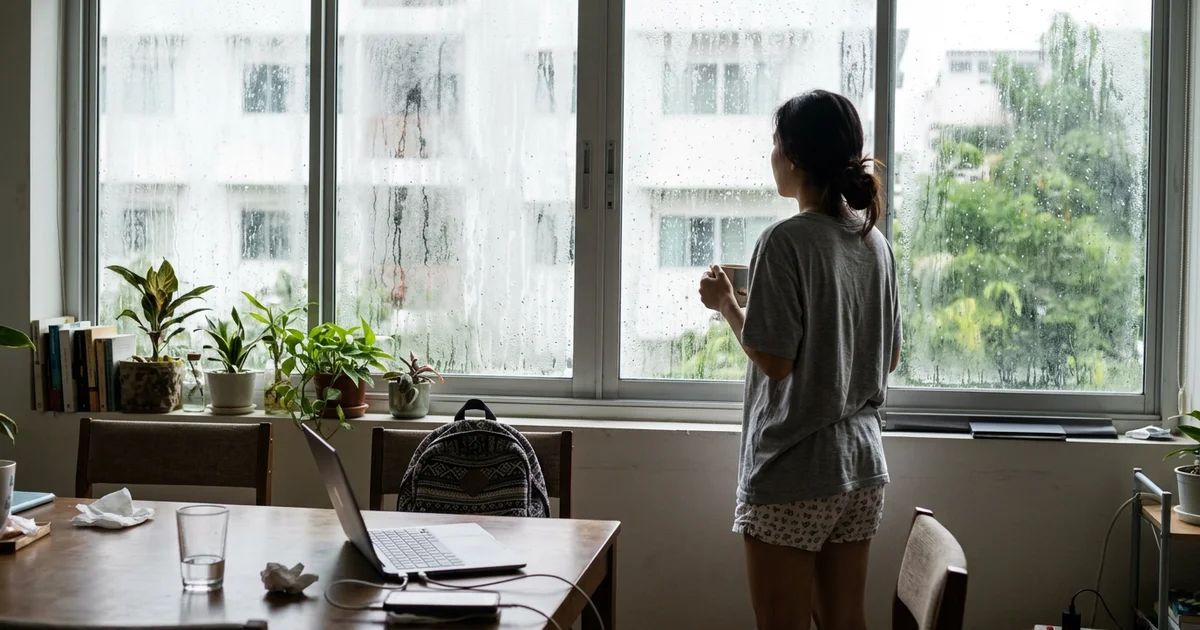
If you are in Chiang Mai through the rainy season and your rooms regularly sit above 60 to 65 per cent relative humidity, a dehumidifier can make a surprisingly big difference. But humidity varies between buildings and seasons, so the better test is what is happening inside your home. Even during Chiang Mai’s drier months, a dehumidifier can still be useful if indoor humidity remains higher than you find comfortable.
That is the short answer. The longer one matters, because humidity here is a moving target and what you should do depends on your building, your habits and how long you are staying.
For most of the year the humidity is manageable. The hot season from March to May is uncomfortable, but what you are dealing with is heat rather than moisture. From June to October the equation changes completely: outdoor humidity climbs well above 80 per cent, and unless your condo is unusually well sealed, indoor levels follow it up. Our guide to Chiang Mai’s seasons covers how the year breaks down.
How the rainy season affects indoor humidity
Air conditioners are built to control temperature, not moisture. Once the room reaches the temperature you have set, the cooling compressor simply stops — and so does most of the drying that was happening as a side effect.
That is the catch during the wettest months. If you run the air conditioning lightly to keep the electricity bill down, the moisture creeps back up between cooling cycles. August and September are typically the most humid months of the year, with average relative humidity in the low 80s. On a wet day a room might sit at a perfectly comfortable 26°C and still read 75 per cent humidity.
For a short stay, or if you run the air conditioning constantly, none of this amounts to much. For anyone living here through the full rainy season, the dampness quietly adds up — in wardrobes, on walls, and in anything made of leather or paper.
First-hand experience · Chiang Mai
My Experience Using a Dehumidifier in Chiang Mai
Buying a dehumidifier has been the single biggest improvement I’ve made to the comfort of my condo in Chiang Mai.
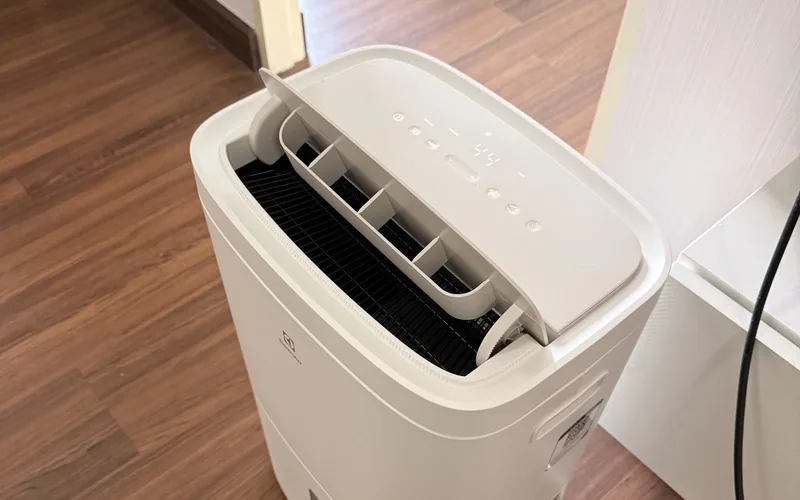
I started running one properly during the humid months, and it fixed something I had been misreading for a long time. I used to wake in the night feeling hot and uncomfortable even though the air conditioning was running, and my instinct was always to set the temperature lower. It took me a while to work out that the moisture in the room, rather than the temperature, was doing most of the damage.
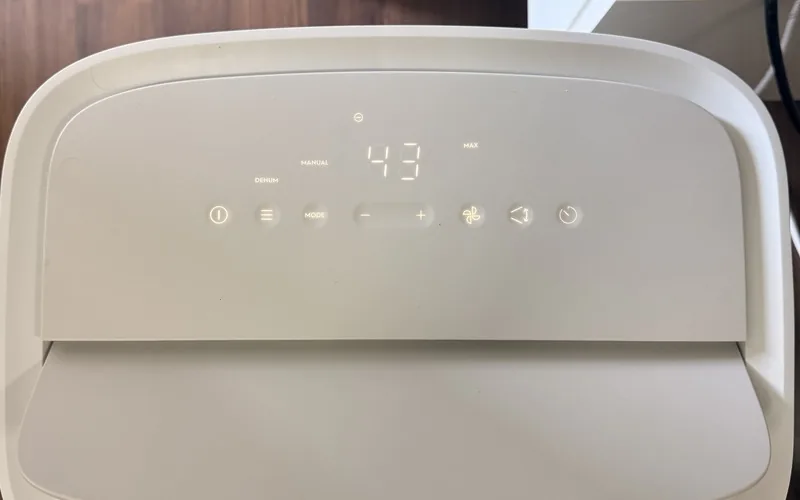
On some nights the humidity indoors was reaching roughly 63 to 65 per cent. Turning the dehumidifier’s fan speed up brought it down quickly, and the change in how the room felt was obvious rather than subtle. I find the condo most comfortable at around 40 to 50 per cent, and I get there by running the dehumidifier alongside the air conditioning rather than instead of it.
The difference to my sleep is the part I did not see coming. The bedroom now stays cool and comfortable right through the night, instead of turning hot and clammy a few hours in. I still run the air conditioning in there overnight, but keeping the humidity down at the same time is what stopped the room deteriorating while I was asleep.
During the day I now barely run the air conditioning at all. At the same temperature the condo simply feels better with the moisture taken out. Before I owned a dehumidifier I thought about comfort indoors almost entirely in terms of temperature and air conditioning; through the humid months here I have come to treat the moisture in the air as just as important as cooling it.
The smaller signs are just as telling. Towels and clothes dry noticeably faster, and the place has lost the clammy feeling it used to have. Some days the machine has collected roughly a tank of water, which is a very tangible way of seeing what was sitting in the air. I have since put separate hygrometers around the condo so I can watch the humidity independently, rather than trusting the readout on the dehumidifier alone.
This is one condo and one machine, so my numbers will not be anyone else’s. But for me, getting the humidity under control has done more for day-to-day comfort than anything else I have changed indoors.
The dehumidifier I use in Chiang Mai
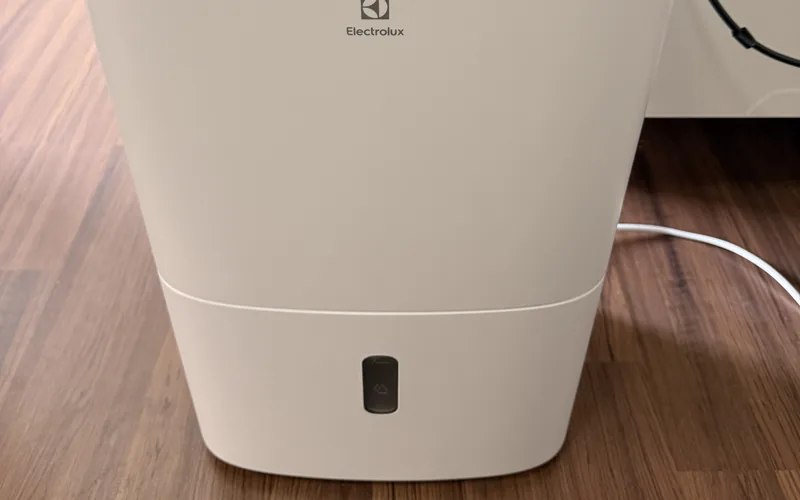
The unit behind all of that is an Electrolux UltimateHome 300 (EDH10TRBW1), rated at 10 litres a day. I paid approximately ฿9,000 (about US$285) for it at the time, from Power Buy at Central Festival Chiang Mai. That was what it cost me then rather than a price to rely on now, and the dollar figure is only a rough conversion.
My condo is roughly 42 square metres, which is also the room coverage Electrolux states for the model. That is worth knowing when you weigh my experience against your own place, because it means I am running the unit at the top of what it is rated for rather than with room to spare. Everything I have said about humidity, sleep and how quickly clothes dry comes from this machine in this condo, so treat it as one person’s setup rather than a recommendation.
Signs your space is too humid
The clearest signs are laundry that will not dry and condensation on hard surfaces. In a Chiang Mai condo, the things worth watching for are:
- Towels and clothes hung indoors taking more than 12 hours to dry.
- Condensation on windows or tiled surfaces in the morning.
- A faint musty smell you cannot trace to anything in particular.
- Mould in bathroom grout, on window frames or in floor-level corners.
- Leather goods, books or electronics showing visible signs of moisture damage.
- Wooden fixtures such as teak doors swelling and becoming stiff to close.
High humidity works through some materials quickly. Leather bags and shoes are usually the first casualties, and mould can take hold within a few days once humidity is sitting above 70 per cent.
A single symptom on its own does not mean much. Two or more, consistently, and the moisture in your space is staying above the comfortable range.
What comfortable indoor humidity actually means
Comfortable indoor air holds somewhere between 30 and 50 per cent of the moisture it could hold at that temperature. That measurement is relative humidity — usually shortened to RH and shown as a percentage.
The 30 to 50 per cent band is the range widely recommended for indoor comfort and health, and it turns up consistently across modern building and health guidance. It is best treated as a practical target rather than a precise threshold.
| Relative humidity | What it means indoors |
|---|---|
| 30% to 50% | The range widely recommended for comfort and health. |
| Above 65% | Air feels noticeably sticky; condensation forms on cool surfaces. |
| Above 70% | The point where mould germinates readily on walls and leather. |
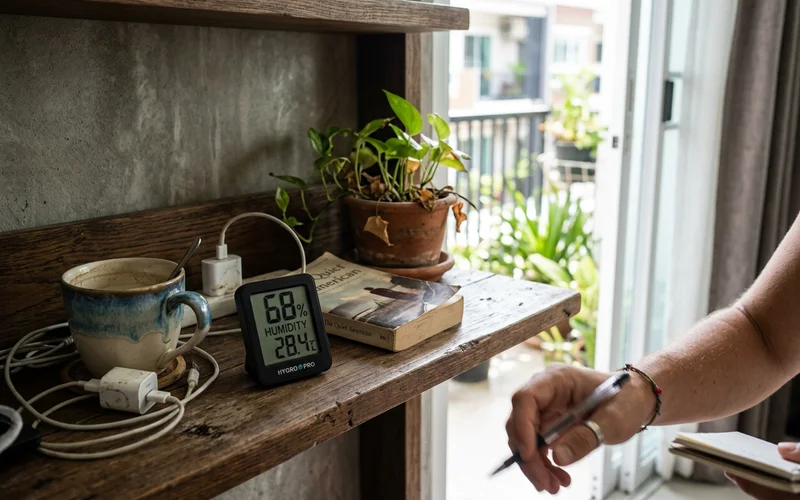
Buy a basic digital hygrometer before you buy anything else. Xiaomi and similar brands sell reliable models on Shopee for under 300 baht. Without a meter you are going on how the air feels, which is very hard to judge accurately.
When a dehumidifier actually helps
A dehumidifier earns its place if your hygrometer regularly reads above 60 to 65 per cent. It pulls moisture out of the air without chilling the room, so your space stays dry even when the cooling compressor has stopped.
The situations where these units are genuinely useful:
- You are living in Northern Thailand through the full wet season rather than passing through.
- Your condo has limited natural ventilation and stays sticky despite regular cooling.
- You work from home and spend most of the day indoors.
- Mould keeps reappearing on leather goods or walls despite regular cleaning.
You are less likely to need one if your rooms sit comfortably below 60 per cent on their own, or if your air conditioning already handles the moisture well enough. A short stay weakens the case too, though your hygrometer is a better guide than the calendar.
What to look for when choosing one
Three things decide whether a unit suits your space: how much moisture it extracts, how it gets rid of the water, and what it costs to run.
Capacity is measured in litres per day. For a typical one-bedroom condo of 30 to 50 square metres, a unit rated at 10 to 12 litres a day is usually sufficient. Larger spaces need more extraction capacity.
Drainage is the detail most people overlook. Most portable units collect the extracted water in an internal tank you have to empty by hand. A unit with a continuous drainage hose, run to a bathroom drain, is far less trouble over a long wet season.
Noise matters because these machines run an internal compressor — roughly the sound of a quiet fridge. Check the decibel rating carefully if it is going in the bedroom overnight.
Running costs come down to the wattage and to how your building bills you. Metered residential electricity in Thailand works out at roughly 4 baht per unit, but plenty of landlords charge a flat 7 or 8 baht instead, which changes the sums considerably. Our guide to deposits, utilities and landlord costs explains that difference.
Fan speeds are worth having. Multiple settings let you run the machine quietly at night and harder after a wet afternoon.
Air conditioning and dehumidifiers do different jobs
An air conditioner lowers the temperature of the room. A dehumidifier extracts moisture from the air. They do entirely different jobs and neither replaces the other, which is why the best setup through the wettest months is usually both: the air conditioning holding a comfortable temperature while the dehumidifier deals with the moisture left behind.
| Air conditioning | Dehumidifier |
|---|---|
| Optimised to lower room temperature. | Optimised to extract moisture from the air. |
| Compressor stops when the target temperature is reached. | Compressor runs until the target humidity is reached. |
Drier air also feels different on the skin, which is why many people find they can set the air conditioning slightly warmer once the humidity is under control. Turning the thermostat down is not the same thing as controlling moisture. If your air conditioning cycles off frequently and the stickiness climbs back between cycles, no amount of thermostat adjustment will fix it.
How much electricity does a dehumidifier use?
The Electrolux dehumidifier’s rating plate carries two figures worth knowing: a power input of 181 W measured at 26.7°C and 60 per cent humidity, and a higher rated input of roughly a quarter of a kilowatt. Working from the measured 181 W, continuous running comes out like this.
| Running time | Electricity used | Cost in baht | Cost in USD |
|---|---|---|---|
| 8 hours | 1.45 kWh | 6 baht | $0.18 |
| 12 hours | 2.17 kWh | 9 baht | $0.27 |
| 24 hours | 4.34 kWh | 18 baht | $0.55 |
| 8 hours a night for a month | 43.4 kWh | 181 baht | $5.50 |
Those costs use 4.16 baht per unit, the rate for the 201 to 400 unit band in the residential tariff structure that took effect with September 2026 bills, before VAT. Below 200 units a month the rate is capped lower, and a building that bills its own flat rate changes the sums more than the machine does. Dollar figures are converted at about 33 baht to the dollar.
Treat all of it as a sense of scale rather than a forecast. The 181 W on the label was measured in gentler air than a Chiang Mai August, so the draw climbs as the air gets wetter, and a full 24 hours of unbroken running is unusual in any case because the compressor stops once the target humidity is reached.
A quarter of a kilowatt is also well below the instantaneous draw of most residential air conditioners, which is what makes running both together less extravagant than it sounds. What you actually save depends on your air conditioner, the room, the temperature you set and how long each machine runs, so any single figure would be invented.
In my own condo the change showed up in what runs rather than in any number on a bill. With the humidity under control I barely use the daytime air conditioning, and overnight the bedroom air conditioning and the dehumidifier work together, with the room staying comfortable until morning. Taking the moisture out does not do the cooling for you, but it can lower how much cooling you need before a room feels comfortable.
Making the call for your condo
It comes down to how your own rooms behave, and to a lesser extent how long you are staying. A well-sealed modern high-rise in Nimman is a completely different environment from an older Santitham shophouse with air moving through it, so measuring your own rooms is the only way to know for sure. If you have recently moved into a Chiang Mai condo, another basic thing worth sorting out early is your drinking water setup.
Get the hygrometer first, before any larger purchase, and watch it through a wet week. A short stay narrows the window enough that you may be able to live with it, but let the readings decide rather than the calendar. If you are consistently above 70 per cent despite running the air conditioning normally, buy the dehumidifier — the answer in that case is a clear yes.
People who do tend to report that the difference is bigger than they expected. Taking the moisture out improves everyday physical comfort as much as it reduces the risk of mould, and it protects the clothes, shoes and electronics that quietly suffer through every rainy season.
If smoke rather than damp is your concern, our guides to choosing an air purifier and sealing your room cover the other half of indoor air in Chiang Mai.
Stay updated
Get the Chiang Mai Brief
Useful local updates, new guides, openings and practical information for living in or visiting Chiang Mai.