Everyday Living
Can You Drink the Tap Water in Chiang Mai?
A practical guide to drinking water in Chiang Mai — why tap water isn't recommended for drinking, what it is safe for, and how residents actually manage their water day to day.
7 min read
Is Chiang Mai Tap Water Safe?
One of the first practical questions newcomers ask is whether Chiang Mai tap water is safe to drink.
The Provincial Waterworks Authority (PWA) says water produced at its treatment plants meets drinking-water quality criteria based on World Health Organization standards. Raw water from the Ping River is treated at municipal plants before it enters the network. That plant-level standard is the usual baseline for treated municipal water in Thailand.
The practical concern is what happens after that. As water travels through city pipes, building plumbing and rooftop storage tanks, sediment, rust or bacteria can be introduced before it reaches your faucet — especially where plumbing or tanks are poorly maintained.
For that reason, many residents prefer filtered, bottled, delivered or refill water for drinking, particularly when they do not know the condition of a building’s plumbing or tanks. That remains the practical recommendation in this guide.
Here is what the water is actually good for, and the options residents use at home.
Water Safety After Treatment in Thailand
In Thailand, as in many places, water safety at the tap is not only about what leaves the treatment plant. The more local question in Chiang Mai is whether drinking water still looks and tastes acceptable after it has sat in a building’s storage tank and travelled through older pipes.
Contamination concerns people raise most often are practical: cloudy water after tank cleaning, a metallic taste after low use, or simply not knowing when the rooftop tank was last maintained. Bacteria and sediment are the usual worries in that setting. That is why so many households treat filtered water or bottled water as their everyday drinking water rather than relying on the faucet alone.
Safe water for drinking, in everyday Chiang Mai terms, usually means water that has been bottled, delivered in large jugs, drawn from a maintained water filtration system, or purchased from a neighbourhood water vending machine. The municipal supply remains the backbone for bathing, washing and cooking with heat.
What Chiang Mai Tap Water Is Fine For
Not everything requires pristine, filtered water. For ordinary household tasks, municipal tap water is widely used without issue.
Hard water is common in the region and may leave mineral spots on glassware, but that is a cleaning inconvenience rather than a health concern for external use.
In a typical residential setting, tap water is widely used for these common activities:
- Showering and bathing daily
- Washing vegetables and produce before cooking
- Boiling for cooking pasta, rice and soups
- Making tea or coffee using a full rolling boil
- Brushing teeth at the sink
Most long-term residents brush their teeth with tap water without any problems. The main practical caution is drinking it cold and direct, or using it in food preparation without sustained high heat, when you are unsure about the building’s plumbing or tanks.
Can You Brush Your Teeth With Tap Water?
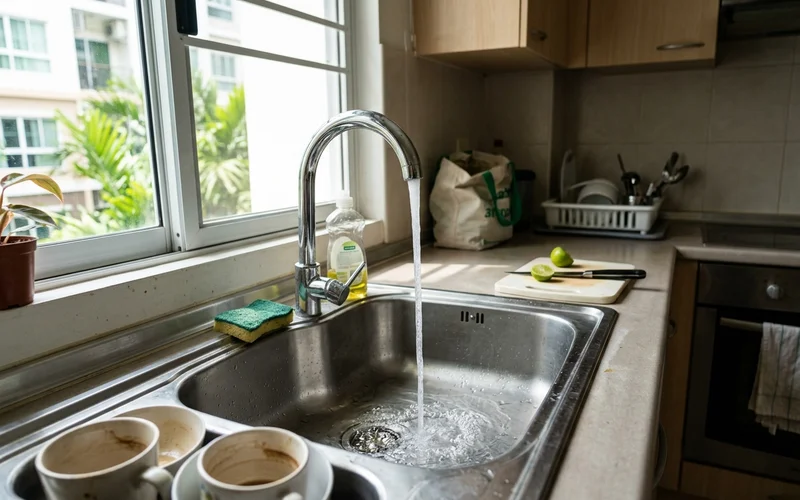
Tap water in Chiang Mai is perfectly safe for brushing your teeth. You are not drinking or swallowing the water, so there is no need to use bottled or filtered water to brush your teeth. I use tap water for brushing my teeth and see no practical reason to do otherwise.
The same applies to cooking rice. Using Chiang Mai tap water to cook rice is perfectly fine. The water is brought to boiling temperature during cooking, so buying bottled water just to cook rice is unnecessary. Save your bottled or filtered water for drinking and use tap water for everyday tasks such as brushing your teeth, cooking rice, showering and washing dishes.
Does Boiling Tap Water Help?
If biological pathogens are your primary concern, bringing water to a rolling boil for one minute can kill harmful microorganisms. A one-minute rolling boil is also a common emergency way to reduce bacteria when you have no bottled or filtered option available.
There is an important limitation, though. Boiling does not remove chemical contaminants such as heavy metals.
“Boiling can kill harmful microorganisms, but it does not remove chemical contaminants such as heavy metals.”
Running a kettle repeatedly through the day also uses a surprising amount of electricity. Most residents find dedicated filtration or delivery simpler for regular drinking.
Boiling remains a useful emergency form of water purification when you only need to reduce biological risk for a short period — for example, if your usual bottled water run is delayed or a home filter is offline. It is less practical as a permanent drinking-water strategy in a hot climate where you may want several litres of cool water a day. That is why water filters, reverse osmosis systems and delivered bottles dominate long-term setups in Chiang Mai rather than constant kettle use. For day-to-day drinking water, most people still prefer a cooler source they trust without waiting for a boil every time.
What About Ice in Chiang Mai?
Commercially produced ice is widely used in cafés, restaurants and street stalls and is generally considered a practical choice. Commercial ice factories in Thailand operate under Thai Food and Drug Administration guidelines and Thai GMP 420 requirements for edible ice.
The large tube ice with a hole in the middle often comes from commercial plants rather than a building’s internal plumbing, though that shape alone does not prove source or safety. Standards and handling can still vary between vendors.
Ice made at home in freezer trays from unfiltered tap water is a different matter and carries the same caveats as drinking straight from the faucet.
Drinking Water in Chiang Mai Restaurants and Hotels
Restaurants and cafés in Chiang Mai almost never expect you to drink from the tap. Most places serve bottled water, filtered water from an in-house water filtration system, or water from large dispensers filled with commercial jugs. If you order an iced drink, the liquid is usually prepared from that same purified supply, with commercially produced ice on top.
Hotels follow a similar pattern. Mid-range and higher properties typically provide complimentary bottles in the room, a corridor water dispenser, or both. Boutique hotels and hostels vary more. For short travel stays in Thailand, using the hotel’s bottled or dispensed drinking water is the simplest approach — there is rarely any need to drink from the bathroom faucet.
Street-food stalls and casual restaurants can be less formal, but the habit across Thailand is still to rely on purchased or purified drinking water rather than untreated tap water at the table. If a place feels poorly run, skipping the ice or choosing sealed bottles is a reasonable personal choice.
Drinking Water Options in Chiang Mai
Residents generally rely on four main methods for drinking water. Each balances cost, convenience and plastic waste differently.
These options are what people commonly do instead of drinking directly from the tap. The mix you choose usually depends on how long you are staying, how much drinking water your household uses, and whether you care more about convenience or plastic waste.
Bottled Water in Chiang Mai
When shopping for bottled water in Chiang Mai, you will find 600ml and 1.5L sizes at 7-Eleven, Tops Daily, supermarkets and local shops on almost every corner. Common brands include Aura, Mont Fleur and Namthip, typically costing between 7 and 10 THB for a standard 600ml bottle.
Premium imported waters such as Evian cost significantly more. Some people prefer local mineral water in glass bottles, which often taste cleaner than plastic.
This option works well for your first few days in a new place. It is not a sustainable long-term solution: the cost per litre is high, and disposable plastic builds up quickly.
Bottled water is still the default for travel days, airport runs and the first night in a new rental. Sealed bottles are easy to judge, widely available across Chiang Mai, and familiar if you are moving around Thailand. Many visitors never move beyond small bottles because a short trip does not justify a dispenser or a home filter. Once you are buying multiple bottles every day for a household, though, the cost and waste push most people toward larger jugs, water vending machines or filtered water at home. Keeping a few spare bottles in the fridge remains useful even after you switch to a longer-term drinking-water setup — for guests, overnight travel, or days when a delivery is delayed.
Delivered Bottles and Water Dispensers
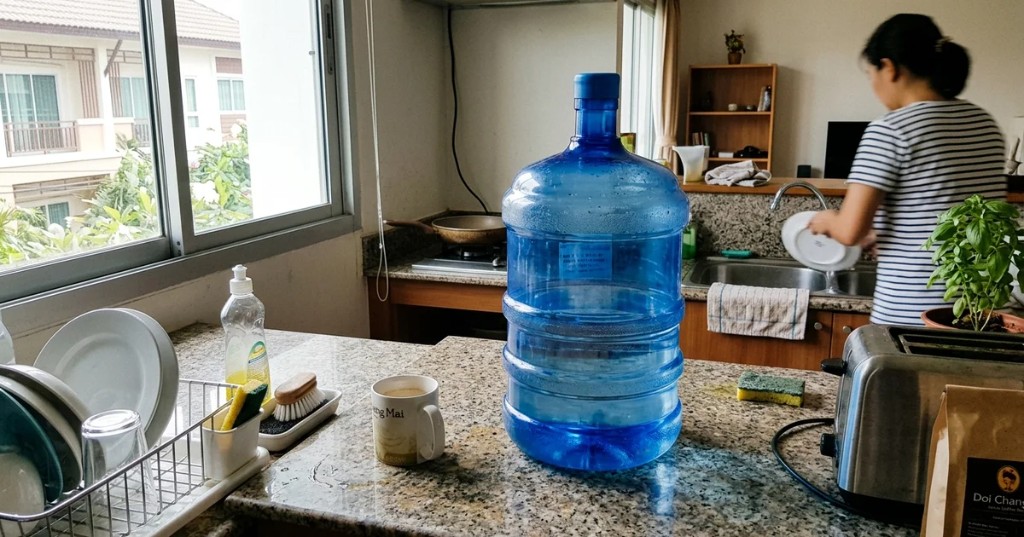
Large reusable jugs are the standard solution for office coolers and many residential condo buildings. Companies deliver the bottles to your door and swap empties for full ones.
Regional suppliers such as Sprinkle are one example, and some offer mobile-app ordering. Ballpark prices are often in the region of 40 to 60 THB per large bottle, though pricing varies by supplier, bottle size, delivery arrangement and any deposit on the container.
It is worth asking building management whether the condo has a preferred supplier with resident discounts. You will need a freestanding dispenser to use these bottles, which usually costs roughly 500 to 1,500 THB new.
Water dispensers matter as much as the bottles themselves. A basic top-loading cooler keeps drinking water available all day without repeated trips to the shop. Some condo common areas already have shared dispensers for residents; others leave you to set one up in the kitchen. Hot-and-cold dispensers are common in offices and family apartments. If you work from home, a dispenser filled with delivered RO water or purified jug water is often the least fussy way to keep safe water within reach.
Water Vending Machines
Automated water refill machines sit outside convenience stores and on quiet side streets across many residential neighbourhoods. Many use multi-stage filtration or reverse osmosis.
Many refill machines charge around 1 THB per litre. A standard two-litre bottle often costs only about 2 THB to fill, which makes this one of the cheapest options for most people.
Inspect the machine’s service sticker before you use it. The water is only as clean as the filters inside, and you must supply your own containers and carry the filled water home.
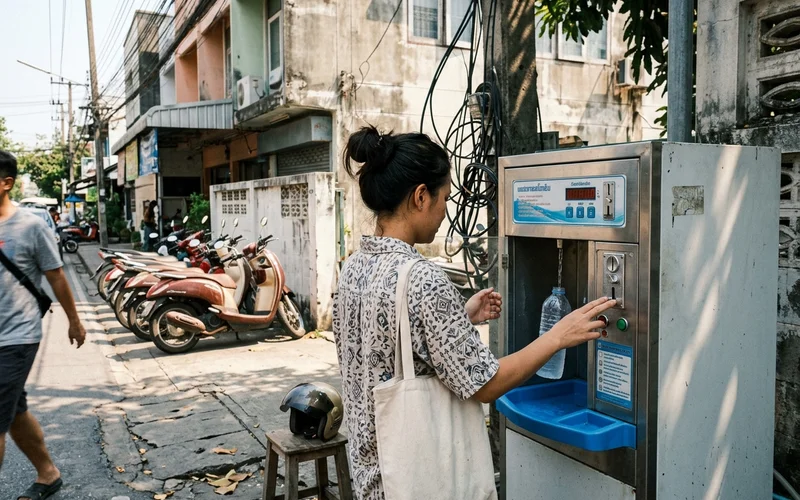
These water vending machines are a normal part of neighbourhood life in Chiang Mai. Locals and long-stay residents refill reusable bottles on foot or by scooter, then store the water at home for drinking and cooking finishes that need cool water. Because the machines are a form of water purification at the point of sale, they sit between bottled water and a private household system: cheaper than sealed retail bottles, more flexible than waiting for a delivery, but dependent on how well that particular machine is maintained. Checking the filter-service date and choosing a busy, well-kept unit is part of using them sensibly.
Using Water Filters at Home
A dedicated 5-stage reverse osmosis unit under the kitchen sink is the most convenient long-term setup. Properly maintained, it can remove sediment, heavy metals, chlorine and biological contaminants and give you filtered water on demand.
Major retailers such as HomePro and Mega Home sell complete residential kits starting around 4,000 THB. Installation may be included with some systems, while others charge separately.
Maintenance costs and filter-replacement schedules vary by system. For long-term residents, a home filtration system can become an economical option compared with relying on small disposable bottles.
RO Water and Reverse Osmosis Systems
Household water filters come in more than one form. Pitcher filters and faucet-mounted cartridges are a light step up from untreated tap water, but reverse osmosis — often called RO water when people talk about the result — is the system most associated with everyday drinking water in Chiang Mai condos. An RO setup typically combines sediment filtration, carbon filtration and a reverse-osmosis membrane.
Water purification at household scale is not set-and-forget. Filters clog and membranes age, so cartridge changes are part of the cost of safe water. Compared with endless small bottles, a working water filter is usually the cleanest long-term source of drinking water for a settled household.
Drinking Water Options Compared
| Option | Approx. cost per litre | Convenience | Plastic waste |
|---|---|---|---|
| Small bottles (convenience store) | 10-20 THB | High | High |
| Large 19L delivered | 2-4 THB | Medium | Low |
| Refill machine | ~1 THB | Medium (you carry) | Very low |
| Home RO filter | Under 1 THB (amortised) | High (on-tap) | None |
Upfront equipment costs look higher, but the running cost of filtration or refill usually drops quickly compared with living on small disposable bottles.
Visitors and Long-Term Residents
How you handle drinking water in Chiang Mai depends heavily on whether you are travelling through or settling in.
Drinking Water for Visitors to Chiang Mai
Short-stay visitors usually rely on bottled water from shops, hotel bottles and restaurant service. That covers water safety for a week or two without any setup. Brushing your teeth with tap water or with a spare bottle is a personal call for the first few days.
Drinking Water for Long-Term Residents
Longer stays change the maths. Once you have a condo kitchen, daily small bottles become expensive and wasteful. Delivered jugs with a water dispenser, neighbourhood water vending machines, or a reverse-osmosis filter become the normal path to reliable drinking water. Many local residents also use bottled, delivered or filtered water for drinking even when they use tap water for washing and brushing.
If you are comparing Chiang Mai with other parts of Thailand, the pattern is familiar: municipal treatment at the plant, caution about building plumbing, and a strong everyday market for purified drinking water. People who travel elsewhere in Thailand usually find the same practical preference for bottled, delivered or filtered drinking water rather than untreated tap water.
Plastic Waste From Bottled Water in Thailand
Thailand processes millions of tons of plastic waste annually, and a household relying heavily on small plastic bottles can go through dozens of bottles each month.
Large delivered bottles, neighbourhood refill machines and under-sink filters all cut that footprint substantially.
A refill machine is the fastest low-waste option if you are setting up a short stay. A permanent home filter remains the cleanest long-term choice for most residences.
Getting Your Drinking Water Sorted When You Arrive
Sorting drinking water should be one of the first practical jobs when you move into a new place. Most people prefer not to drink tap water straight from the faucet. Buy a few larger bottles from a convenience store in the first week while you decide on a longer-term arrangement — especially useful if you arrive in the hot season, when you will be drinking more than usual.
Ask your condo juristic office or landlord whether the building already provides a shared dispenser or an integrated filtration system. It is also worth walking the neighbourhood to find the nearest refill machine. If you are settling into a condo during the wetter months, indoor humidity is another issue worth paying attention to.
Families often prefer scheduled 19L bottle deliveries. Longer-stay residents frequently switch to a permanent home filter once they settle in.
For the wider practical picture of settling in, start with our Living in Chiang Mai section. For how electricity and water charges usually work in rentals, see deposits, utilities and landlord costs.
Stay updated
Get the Chiang Mai Brief
Useful local updates, new guides, openings and practical information for living in or visiting Chiang Mai.