
Accommodation & Renting
Deposits, Utilities & Landlord Costs in Chiang Mai
Demystify Chiang Mai rental deposits and the government-vs-landlord utility rate issue — standard terms, disputes and how to protect yourself.
5 min read
By Daniel Calleja, founder of The Chiang Mai Brief and Chiang Mai resident.
The two things that cost people money
Rental disputes in Chiang Mai almost always come down to one of two issues: a deposit that didn’t come back, or an electricity bill three times higher than expected.
Both are entirely avoidable, and both are avoided at the same moment — before you sign. This guide sits under our renting hub and covers what to ask, what’s normal, and what to do when something goes wrong.
Deposits: what’s standard
| Rental type | Typical deposit | Paid alongside |
|---|---|---|
| 12-month lease | 2 months’ rent | 1 month advance |
| 6-month lease | 1–2 months’ rent | 1 month advance |
| Monthly | 0–1 month | 1 month advance |
So a 15,000 THB flat on a yearly lease needs 45,000 THB on day one. That’s the number to have ready, and it’s the reason a Thai bank account matters early.
The deposit exists to cover damage and unpaid bills, not normal wear. In practice, what’s “normal wear” is decided by whoever has evidence.
The move-in record
This is the single highest-value twenty minutes in the whole rental process.
On the day you get the keys, before you move anything in:
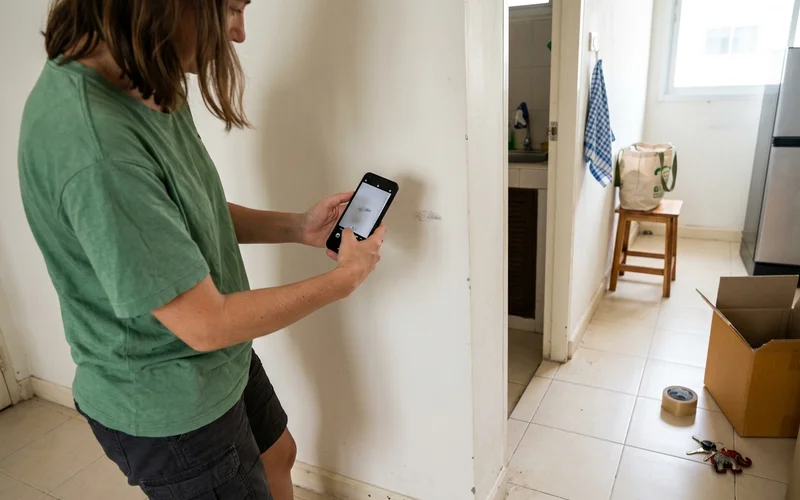
- Photograph every room, wall, floor and ceiling.
- Close-up every existing mark, scratch, stain, chip and burn.
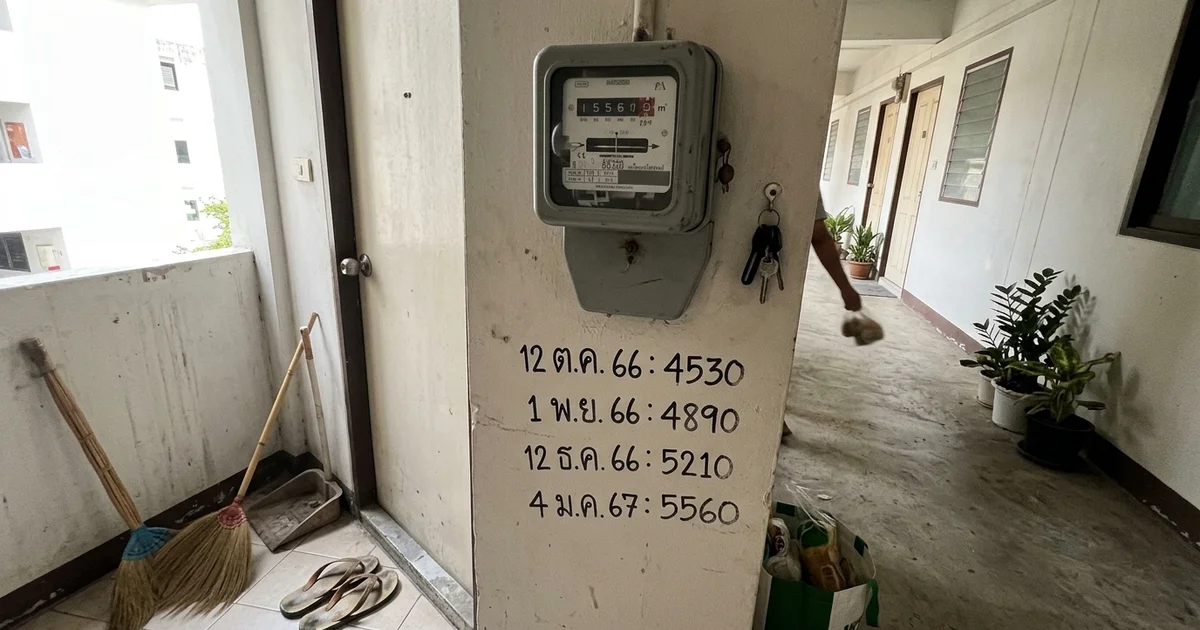
- Photograph the meter readings for electricity and water.
- Test and film anything that doesn’t work — a socket, a tap, a window latch.
- Email or message the whole set to the landlord the same day, with a short note.
That message is your evidence. It costs nothing and it resolves virtually every deposit argument before it starts.
The electricity markup
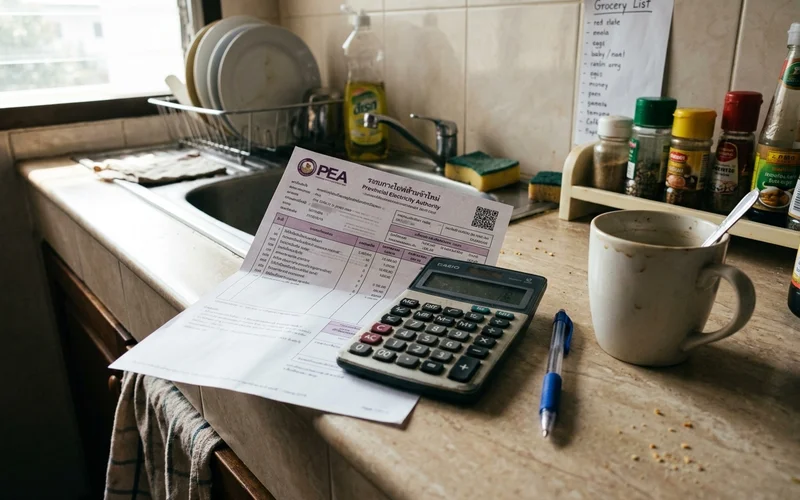
Thailand’s Provincial Electricity Authority charges a regulated per-unit rate, currently in the region of 4–5 THB depending on consumption tier. Many condo landlords bill tenants at their own rate instead — 6, 7, sometimes 8 THB a unit.
It’s legal in the sense that it’s contractual, and it’s extremely common. What’s not acceptable is a landlord who refuses to tell you the rate before you sign.
Why it matters: a typical air-conditioned one-bedroom in hot season can consume 400–700 units a month. At the government rate that’s roughly 2,000–3,000 THB. At 8 THB a unit it’s 3,200–5,600 THB. Across March, April and May the difference is real money.
Ask for the per-unit rate in writing, before signing. A landlord who answers straight away is telling you something good about how they’ll handle everything else too. Our guide to renting a condo has the full list of pre-signing questions.
Other charges to check
- Water. Usually cheap and metered, sometimes a flat monthly charge.
- Common-area fee. Some buildings charge tenants a monthly maintenance fee; many roll it into rent.
- Internet. Rarely included. Budget 500–800 THB for fibre.
- Cleaning and aircon servicing. Confirm who pays. Aircon servicing twice a year is normal and someone has to fund it.
- Parking. Usually free for scooters, sometimes charged for cars.
Your water bill is separate from how you handle drinking water at home, with most residents using filtered, refilled or delivered water.
Getting the deposit back
Three things decide this:
Notice. Give the exact period the contract states, in writing. Verbal notice to a landlord who later doesn’t remember it is worth nothing.
Condition. Clean the unit properly, including the aircon filters and the fridge. Fix anything you broke.
Handover. Do a joint walkthrough with the landlord present, take final meter photographs, and settle outstanding bills there and then.
If a deduction is proposed that you disagree with, ask for it in writing with a reason. Most landlords, faced with a documented move-in record and a calm request, drop it. If they don’t, the amounts involved rarely justify formal escalation — which is exactly why the photographs at the start are the real protection.
Stay updated
Get the Chiang Mai Brief
Useful local updates, new guides, openings and practical information for living in or visiting Chiang Mai.