
Guides
Chiang Mai Rainy Season 2027: Weather, Months and What to Expect
Chiang Mai rainy season guide: when the rainy months start and end, Chiang Mai rainfall, humidity, flooding, daily weather and what to pack.
22 min read
By Daniel Calleja, founder of The Chiang Mai Brief and Chiang Mai resident.
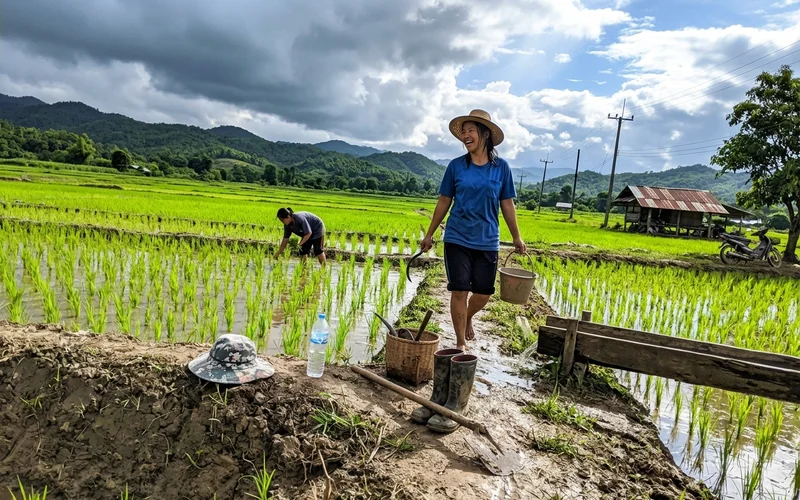
The rainy season in Chiang Mai runs from roughly May to October, with the heaviest rain falling in August and September. It does not rain all day, every day. On a typical rainy-season day, the morning is dry and often bright, clouds build over the mountains after lunch, and a heavy downpour arrives in the afternoon or evening, usually lasting an hour or two before the sky clears again. Some days bring no rain at all, and some weeks, especially in August and September, bring several days of persistent monsoon rain in a row.
This guide is updated in October 2026 for travelers and residents planning ahead for the Chiang Mai rainy season 2027. It is built on long-term climate data from the Thai Meteorological Department and documented recent seasons, because that is the only honest baseline: nobody can responsibly forecast specific 2027 weather this far out, and this article does not pretend to. What it can do is explain what the season is actually like, month by month, so you can plan around realistic expectations rather than guesswork.
Chiang Mai Rainy Season at a Glance
| Question | Short answer |
|---|---|
| When is it? | Roughly May to October; the Thai Meteorological Department officially dates it mid-May to mid-October |
| Wettest months | August and September, each averaging roughly 200 to 235 mm of rain |
| Does it rain all day? | Rarely. Short, heavy afternoon or evening storms are the norm; prolonged wet spells happen mainly in August and September |
| Temperatures | Daytime highs around 32 to 35 °C, nights around 22 to 24 °C |
| Humidity | High, peaking around 80 percent in August and September |
| Air quality | The cleanest of the year; rain clears the smoke season haze |
| Crowds and prices | The quietest and cheapest time of year for accommodation |
| Main risks | Flooding in September and October, slippery roads, mosquitoes, muddy trails |
The rest of this guide to the Chiang Mai rainy season unpacks each of these, with the detail that actually matters for planning.
When Is the Rainy Season in Chiang Mai?
The Thai Meteorological Department defines the rainy season for upper Thailand as the period of the southwest monsoon, officially running from around mid-May to around mid-October. Rather than using fixed calendar dates, the department declares the actual start each year once specific conditions are met: rain covering more than 60 percent of upper Thailand, lower-level winds established from the southwest and upper-level winds turning easterly. In 2026, the declaration came on May 15, and the season was expected to run until about mid-October.
In everyday speech, the wet season, the monsoon season and the rainy season all mean the same thing here, and the same southwest monsoon covers Chiang Rai, Lampang, Mae Hong Son and the rest of the north as part of the wider Southeast Asian monsoon. For practical planning, think of it this way:
- May is a transitional month. The hot season is ending, humidity climbs and the first proper storms arrive. Some years the rain starts seriously in May; other years stay mostly dry into June.
- June to September is the core of the wet season, with August and September the wettest months.
- October is transitional again. Rainfall roughly halves compared with September, and by late October many years are already drying out toward the cool season, which the Thai Meteorological Department officially calls winter.
If you are planning for 2027, the exact onset and withdrawal dates for that year will only be announced by the Thai Meteorological Department as they happen, typically in May and October. Long-range forecasts cannot reliably pin down the timing months ahead, which is why the long-term averages below are the right planning tool.
Does It Rain All Day in Chiang Mai?
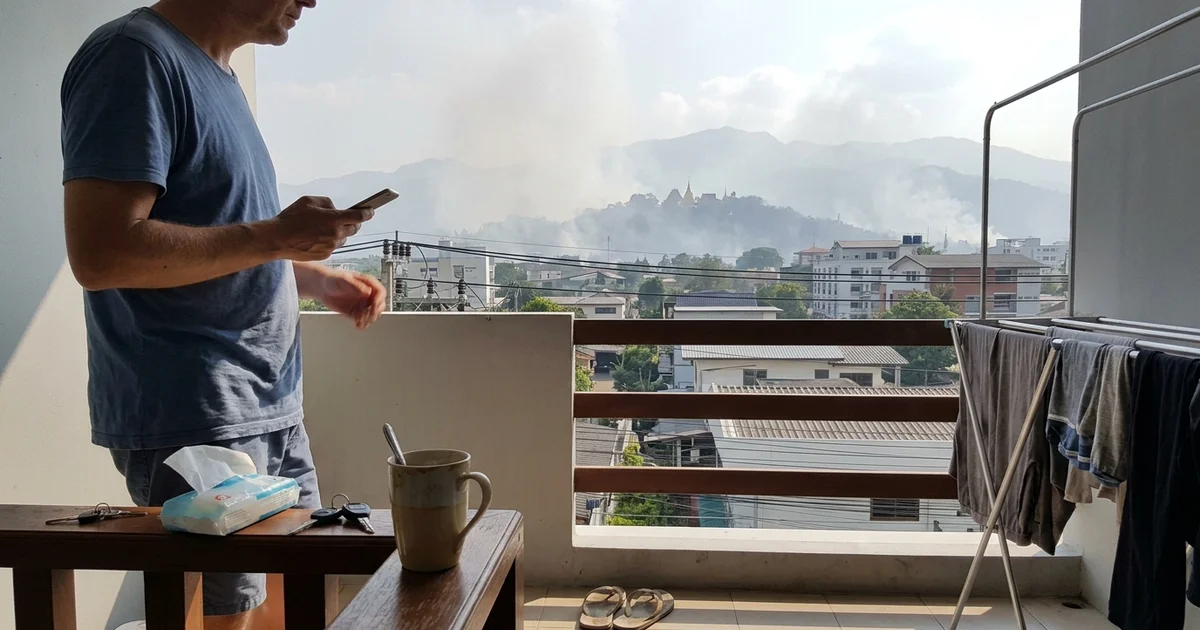
No, and this is the single biggest misconception about the Chiang Mai rainy season. Continuous all-day rain is the exception, not the rule.
The most common daily pattern looks like this: a dry, warm, often sunny morning; cloud building over Doi Suthep and the surrounding foothills from late morning; a heavy shower or thunderstorm in the afternoon or early evening, typically lasting one to two hours; then clearing skies, sometimes with a dramatic sunset. Many days follow this pattern loosely, plenty of days see no rain at all, and the timing is not reliable enough to schedule around to the hour.
Two important qualifications. First, when a monsoon trough settles over northern Thailand, or the remnants of a tropical storm drift in from the South China Sea, it can rain steadily for a day or more at a time. These prolonged wet spells are most likely in August and September, which is exactly when the monthly rainfall totals peak. Second, conditions vary with topography: the mountains around Doi Suthep, Doi Inthanon and the Mae Rim foothills catch more rain than the city centre, and a storm can drench one side of town and miss the other entirely.
So the honest answer is: expect rain most days in some form during the wettest months, expect it in bursts rather than all day, and keep one indoor backup plan for each day of outdoor sightseeing.
Chiang Mai Rainy Season Month by Month
How does the Chiang Mai rainy season actually unfold across its six months? The table below shows long-term averages for Chiang Mai city, drawn from Thai Meteorological Department station-based climate normals (1991 to 2020). These are averages, not forecasts: individual years regularly come in wetter or drier, and the mountains run a few degrees cooler than the city. Humidity is described qualitatively, because daily values swing widely and false precision helps nobody.
| Month | Low / High °C | Rainfall | Rain days | Humidity | What to expect |
|---|---|---|---|---|---|
| May | 24 / 35 | ~170 mm | ~15 | Rising | Hot season ending; first real storms clear the smoke |
| June | 24 / 33 | ~115 to 135 mm | ~16 | High | Settled wet-season rhythm; landscapes greening fast |
| July | 24 / 32 | ~155 to 160 mm | ~18 to 20 | High | Regular afternoon downpours; rice planting in the valleys |
| August | 24 / 32 | ~225 mm | ~21 | Very high | One of the two wettest months; waterfalls at full power |
| September | 23 / 32 | ~200 to 235 mm | ~17 to 18 | Very high | Peak monsoon; highest flood risk begins |
| October | 22 / 32 | ~120 to 130 mm | ~12 | Easing | Rain tapers off late month; shoulder-season value |
May: The Season Arrives
May still feels like the hot season for the first couple of weeks, with highs around 35 °C, but the rains usually arrive in force by mid-month. The first storms are a relief: they end the burning season, wash the haze from the sky and drop temperatures noticeably. Rainfall jumps to around 170 mm for the month, but it comes in intense bursts separated by dry, bright intervals.
June and July: The Settled Rhythm
June and July are the wet season at its most manageable, with real sunshine between storms. Rainfall dips slightly from May, the countryside turns deep green and the daily pattern of dry mornings and afternoon storms is at its most dependable. Rice planting transforms the paddies around the city, and visitor numbers are at their lowest. These are good months for travelers who want the green season with somewhat lower flood risk than August and September.
August: Rain at Its Heaviest
August is one of the two wettest months, averaging around 225 mm of rain with some rain recorded on roughly 21 days. Multi-day wet spells become more likely, and rivers and waterfalls run at full flow. This is also peak green: the rice terraces at places like Pa Pong Piang in Mae Chaem district are at their lushest from August into early October.
September: Peak Monsoon and Flood Season
September brings the year’s most persistent rain and rivals August as the wettest month, and it is when the ground is most saturated. That combination makes September the start of the highest-risk window for flooding along the Ping River and for landslides on mountain roads. It is still very much a usable month, with the same rhythm of storms and clear gaps, but it demands the most flexibility of any rainy-season month.
October: The Way Out
October is the transition back toward the dry season. Rainfall drops to around 120 to 130 mm, the dry periods between storms lengthen, and by the final week many years feel more like the approaching cool season than the monsoon. October also carries a residual flood risk early in the month if September has been heavy, since swollen rivers lag behind the rain. For budget-conscious travelers, late October is one of the best-value windows of the year: low-season prices, green scenery and rapidly improving weather.
What Is the Wettest Month in Chiang Mai?
August and September are the two wettest months, and climate datasets do not fully agree on which takes the top spot. Thai Meteorological Department station-based normals put August at around 220 to 225 mm; other widely used datasets place September slightly higher, at around 235 mm. The practical takeaway is simple: treat August and September as equally wet on average, expect the year’s heaviest and most persistent rain in that window, and treat September into early October as the peak flood-risk period.
Temperature and Humidity During Rainy Season
Rainy-season temperatures are moderate by Chiang Mai standards. Daytime highs average 32 to 33 °C through the core of the season, with May hotter at around 35 °C before the rains fully establish. Nights stay warm at 22 to 24 °C. The cloud cover and rain keep the wet months noticeably cooler than the scorching hot season of March to May.
Humidity is the bigger story. Relative humidity climbs from around 70 percent in May to roughly 80 percent in August and September, the highest levels of the year. The practical issue is often the humidity rather than the rain itself: clothes dry slowly, towels stay damp, leather goods and camera gear can grow mould if left in closed rooms, and unventilated spaces feel heavy. Air conditioning handles comfort, but a dehumidifier or the dry mode on an air conditioner is what actually protects a wardrobe and electronics over a longer stay. This is one of the biggest adjustments for people living through their first full wet season, and we will cover it in more depth in a dedicated rainy-season humidity guide.
Air Quality: The Cleanest Months of the Year
One genuine advantage of the Chiang Mai rainy season is the air. Every storm washes particulate matter out of the atmosphere, agricultural burning stops almost entirely once fields are wet, and the smoke season air pollution and haze that chokes the north from February to April is gone. Rainy-season AQI readings in Chiang Mai are routinely in the good to moderate range, the best air quality the city sees all year. If clean air matters to you, June to October is the reliable window, and October in particular combines clean air with easing rain.
Does Chiang Mai Flood During Rainy Season?

Flooding deserves a calm, precise explanation, because the word covers very different situations.
Temporary street flooding is a common phenomenon of the wet season. A heavy downpour can overwhelm drains and put a few centimetres of water on low-lying roads for an hour or two before it clears. It is an inconvenience, not a disaster, and it happens somewhere in the city most wet seasons.
River flooding is a different matter. The Ping River runs through the city, and when sustained heavy rain falls across its upstream catchment, sometimes fed by the remnants of tropical cyclones, the river can overtop its banks days later. Risk is geographically uneven: exposure is concentrated in low-lying areas along the river, including parts of the Night Bazaar and riverside neighbourhoods, while most of the city sits safely above flood levels.
Major floods are not an annual occurrence, but they are not rare either. In early October 2024, the Ping River recorded its highest level in about 50 years, peaking at around 5.30 metres above the benchmark on October 5 and putting tourist areas including the Night Bazaar and Tha Phae Gate under up to a metre of water for days. Serious flooding also struck in October 2022. Both events happened at the same point in the calendar: late in the season, after months of rain had saturated the catchment. Chiang Mai’s history with the river is long; Wiang Kum Kam, the ancient settlement just south of the modern city, was repeatedly flooded by the Ping in past centuries.
The practical guidance: if you visit in September or early October, choose accommodation away from the riverside lowlands if flooding would seriously disrupt your plans, keep an eye on local news and official warnings during wet spells, and treat any single forecast with appropriate scepticism. If you live in Chiang Mai, flood exposure is worth checking before signing a lease on any property near the river.
Getting Around and Motorbike Safety in the Rain
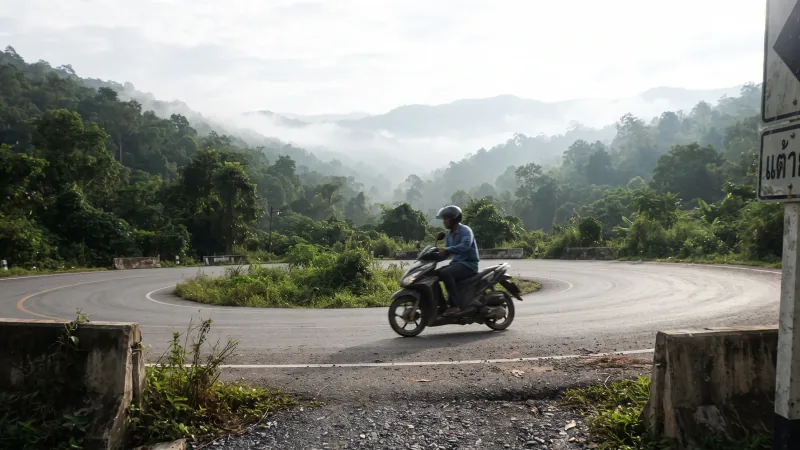
Rain changes the road more than it changes the city. Visibility drops in heavy showers, braking distances lengthen, painted road markings and manhole covers turn slick, standing water hides potholes, and rural and mountain roads to places like Doi Suthep, Mae Kampong, Pai and Chiang Dao can carry runoff, debris and occasional landslides after prolonged rain. The first storms of May are statistically among the trickiest, because months of dust and oil lift off the road surface and turn it greasy.
None of this means you cannot ride a motorbike through the Chiang Mai rainy season; residents do it every day. It means the margin for error shrinks, especially for inexperienced riders. Slow down, increase following distance, brake earlier and gentler, avoid leaning on painted lines, pull over and wait out the heaviest downpours rather than pushing through them, and treat mountain routes with extra respect after overnight rain. A poncho that actually covers you and the bike’s seat is worth its modest cost. Riders planning longer wet-season trips should watch for our dedicated rainy-season motorbike safety coverage.
Mosquitoes, Dengue and Other Health Notes
Mosquitoes thrive in the wet months, and in Thailand that is a health consideration, not just an annoyance. Research based on more than a decade of Chiang Mai case data found that mosquito populations climb steeply from the start of the rains in May, and that dengue transmission in the city peaks between June and August, with the highest number of infections typically recorded in August. Nationally, Thailand had recorded around 21,600 dengue cases and 31 deaths by mid-August 2026, according to the Department of Disease Control, a total below 2025 but rising with the rainy season.
Dengue-carrying Aedes mosquitoes bite mainly during the day, particularly in the hours after sunrise and before sunset, so the advice applies around the clock, not just at dusk: use insect repellent, wear covering clothing in the evening, keep accommodation screened or air-conditioned, and tip out standing water around your home or hotel balcony. Leeches appear on forest and jungle trails after rain, which matters more for trekkers than for city visitors. None of this is a reason to avoid the season; it is a reason to pack repellent and use it.
What to Do in Chiang Mai During Rainy Season
Rainy season changes what is worth doing rather than whether anything is. Some experiences genuinely improve; a few become unreliable.
What Gets Better in the Rain
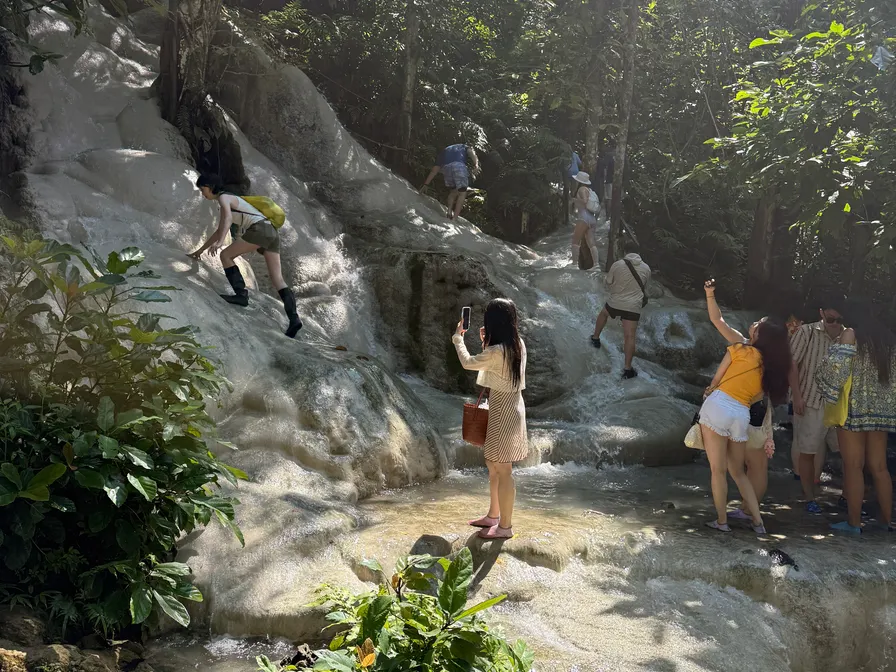
- Waterfalls are the headline act of the wet season. From June onward they run at full power, and by August and September they are at their most impressive. The Bua Tong Sticky Waterfalls, where grippy limestone lets you climb directly up the falls, are at their best with strong flow and make a unique half-day trip, while the falls of Doi Inthanon National Park thunder after rain.
- Green season scenery is the other signature. Rice fields around the city fill with water and young rice, and the terraced fields at Pa Pong Piang, where Karen hill tribe families run simple homestays and bamboo bridges cross the paddies, reach peak green from August to early October before turning gold toward harvest. Mist hangs in the valleys around mountain villages like Mae Kampong, and the whole landscape is at its most lush and beautiful, photographing better than at any other time of year.
- Gardens and parks
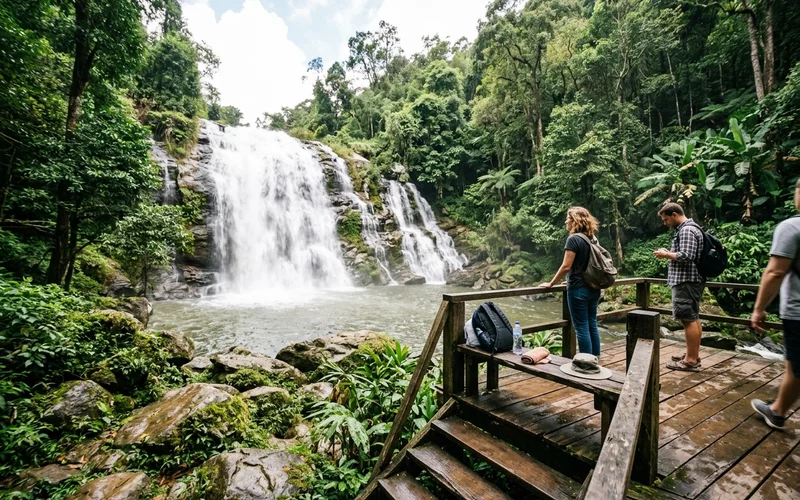
, including the Queen Sirikit Botanical Garden in Mae Rim and Royal Park Rajapruek, are at their lushest.
- Air quality, as covered above, is the best of the year.
- Popular sights are quieter. Temples such as Wat Phra That Doi Suthep, the old city and the markets see a fraction of their high-season crowds.
What Becomes Less Reliable
- Trekking and hiking continue, but trails turn muddy and slippery, leeches come out, and stream crossings run high. Some routes close entirely: the Kew Mae Pan nature trail on Doi Inthanon, one of the most popular walks in the north, closes every year from June 1 to October 31 for forest recovery.
- Mountain views are a lottery. Cloud and mist can hide the summits, from Doi Suthep to Doi Luang Chiang Dao, for days, though the same mist is what gives the season its atmosphere. Check the weather forecast before committing to a viewpoint trip.
- Caves and low-lying attractions can flood or close sections after heavy rain; check weather conditions on the day for places like Chiang Dao Cave.
- Some tours adjust schedules. Rafting and kayaking on the Mae Taeng River actually benefit from higher water, but operators may cancel departures when conditions are unsafe, and outdoor visits to elephant sanctuaries carry on in all weather, mud and all.
Rainy-Day Standbys
For the afternoons when the sky opens: cooking classes, muay thai training, massage and spa sessions, the Lanna Folklife Museum and other museums, the covered sections of Warorot Market, shops and studios selling local handicrafts, specialty coffee shops and a bowl of khao soi, the classic Chiang Mai comfort food for a wet afternoon. Families will find enough indoor options to keep children busy and having fun when the storms roll in. The city has enough indoor depth that a wet afternoon is a change of plan, not a lost day.
Crowds and Prices
The rainy season is Chiang Mai’s low season for tourism, and the difference is obvious on the ground. The old city, night markets and popular day trips all thin out from June onward, bookings are easy to get even at short notice, tour logistics are simpler, and accommodation prices drop to their lowest levels of the year, with hotels and guesthouses offering discounts to fill rooms and fewer tourists in the heart of the old city. Exact savings vary too much by property and month to quote responsibly, but the direction is consistent: the wet months are the cheapest time to stay in Chiang Mai, and September is usually the quietest month of all. Flights and tours follow the same pattern, though deals depend more on booking timing than on the season alone.
Living in Chiang Mai Through the Rainy Season
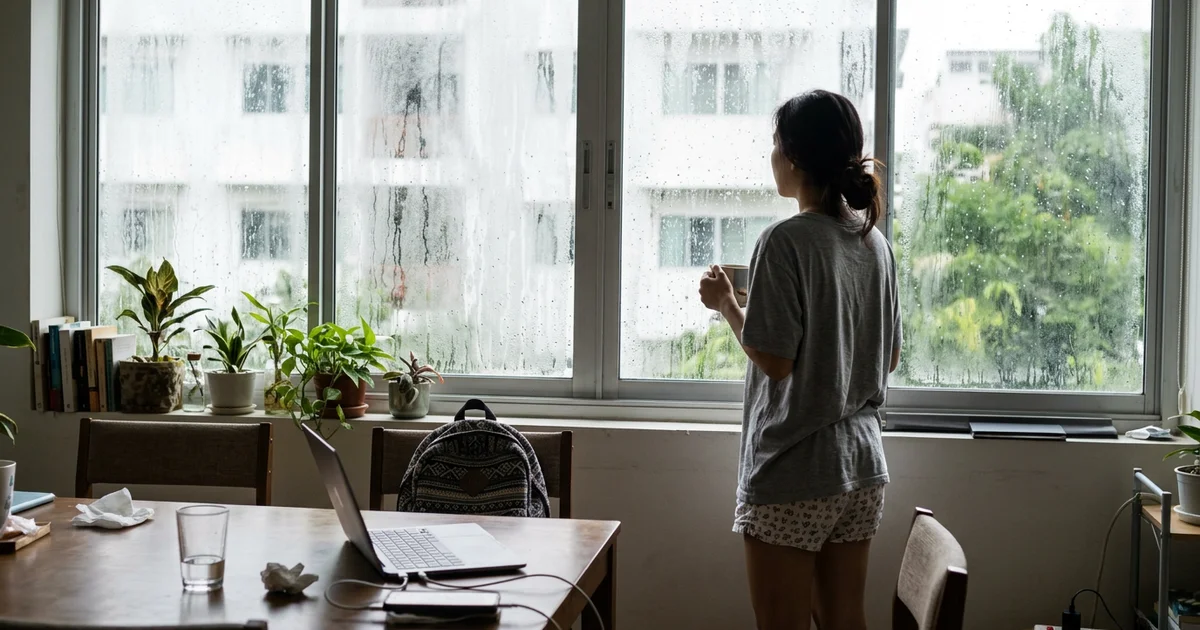
For residents rather than visitors, the wet season is less about itinerary planning and more about daily systems. On many rainy-season days, life runs on a simple rhythm: errands and exercise in the dry morning, indoor work through the afternoon storm, evening out once the streets drain. Motorbike riders keep a poncho under the seat from May onward. Laundry needs planning, because clothes will not dry on a balcony in 80 percent humidity; a drying rack near the air conditioner or a laundromat with dryers becomes part of the routine. Mould management, mosquito control around the house and checking flood maps and historical flood records before choosing a neighbourhood are the other quiet realities of the wet months. Evenings after a storm, when the air cools and the streets dry, are often the most pleasant part of the day. Our Living in Chiang Mai guide covers neighbourhoods and the practical side of settling in, including how the seasons shape daily life across the year.
What Should You Pack for Chiang Mai Rainy Season?
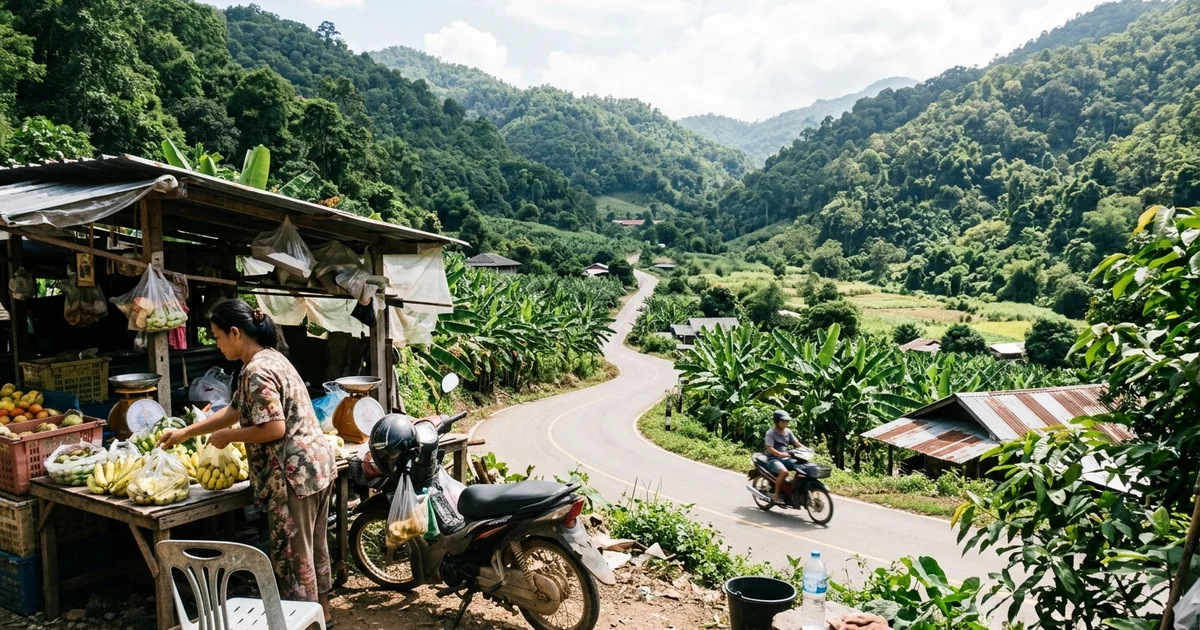
- A compact umbrella and a light, quick-drying rain jacket; heavy waterproofs are too hot for tropical rain.
- Sandals or shoes that tolerate wet streets, plus footwear with grip if you plan any trails.
- Quick-dry clothing throughout your wardrobe; cotton stays damp for days in this humidity.
- A dry bag or waterproof pouch for phone, documents and electronics.
- Insect repellent, and consider a small bottle for day trips.
- A poncho if you will ride a motorbike or bicycle.
- For longer stays: silica gel packs for camera gear and a mould-resistant mindset for anything leather.
Is Chiang Mai Worth Visiting in the Rainy Season?
So, does the Chiang Mai rainy season deserve a place in your plans? Yes, for the right traveler, and with realistic expectations. The case for the wet season is strong: the greenest landscapes of the year, waterfalls at full flow, the cleanest air, the fewest crowds and the lowest prices. However, the case against is equally real: high humidity, daily disruption from storms, genuine flood risk in September and early October, trickier motorbike conditions, more mosquitoes and unreliable mountain views.
The travelers who enjoy the season most are the ones who plan around the rain rather than fight it: outdoor activities in the morning, flexibility in the afternoon, and an indoor backup for every outdoor plan. If your trip depends on guaranteed dry days, long treks or clear summit views, the cool season from November to February suits you better; our broader guide to the best time to visit Chiang Mai compares all three seasons head to head. If you want Chiang Mai at its greenest, quietest and cheapest, the rainy months deliver exactly that. Families tied to July and August school holidays often find the season works better than expected. Skip September if even the possibility of flooding would worry you, and aim for June, July or October instead. The big festivals mostly fall outside the wet months: Loy Krathong and the Yi Peng lantern celebrations usually arrive in November as the rains end, Songkran lands in April before they begin, and Christmas and Chinese New Year sit in the dry season.
Chiang Mai Rainy Season 2027: What We Know So Far
This article was prepared in October 2026, so here is the honest state of knowledge for anyone planning the Chiang Mai rainy season 2027.
What happened in 2026. The Thai Meteorological Department declared the start of the 2026 rainy season on May 15 and forecast nationwide rainfall around 10 percent below the long-term average, with one to two tropical storms expected to affect the country, most likely in August and September. Climate officials also flagged developing El Niño conditions likely to suppress rainfall into early 2027.
What is known about 2027. As of publication, no official 2027 rainy-season forecast exists. The Thai Meteorological Department issues its seasonal outlook and declares the monsoon onset only as the season approaches, typically in May, and that will be the first authoritative word on 2027 timing and expected rainfall. One Thai research house has projected that El Niño conditions early in 2027 could swing toward La Niña later in the year, which would tend to raise flood risk in the second half of the season, but long-range outlooks of that kind carry genuine uncertainty and should not be treated as a forecast.
How to plan anyway. Use the long-term averages in this article as your baseline, because they are the most reliable information available this far out. Then, as your trip approaches, check the Thai Meteorological Department’s seasonal announcements in May 2027 for the official onset declaration and outlook, and follow short-range forecasts and local news in the final weeks, especially for September and October travel when flooding becomes a possibility. This page will be updated as official 2027 information is released.
Frequently Asked Questions
When does the rainy season start and end in Chiang Mai?
Officially, the Thai Meteorological Department dates the rainy season in upper Thailand from around mid-May to around mid-October, declaring the exact dates each year. In traveler terms, May and October are transitional months and June to September is the core wet season.
Does it rain every day during rainy season?
Not every day, and rarely all day. The typical pattern is dry mornings with heavy afternoon or evening storms lasting an hour or two; when it rains, it tends to rain hard. In August and September, multi-day wet spells can occur when a monsoon trough parks over the north.
Is August or September wetter in Chiang Mai?
The truth is that both average roughly 200 to 235 mm of rain, and datasets disagree on which is wettest. Treat them as equally wet; September into early October carries the higher flood risk because the ground is saturated by then.
Is Chiang Mai safe during rainy season?
For most travelers, yes. The real risks are specific and manageable: flooding in low-lying riverside areas in September and October, slippery roads for motorbike riders, landslides on mountain routes after prolonged rain, and dengue, which peaks in the wet months. Sensible precautions cover all four.
Can you trek in Chiang Mai during rainy season?
Yes, with caveats. Trails are muddy, leeches are active and some routes close, including the Kew Mae Pan nature trail on Doi Inthanon, which is closed every year from June 1 to October 31. Guided treks operate through the season and the scenery is at its greenest.
Are hotels cheaper in Chiang Mai during rainy season?
Generally yes. The wet months are the low season, with accommodation at its cheapest and availability easy even at short notice. The size of the discount varies by property, but the direction is consistent.
Is May part of the rainy season in Chiang Mai?
Yes, as a transition month. The rains typically establish during May, often dramatically, ending the burning season and clearing the air. Early May can still feel like the hot season; by late May the wet-season pattern is usually in place.
Final Thoughts
The Chiang Mai rainy season is more usable than its reputation suggests. Rain falls in bursts far more often than in day-long sheets, the air is the cleanest of the year, the countryside turns intensely green and the city slows to its most relaxed and most affordable rhythm. The trade-offs, humidity, mosquitoes, slippery roads and a real flood risk in September and October, are specific and manageable rather than reasons to stay away. Plan around the afternoon storms, keep an eye on the Ping River late in the season, and the wet months might become your favourite time in the north.
Stay updated
Get the Chiang Mai Brief
Useful local updates, new guides, openings and practical information for living in or visiting Chiang Mai.