
Cost of Living
Is Chiang Mai Safe for Tourists? Safety, Scams & Real Risks
Yes, Chiang Mai is generally safe for tourists. The real risks are roads, petty scams and burning-season smoke, not crime. Practical advice for 2026.
11 min read
By Daniel Calleja, founder of The Chiang Mai Brief and Chiang Mai resident.
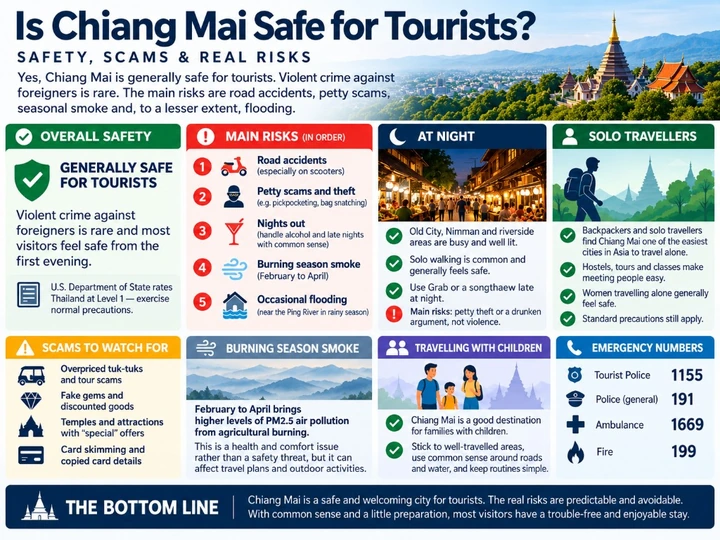
Yes. Chiang Mai is generally safe for tourists, and the honest answer to whether Chiang Mai is safe for visitors has been consistent for years: violent crime against foreigners is rare, and the risks that actually matter are roads, petty scams and seasonal smoke, not personal safety in the street. Most visitors find Chiang Mai feels safe from the first evening. The US Department of State rates Thailand at Level 1, exercise normal precautions, and the higher-caution areas it flags are the far southern provinces and parts of the Cambodian border region, a long way from Chiang Mai.
What hurts tourists in Chiang Mai, in rough order of likelihood, is: road accidents, especially on scooters; minor theft and avoidable scams; nights out handled carelessly; burning season smoke in February to April; and occasional rainy-season flooding near the Ping River. This page takes each of those seriously and skips the generic warnings.
Is Chiang Mai Safe?
By any reasonable measure, yes. The US security bureau’s current country report assesses Chiang Mai as a low-threat location for crime, and crowd-sourced safety rankings point the same way: Numbeo’s 2025 safety index placed Chiang Mai first in Southeast Asia, and its 2026 index still has Chiang Mai 19th worldwide. Treat that as perception data rather than an official statistic, but it matches what visitors consistently report.
The question “is Chiang Mai safe” has a clear answer precisely because the everyday picture is boring: tourists walk around, take songthaews, eat at night markets and come home fine. It is safe to walk almost everywhere visitors go. What keeps Chiang Mai safe for most visitors is not luck; it is that the main dangers are predictable and avoidable, and the sections below deal with each one on its merits.
Chiang Mai Safety: What Tourists Actually Need to Know
Most crime affecting foreigners in Chiang Mai is non-confrontational: pickpocketing in crowded markets, bag snatching, and theft from rooms or unattended bags. Chiang Mai safety, in practice, is less about avoiding dangerous people and more about not creating easy opportunities. Lock your room, keep phones and bags secure in crowds, and be sceptical of strangers bearing special offers.
Tourists in Chiang Mai do not face a unique risk simply for being foreign, and Chiang Mai is no exception to that Thailand-wide pattern. When an isolated case of violence involving a foreigner does make the news, it travels far precisely because it is unusual. The genuinely elevated-risk parts of Thailand are specific districts in the deep south, well over a thousand kilometres away, which advisories warn against visiting; they have no bearing on a Chiang Mai trip. One legal note: some medicines that are routine prescriptions elsewhere are controlled in Thailand, with quantity limits and permits administered by the Thai FDA, so check before you fly.
Is Chiang Mai Safe at Night?
In the areas where visitors actually spend their evenings, yes. The Old City, Nimman and the riverside strips are busy into the evening, well lit on the main streets, and solo walking there after dark is normal and common. The tourist core of Chiang Mai stays safe late into the evening because of simple density: people, open shops and transport stay around late.
Standard urban caution still applies. Avoid deserted lanes after midnight, keep an eye on drinks in bars, and take a Grab or songthaew rather than a long walk through quiet areas late at night. The realistic risk in Chiang Mai after dark is petty theft or a drunken argument, not violence.
Is Chiang Mai Safe for Backpackers and Solo Travellers?
Backpackers, solo travellers and digital nomads all find Chiang Mai one of the easiest cities in Asia to travel alone, and hostels, cooking classes and group tours make meeting people straightforward. Solo travellers generally feel safe in Chiang Mai from day one. The solo-specific risks are mostly social rather than criminal: nights that end with impaired judgement, and the transport choices made afterwards.
The practical habits are ordinary ones. Watch your drinks and your alcohol intake, because British and other official travel advice for Thailand warns that drink spiking does occur in tourist areas, with male and female victims. Use Grab or a marked songthaew for late rides rather than accepting lifts from strangers. Keep your bag zipped in crowds, and tell someone your plans on trekking or waterfall days, because the realistic outdoor risks are trails and river currents, not people.
Is Chiang Mai Safe for Women Travelling Alone?
Women travelling alone in Chiang Mai generally report feeling safe and comfortable, and street harassment is noticeably low-key by regional standards; solo women walking, dining and working from cafes are an unremarkable sight. There is no reliable statistic that singles Chiang Mai out, so this is a practical observation rather than a hard number, but it is a consistent one.
The risks worth planning around are the documented Thailand-wide ones, not anything city-specific. Official guidance warns that drink spiking and drug-assisted assault occur in Thai tourist areas, most often around bars late at night, and that methanol poisoning has been found in spirits and cocktails from unregulated sources; even small amounts can kill. Choose accommodation with secure entry, stick to sealed bottles or reputable venues for drinks, keep your phone charged, and use Grab after dark rather than walking quiet streets alone. The same safety habits that apply anywhere serve well in Chiang Mai.
Are Scams Common in Chiang Mai?
Some, but the everyday versions are mild and avoidable: unmetered songthaew fares, inflated tourist prices and the occasional driver quoting triple the going rate. Agree the price before you get in, and most of the problem disappears. Grab shows the fare upfront, which removes the negotiation entirely.
The structured scams reported in Chiang Mai are mostly rental disputes: a shop holds your passport or cash deposit, then claims new damage on return. Never surrender your passport as rental collateral; photograph any vehicle from every angle before riding off; and treat unsolicited detours to gem or tailor shops as commission runs, which they are. Fake booking and payment links operate online as they do everywhere. The pattern to remember in Chiang Mai is simple: unsolicited deals, upfront payments and anyone who approaches you first deserve scepticism. If a dispute turns serious, the Thai Tourist Police handle exactly this category of complaint.
Is It Safe to Ride a Motorbike in Chiang Mai?
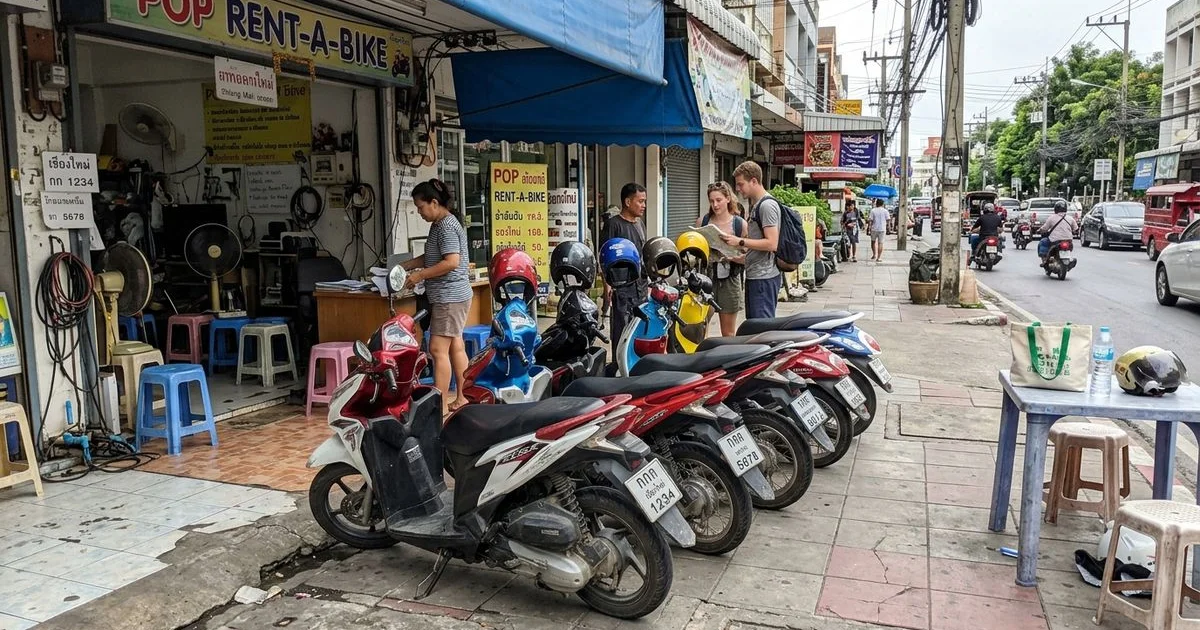
This is the section to take seriously, because riding is statistically the most dangerous thing most tourists do here. Thailand’s road death rate is about 25 per 100,000 people according to the WHO, among the highest in Asia, and motorcyclists account for more than four in five of those deaths. Chiang Mai traffic is calmer than Bangkok’s, but junctions, sudden lane changes and wet-season roads catch inexperienced riders out daily in Chiang Mai, and renting a motorbike without experience is the classic Chiang Mai mistake.
If you do ride: always wear a helmet, ride defensively, and never ride after drinking. Under Thai law helmets are mandatory, and legally a foreign licence alone is not accepted; visitors need an International Driving Permit covering motorcycles, carried with their home licence, and riding without the right licence can invalidate insurance cover, depending on the policy. The site’s scooter rental guide covers the practical side. Plenty of visitors decide the maths does not work and get around on Grab and songthaews instead, which is the safe choice.
Burning Season and Air Quality in Chiang Mai
From roughly February to April, agricultural burning across the north pushes Chiang Mai’s air quality to unhealthy and sometimes hazardous levels, with March usually the worst month. This is a genuine health issue rather than a comfort issue: fine PM2.5 particles penetrate deep into the lungs, and anyone with asthma, heart conditions or pregnancy should plan carefully around the burning season, as should those travelling with young children or older relatives.
The practical response is to check live AQI readings before a spring visit to Chiang Mai, keep windows sealed on bad days, and use a well-fitted N95 outdoors. The site’s air quality and burning season guide covers timing, masks and mitigation in detail. Outside those months the air is generally good, and the smoke should shape when you visit, not whether you visit.
Which Areas of Chiang Mai Are Safest for Tourists?
There is no official crime breakdown by neighbourhood, so nobody can honestly rank one part of Chiang Mai as statistically safer than another. What can be said is practical: the Old City, Nimman, Riverside and the Night Bazaar area are busy and well travelled, with lighting, people and transport around late, they are where the vast majority of visitors stay without incident, and all of them are safe to walk around. The digital nomads who base in Nimman month after month are part of that settled picture.
The more meaningful area differences are not about crime. Riverside properties sit in the flood-prone band near the Ping, which matters in a wet monsoon week; outlying suburbs mean longer, darker rides home in the evening; and the Old City and Nimman put everything within walking distance, which removes transport risk altogether. The site’s Old City neighbourhood guide gives a feel for the most walkable base. Pick a busy, well-lit area that suits your plans, and the safety difference between Chiang Mai’s tourist areas is negligible.
Safety for Families and Kids in Chiang Mai
Chiang Mai is a safe, easy base for family travel: malls, parks and cafes are set up for children, and Thai culture is genuinely warm toward kids. The honest caveats are the same risk hierarchy adults face, sharpened. Traffic is the big one: songthaews and tuk-tuks do not carry child seats, pavements are inconsistent, and children on the back of scooters are a common sight but a real risk.
Smoke season matters more for children, whose lungs are still developing, so spring visits with kids deserve an AQI check before booking. Dengue is present year-round; use repellent, and if a high fever develops, see a doctor and avoid ibuprofen or aspirin until dengue is ruled out. Long-stay visitors, digital nomads with children, and expat families all work around the same considerations, and the site’s international hospitals guide lists the facilities parents should know about.
Emergency Numbers and What to Do If Something Goes Wrong in Chiang Mai
Save these before you need them. Thailand does not use 911; in an emergency, these are the numbers that work:
- Tourist Police: 1155, the 24-hour English-language line for theft, scams, disputes and translation help; the right first call for most tourist problems.
- Police: 191, general emergency dispatch; expect Thai-language operators outside Bangkok.
- Ambulance: 1669, medical emergency dispatch to public hospitals; private hospitals also run their own ambulances.
- Fire: 199.
After any accident or theft, get the official police report slip, because insurers require it. US travellers have a Consulate General in Chiang Mai for passports and citizen services, the embassy in Bangkok covers after-hours consular emergencies, and enrolling in the State Department’s STEP programme is a sensible habit; other nationalities should note their own embassy’s emergency contact. None of this should put anyone off Chiang Mai: the living in Chiang Mai overview shows how routine daily life feels once the basics are covered.
Frequently asked questions
Is Chiang Mai Safer than Bangkok?
On the numbers that exist, yes: Numbeo’s 2025 index placed Chiang Mai safer than the capital on perceived safety, with a crime index roughly half Bangkok’s, though both are perception figures rather than police statistics. In practice, Chiang Mai traffic is calmer, crowds are thinner and the pace is slower, which removes much of the low-level friction visitors notice in Bangkok.
What Should Tourists Be Most Careful About in Chiang Mai?
Scooters, first and last: road accidents injure far more visitors in Chiang Mai than crime ever does. After that, seasonal smoke in February to April, drink handling on evenings out, and the minor discipline of agreeing fares and photographing rentals. Do those things and the rest of the safety picture takes care of itself.
Is Chiang Mai Safe to Visit During the Rainy Season?
For Chiang Mai, yes, with one caveat. Heavy rain from May to October brings temporary street waterlogging and, occasionally, Ping River flooding; the record flood of October 2024 inundated riverside areas, and a major flood barrier upgrade was completed in May 2026 in response. Mountain roads can suffer landslides after storms, so build flexibility into trips to Pai or Doi Inthanon and check forecasts during wet weeks.
Sources
- U.S. Department of State - Thailand Travel Advisory (Level 1, issued July 7, 2026)
- U.S. Department of State, OSAC - Thailand Country Security Report (Chiang Mai assessed low-threat for crime)
- UK FCDO - Thailand safety and security advice (drink spiking, methanol warning, rental passport-collateral warning)
- U.S. Embassy & Consulate in Thailand - Driving in Thailand (licence and International Driving Permit rules)
- U.S. Consulate General Chiang Mai - American citizen services
- World Health Organization, Thailand - Road safety (25.4 deaths per 100,000; motorcyclists 83.8% of road deaths)
- World Health Organization - Ambient (outdoor) air pollution and health (PM2.5)
- Tourist Police Bureau, Royal Thai Police - 24-hour hotline 1155
- Thai FDA - Guidance for travellers carrying personal medications containing narcotic drugs or psychotropics
- Numbeo - South-Eastern Asia Safety Index by City 2025 (Chiang Mai ranked 1st; perception-based, user-contributed data)
- Numbeo - Safety Index by City 2026 (Chiang Mai 19th worldwide; perception-based)
- Chiang Mai CityLife - Ping River flood barrier upgrade completed May 2026
Stay updated
Get the Chiang Mai Brief
Useful local updates, new guides, openings and practical information for living in or visiting Chiang Mai.