
Cost of Living
Chiang Mai Digital Nomad: Coworking, Internet, Costs & Visas
A practical Chiang Mai digital nomad brief for 2026: coworking prices, internet speeds, the DTV visa, work-friendly areas, community and burning season.
7 min read
By Daniel Calleja, founder of The Chiang Mai Brief and Chiang Mai resident.
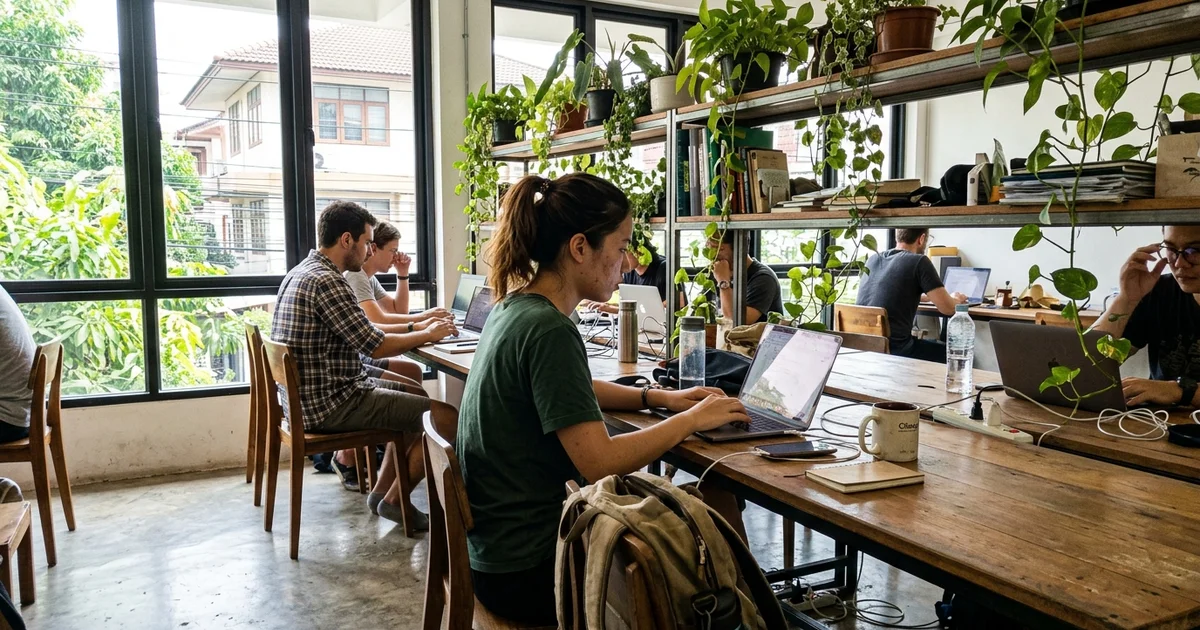
Yes. Chiang Mai remains one of the most workable bases in Southeast Asia for remote work, and the scene here is no longer an experiment; it is established infrastructure. Desks are inexpensive, the internet is fast, and the digital support network is mature. The Chiang Mai digital nomad community has been building here for well over a decade, and it shows.
That said, 2026 is not 2016. Entry rules require planning, the burning season is a genuine interruption, and the cafe culture that once defined Chiang Mai has tightened its laptop policies. Whether you travel full-time or settle in for a year, this page covers what actually matters for digital nomads and remote workers deciding on Chiang Mai in 2026. Which hospital in Chiang Mai is best for foreigners is worth reading once healthcare is on your checklist, and is Chiang Mai LGBTQ friendly? covers inclusion questions many remote workers ask before committing.
Coworking spaces and what they cost
Chiang Mai has no shortage of venues built for laptops, but a handful of operators do most of the heavy lifting. Prices below are the latest published figures I could verify across Chiang Mai; confirm current rates before committing, because pricing in this city shifts often.
- Punspace runs two Old City branches, at Wiang Kaew and Tha Phae Gate, operating since 2013 and one of the oldest venues of its kind in Asia. Visitors get daytime hours; members get 24/7 access. A day pass costs about ฿289. The former Nimman branch is closed.
- Yellow Coworking, on Nimmanhaemin Soi 5, offers phone booths, meeting rooms and a garden patio, with 24/7 member access. Its latest public price sheet listed ฿429 per day and ฿5,990 per month; confirm current rates directly.
- Hub53, on Chonpratan Road between Nimman and the university, publishes granular pricing: ฿189 per day, ฿239 for a 24-hour pass, ฿849 for a 50-hour bundle and monthly plans from ฿1,899.
- Alt_ChiangMai, near the Old City’s West Gate, combines desks with co-living spaces and a busy social calendar, with a second riverside site. A four-hour pass is ฿220 and a full day is ฿320.
- RealSpace, on the edge of Nimman, charges roughly ฿300 per day or about ฿4,000 per month for a hot desk, open until midnight.
Treat these as recent figures, not guarantees. For calls and deep focus, a membership beats any cafe; for lighter sessions, cafes are cheaper and often nicer.
Cafes that actually welcome laptops
Cafes remain part of the working rhythm in Chiang Mai, but the rules have tightened across the city. The era of nursing one coffee for eight hours is over at most popular spots.
CAMP, on the top floor of Maya mall, is the classic example. It is still described online as open 24 hours; current listings put it at 8am to midnight. Wi-Fi comes in two-hour blocks tied to a minimum spend of about ฿50, the room gets loud, and calls are miserable. Treat it as a cheap overflow desk for the digital nomad crowd, not an office.
Elsewhere in Chiang Mai, laptop policies vary by branch and by hour. Etiquette: order regularly, avoid peak brunch times, take calls outside, and never spread across a four-top. If a cafe posts a no-laptops sign at weekends, believe it.
Internet: strong fibre, weak shared Wi-Fi
Fixed internet in Chiang Mai is genuinely good. Fibre-to-the-room is standard in condos and most houses, and Thailand currently ranks inside the global top ten for fixed broadband speeds on Ookla’s Speedtest Global Index. That is a national median, not a promise for your specific room.
Gigabit fibre packages from the major providers typically run ฿500 to ฿600 per month, with slower entry tiers below and premium options above. Installation is usually quick, but many condos restrict you to the building’s provider, so check before signing a lease.
Two practical rules. First, a dedicated line beats shared building Wi-Fi every time, especially at night when the whole block streams. Second, keep a 5G hotspot as backup; outages are rare but happen during storms. For a digital nomad, the practical implication is simple: your connection will rarely be the bottleneck.
Where to base yourself in Chiang Mai
Nimman is the default for a reason: the highest concentration of desks, cafes and services in Chiang Mai, all walkable. The trade-offs are price, traffic and aircraft noise on some sois.
Santitham, just north, is the value play. Rents drop noticeably, the food is local-priced, Nimman’s infrastructure is a short ride away, and it is a popular place with longer-stay remote workers.
The Old City suits anyone who wants Punspace on the doorstep and a quieter, more visitor-facing streetscape. Riverside and Wat Ket are calmer still, with a small cafe cluster, at the cost of longer travel time into the centre. Hang Dong only makes sense with your own transport and a preference for space over spontaneity. Whatever you choose, test the location at the hour you plan to use it.
What a remote setup costs in Chiang Mai
The overhead specific to getting work done in Chiang Mai is modest: a desk membership, a fibre line and a generous mobile data plan together run roughly 3,000 to 7,000 baht per month, depending on how often you pay for a dedicated desk versus nursing a laptop in cafes.
Everything beyond that, from rent and food to scooters and insurance, sits outside this page’s scope. The site’s cost of living breakdown and the wider living in Chiang Mai guide cover those in detail.
Visas and the rules that matter
For most people settling in Chiang Mai with a laptop, Thailand’s Destination Thailand Visa, usually called the DTV, is the relevant route. It is a five-year, multiple-entry visa that lets you travel in and out freely, allows 180 days per entry with one 180-day extension at immigration, and requires proof of ฿500,000 in funds. It explicitly covers people working for overseas employers or clients, which is why it was designed with the digital nomad in mind.
The critical distinction: the DTV is not a work permit. If you take on a Thai employer or Thai clients, you need the appropriate non-immigrant status and a work permit from the Department of Employment. Serving the local market is a different category from logging in for a foreign company while physically in Thailand.
Tourist entries and exemption stamps occupy a grey area that enforcement has narrowed over time. Rules shift and cases differ, so treat this as orientation, not legal advice, and confirm your situation with a qualified Thai immigration lawyer before committing.
Community and events
The scene’s anchor is the Nomad Summit, which returned to Chiang Mai in January 2026 with around 250 attendees at the Shangri-La and a surrounding Nomad Week of community-run side events across the city. The next edition is scheduled for January 15 to 24, 2027 at the same venue, with tickets from about €249, and it remains the easiest single place to plug into the local nomad network in one week.
Beyond the conference, most Chiang Mai venues run their own social events, and making friends here is genuinely easier than in most cities of this size; most digital nomads leave with a fuller contact list than they arrived with. Online groups shift platforms constantly, so ask at your first space where the nomads currently gather; the answer changes faster than any article can track.
Burning season for the working nomad
From roughly February to April, smoke from agricultural burning across northern Thailand pushes Chiang Mai’s air quality to unhealthy levels, with March usually the worst. This hits remote workers harder than tourists: you are not passing through for three days, you are trying to run a normal week indoors.
The standard responses are a HEPA purifier in the room where you sit, sealed windows on bad days and, for a growing share of the community, leaving Chiang Mai entirely to travel south until the rains return. The site’s burning season and air quality guide covers timing, masks and mitigation in detail.
Pros, cons and the bottom line
The case for Chiang Mai is strong: cheap desks, fast fibre, a time zone that overlaps both Europe and Asia-Pacific for calls, excellent food and a support network that has seen every problem before. The case against is equally clear: two to three months of smoke, entry rules that demand attention, and a cafe scene less welcoming to laptops than its reputation suggests.
For most digital nomads, the verdict is this. Chiang Mai is one of the few places in Asia where you can land, plug in and be productive on your first afternoon, and it rewards people who stay a month or longer. Come outside the smoke season, sort your paperwork before you arrive, and pick whichever coworking space matches your call schedule. Do that, and Chiang Mai delivers exactly what its reputation promises.
Sources
- Royal Thai Consulate-General, Los Angeles - Destination Thailand Visa (DTV) requirements
- Royal Thai Embassy, Singapore - DTV workcation eligibility (overseas employers and clients)
- Thailand Ministry of Labour - work permit system for foreign workers
- Ookla Speedtest Global Index - Thailand fixed broadband ranking (live index, updated monthly)
- TelecomLead - Thailand ISP market and fibre pricing, June 2026
- Punspace - branches, hours and membership
- Yellow Coworking - official links and price sheet
- Hub53 Coworking and Coliving - published pass prices
- Alt_ChiangMai / Alt_PingRiver - visitor passes and co-living
- RealSpace - desk pricing and hours
- Time Out Chiang Mai - CAMP at Maya, current hours and Wi-Fi terms
- Nomad Summit - Chiang Mai 2026 past event recap
- Nomad Summit - Chiang Mai 2027 dates and tickets
- NASA Earth Observatory - Smoke Shrouds Northern Thailand
Stay updated
Get the Chiang Mai Brief
Useful local updates, new guides, openings and practical information for living in or visiting Chiang Mai.