
Temples & Culture
Wat Phra That Doi Kham Chiang Mai
Plan a visit to Wat Phra That Doi Kham in Chiang Mai, with opening hours, transport, dress etiquette, temple highlights, viewpoints and practical tips.
13 min read
By Daniel Calleja, founder of The Chiang Mai Brief and Chiang Mai resident.
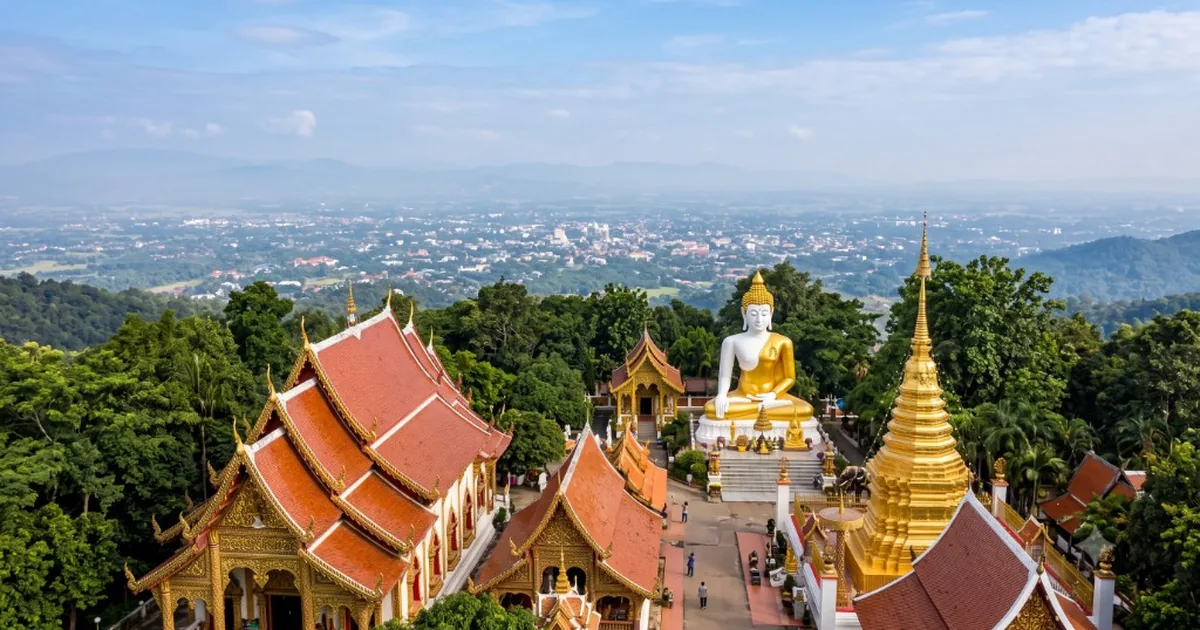
Wat Phra That Doi Kham is one of Chiang Mai’s most rewarding temple visits: a hilltop sanctuary south-west of the Old City, known for its enormous seated Buddha, colourful Lanna details and wide views across the valley. Whether you come for prayer, photography or a quieter alternative to the city’s busiest temples, this guide covers what to see, how to get there, opening hours, dress etiquette, parking and the best time to visit.
Key takeaways
- Hilltop temple southwest of Chiang Mai, combining broad city views with active local Buddhist worship.
- Visit Luang Pho Tanjai, revered for swiftly answered wishes and surrounded by jasmine-garland offerings.
- Allow 45–60 minutes for the white Buddha, old chedi, shrines, viewpoints and terraces.
- Private car, driver or ride-hailing takes about 20–30 minutes; arrange return transport in advance.
- Early mornings are coolest and clearest; weekends and Buddhist holidays are considerably busier.
- Dress modestly, remove shoes indoors, photograph worshippers respectfully, and donate if you wish.
Wat Phra That Doi Kham: Quick Visitor Snapshot
Wat Phra That Doi Kham is one of Chiang Mai’s most rewarding temple visits for travellers who want a hilltop view without committing to a full mountain excursion. Set on a low, wooded rise in Mae Hia, southwest of the Old City, the temple combines an important local place of worship with broad views across the city, airport plain and surrounding foothills. It is especially popular with Thai visitors who come to pray to Luang Pho Tanjai, the revered seated Buddha image associated with wishes and offerings of jasmine garlands.
The temple’s name translates roughly as “Temple of the Golden Mountain Relic”, and its long history is central to its appeal. Local tradition dates the site to the late seventh century, although the buildings visitors see today reflect later restorations and continued religious use. The striking white-and-gold Buddha image near the upper terrace is the visual landmark most people recognise, but allow time for the older chedi, shrines and quieter corners around the complex.
Wat Doi Kham is straightforward to reach by private car, hired driver or songthaew from central Chiang Mai; the journey generally takes around 20 to 30 minutes, depending on traffic. The final approach climbs a short hill, and visitors can either drive close to the main grounds or take the stairway for a more traditional arrival. It is a useful stop when exploring the Mae Hia area, particularly alongside Royal Park Rajapruek or the night safari.
The Tourism Authority of Thailand lists Wat Phra That Doi Kham as open daily from 8:00 am to 5:00 pm. There is normally no standard entrance fee, although donations are welcome. Access to individual shrine areas can vary during religious observances or special events. Dress respectfully with shoulders and knees covered, remove shoes before entering indoor sacred spaces, and keep voices low around prayer areas. Morning is usually cooler and often clearer for views, while weekends and Buddhist holidays can be considerably busier.
Wat Phra That Doi Kham: Visitor Quick Reference
| Visitor detail | What to know |
|---|---|
| Location | On a low, wooded rise in Mae Hia, southwest of Chiang Mai’s Old City. |
| Travel time | The journey from central Chiang Mai generally takes around 20 to 30 minutes, depending on traffic. |
| Getting there | Reachable by private car, hired driver or songthaew; the final approach climbs a short hill. |
| Arrival options | Visitors can drive close to the main grounds or take the stairway for a more traditional arrival. |
| Opening hours | Daily, 8:00 am–5:00 pm according to the Tourism Authority of Thailand. Access to individual areas can vary during religious observances or special events. |
| Costs | There is normally no standard entrance fee; donations are welcome. |
| Dress and etiquette | Cover shoulders and knees, remove shoes before entering indoor sacred spaces, and keep voices low near prayer areas. |
| Best times to visit | Early morning is cooler and calmer; late afternoon brings softer light over Chiang Mai. Weekends and Buddhist holidays can be busy. |
| Nearby stops | Pairs well with visits to Royal Park Rajapruek or the night safari in the Mae Hia area. |
Why Wat Phrathat Doi Kham Matters: History, Faith and Views
Wat Phrathat Doi Kham is one of Chiang Mai’s historically important hilltop temples, combining long-standing religious tradition with active local worship and broad views across the Chiang Mai basin.
The Tourism Authority of Thailand describes the temple as more than 1,400 years old and associates its origins with the era of Queen Chamadevi. Other accounts traditionally date its foundation to 687 CE. As with many ancient northern Thai temples, details of the earliest history are preserved through a mixture of religious tradition and local chronicles. The name Doi Kham means “Golden Mountain”, and the temple is associated with sacred Buddha relics.
- Known for: Luang Pho Tanjai, a revered Buddha image associated with swift fulfilment of wishes.
- Best for: Broad views across the Chiang Mai basin, especially on bright mornings.
- Temple etiquette: Dress respectfully, keep voices low in shrine areas and remove shoes before entering temple buildings.
Its best-known object of devotion is Luang Pho Tanjai, a revered Buddha image whose name is commonly understood to suggest swift fulfilment of wishes. Visitors will often see garlands of jasmine, fruit and other offerings arranged before the image, particularly around weekends and Buddhist holy days. This is a working Buddhist temple, not simply a scenic stop: dress respectfully, keep voices low in shrine areas and follow the lead of worshippers when approaching sacred spaces. Shoes should be removed before entering temple buildings.
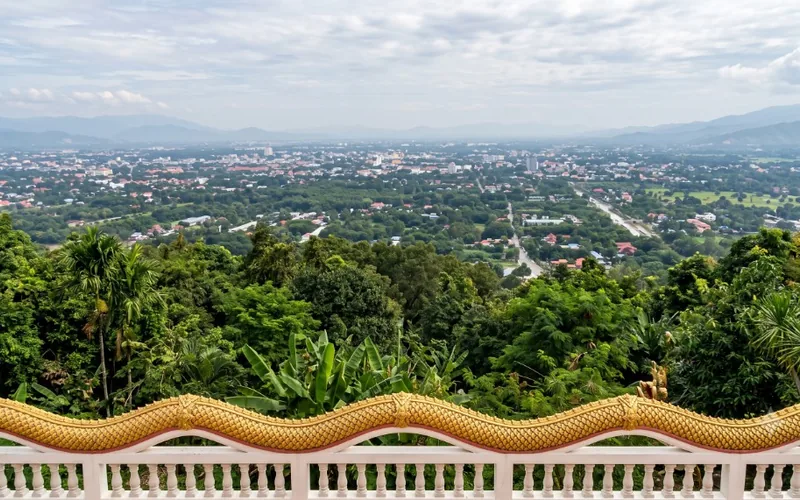
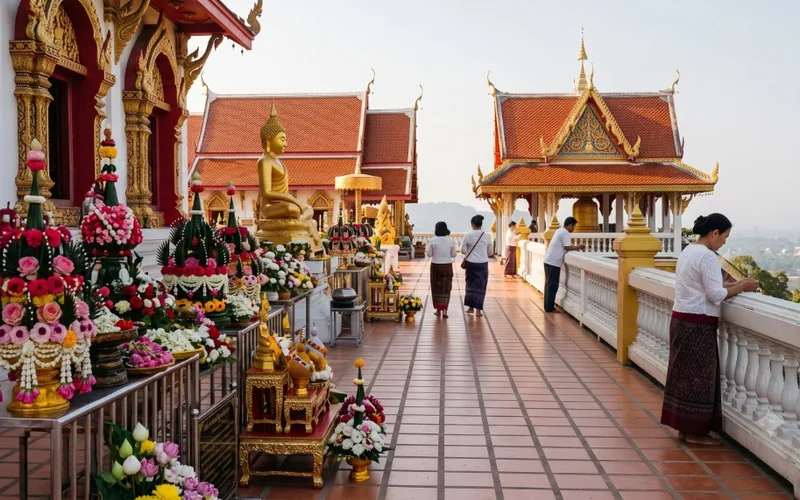
Wat Phrathat Doi Kham also rewards visitors who come without a specific religious purpose. From the upper terrace, the city spreads north and east beneath the mountains, with rice fields, suburban neighbourhoods and the airport plain especially clear on bright mornings. A large white seated Buddha above the complex is visible from the approach and adds to the temple’s distinctive skyline. Compared with the busier temples nearer the centre, Wat Phra That Doi Kham has a more open, hillside atmosphere, one reason it remains a favourite for both local devotees and independent travellers seeking a fuller sense of Chiang Mai beyond its historic walls.
Wat Doi Kham highlights
- Explore a hilltop temple traditionally linked to Queen Chamadevi and northern Thailand’s early religious history.
- See the older chedi, believed to enshrine sacred Buddha relics that gave Golden Mountain its name.
- Visit Luang Pho Tanjai, a revered Buddha image associated with prayers and swift fulfilment of wishes.
- Observe local devotion through jasmine garlands, fruit offerings and merit-making, especially on holy days.
- Dress modestly, remove shoes inside temple buildings and keep voices low around shrine areas.
- Enjoy broad morning views across Chiang Mai, rice fields, suburbs and the airport plain.
- Look for the large white seated Buddha, a striking landmark visible from the approach.
What to See at Wat Phra That Doi Kham
Perched on a low, wooded hill southwest of central Chiang Mai, Wat Phra That Doi Kham is both an active place of worship and a rewarding short cultural stop. The name means “Temple of the Golden Mountain”, and the setting is part of its appeal: the grounds look over the city, airport corridor and surrounding foothills, with especially clear views on bright mornings or after rain. Unlike the more heavily touristed mountain temple at Doi Suthep, Doi Kham Temple has a more locally focused character, drawing regular devotees alongside visitors. Another quieter option on the Doi Suthep side of the mountain is the short hike to Wat Pha Lat via Monk’s Trail.
The most immediately recognisable landmark is the large white seated Buddha image on the hillside. Visible from parts of the approach road, this Buddha statue faces outward across the plain and creates the temple’s defining silhouette. Climb the steps for a closer view, then take time to look back over Chiang Mai rather than treating it as only a photo stop. Around the main terrace, smaller devotional areas, bells and shrines create a layered walk through the complex, making this an easy place for a self-guided tour.
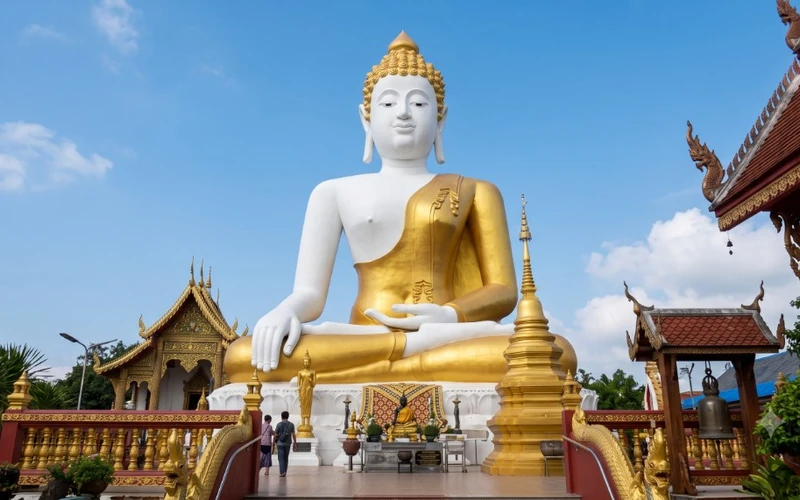
At the heart of Wat Phra That Doi Kham is its principal chedi and old temple buildings, associated with the site’s long Lanna religious history. Details vary across the compound, from gilded ornament and guardian figures to quieter halls where visitors can observe residents making merit. Dress respectfully, remove shoes where required and keep voices low inside prayer areas. This remains a functioning wat doi, not simply a viewpoint.
One distinctive sight is the collection of jasmine garlands left as offerings, often connected with vows made to the temple’s revered Buddha image. The rows of fragrant white garlands can be striking, particularly near busy Buddhist observance days. Whether or not you take part in the practice, it offers useful context for why kham temple holds such importance for many Chiang Mai residents. Allow enough time to explore beyond the seated Buddha, pause at the viewpoints and notice the everyday devotional life that gives this temple its atmosphere.
Highlights at Doi Kham
- See the large white seated Buddha, the temple’s defining hillside landmark overlooking the Chiang Mai plain.
- Climb the steps slowly and turn around for broad views of the city, airport corridor and surrounding foothills.
- Explore the principal chedi and older temple buildings, reflecting the site’s long Lanna religious heritage.
- Walk between smaller shrines, bells, guardian figures and devotional terraces around the main complex.
- Notice jasmine garlands offered near revered images, especially plentiful around Buddhist observance days.
- Observe local worshippers making merit, remembering that this is an active temple rather than only a viewpoint.
- Dress modestly, remove shoes when requested and keep voices quiet inside prayer halls and sacred areas.
Getting to Wat Phra That Doi Kham and Planning Your Visit
Wat Phra That Doi Kham sits on a low, wooded hill southwest of Chiang Mai, roughly 10 kilometres from the Old City. It is an easy half-day outing rather than a full-day destination, particularly when paired with Royal Park Rajapruek or the nearby Chiang Mai Night Safari. The simplest independent option is a private car, hired driver, or ride-hailing service. The approach climbs gently from the main road to the temple grounds, where there is ample parking on most weekdays. Weekends, Buddhist holidays and major merit-making dates are busier, so arrive early if you want a quieter visit and a space close to the main entrance.
Drivers coming from central Chiang Mai generally follow the Canal Road area south before turning towards Doi Kham. Navigation apps are reliable for the final approach, although traffic around the Royal Park junction can slow at peak times. A red songthaew is possible only if negotiated as a private hire; this is not a practical destination to reach by regular shared songthaew. For visitors using Grab or another ride service, arrange your return journey before heading up the hill, or allow time to request a car after your visit, as drivers are less consistently available here than in the city centre.
Most visitors need about 45 minutes to an hour to see the principal shrine, historic chedi, large seated Buddha and viewpoints. Dress respectfully, with shoulders and knees covered, and remove shoes before entering indoor worship spaces. Morning is usually the most comfortable time to visit and often gives the clearest views across the Chiang Mai plain. You do not need an organised tour simply to visit Doi Kham: independent transport is practical, while a hired driver or tour can be convenient for visitors combining several attractions in one outing. Check current opening information before travelling on important religious or public holidays.
Visit Planning Essentials
- Use a private car, hired driver, or ride-hailing service for the easiest journey from central Chiang Mai.
- Arrange your return ride before arriving, as app-based drivers can be less available on the hill.
- Allow 45–60 minutes for the shrine, viewpoints, seated Buddha, and quiet time around the grounds.
- Visit early for cooler temperatures, clearer views, lighter crowds, and easier parking near the entrance.
- Expect heavier crowds on weekends, Buddhist holidays, and merit-making dates; arrive before mid-morning.
- Cover shoulders and knees, and remove shoes before entering indoor worship spaces.
- Check current opening hours before departure and bring small notes for donations or flower offerings.
Temple Etiquette and Photography
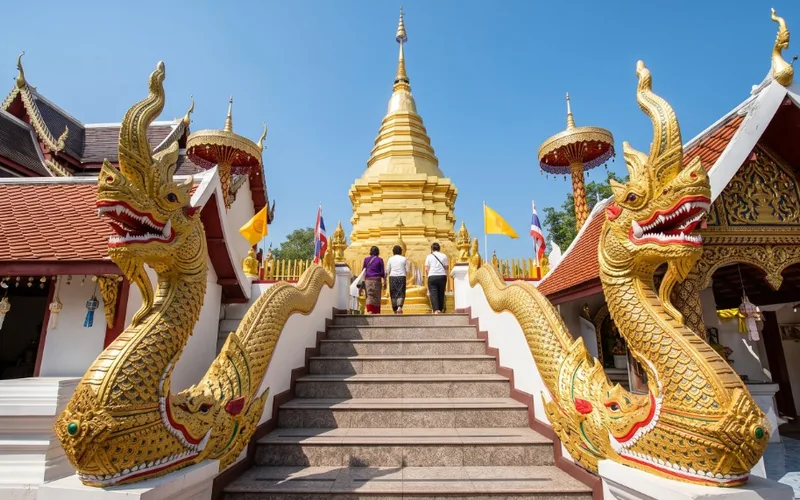
Wat Phra That Doi Kham is an active Buddhist temple, not simply a viewpoint or photo stop. Cover shoulders and knees, remove shoes before entering sacred indoor spaces where required, and keep voices low around people praying. Avoid pointing your feet towards Buddha images or altars. Photography is generally straightforward around the outdoor grounds, including the chedi, naga stairway, seated Buddha and city-facing terraces, but look for signs and follow temple guidance inside worship spaces. Avoid photographing worshippers at close range without permission or treating sacred images as props. Morning is usually the most comfortable time for photography, particularly when skies are clear.
Visitor information last checked: September 2026.
Stay updated
Get the Chiang Mai Brief
Useful local updates, new guides, openings and practical information for living in or visiting Chiang Mai.