
Cost of Living
Living in Chiang Mai Pros and Cons: The Real Advantages and Drawbacks
An honest look at living in Chiang Mai: the real pros and cons, from burning-season smoke, heat and road safety to low costs, healthcare and visas.
14 min read
By Daniel Calleja, founder of The Chiang Mai Brief and Chiang Mai resident.
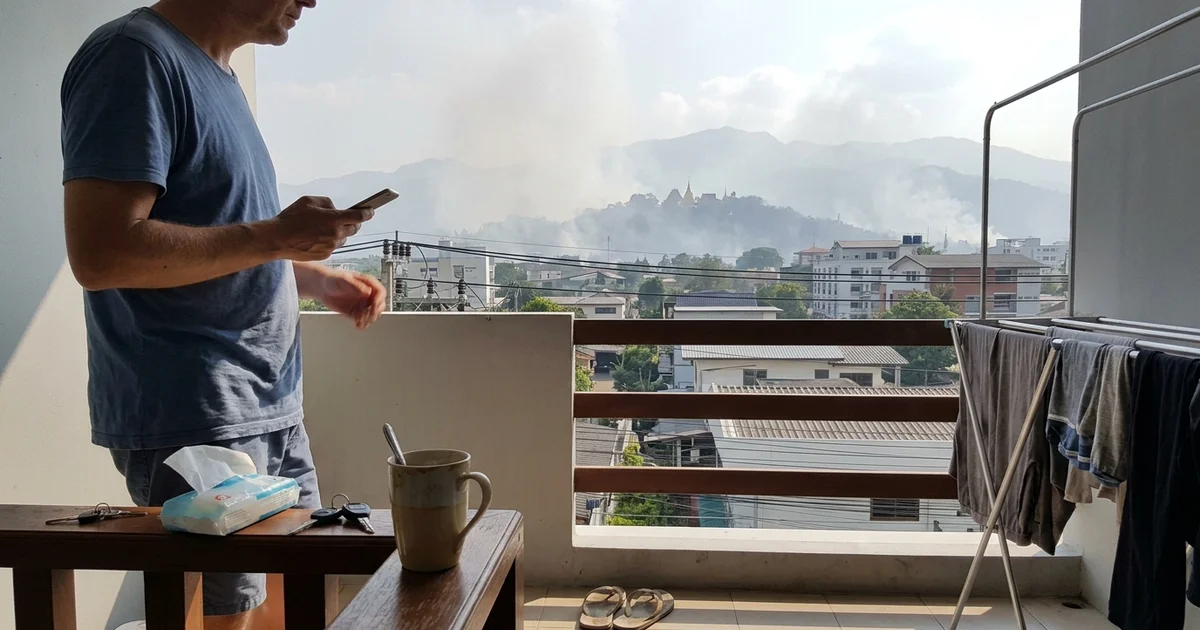
Chiang Mai is easy to love and easy to oversell. For a certain kind of person it offers a quality of life that is hard to match anywhere in Asia at a similar cost: affordable housing, fast internet, good private hospitals, excellent food and a large international community, inside one compact, manageable city. For another, the same place delivers weeks of hazardous smoke each year, dangerous roads, thin public transport and bureaucratic upkeep that wears residents down year after year.
This guide weighs the pros and cons honestly for anyone deciding whether Chiang Mai is somewhere they could actually live. Every advantage and drawback below is one we can substantiate, and where the honest answer is “it depends”, we say so. If inclusion matters to your decision, read is Chiang Mai LGBTQ friendly? first; the overview of daily life remains on living in Chiang Mai.
Is Chiang Mai a Good Place to Live?
For most people who choose it with open eyes, yes. Chiang Mai delivers the things that make daily life pleasant: low day-to-day costs, genuine convenience, a welcoming community and a calmer pace than almost any capital city in the region. It also asks for real compromises, chiefly the smoke that settles over northern Thailand each year and roads that demand constant attention.
At a glance:
- Strongest reasons to move: affordable living, everyday convenience, solid healthcare, fast internet, safety and a superb cool season.
- Hardest things to accept: the annual smoke, the hottest months, road danger and getting around without a car or scooter.
- Potential deal-breakers: smoke sensitivity, frequent long-haul travel, a need for walkable streets or little patience for paperwork.
Each section that follows is a genuine pro, con or trade-off, with the evidence to back it up.
The Pros of Living in Chiang Mai
These are the pros that hold up to scrutiny, roughly in the order they matter.
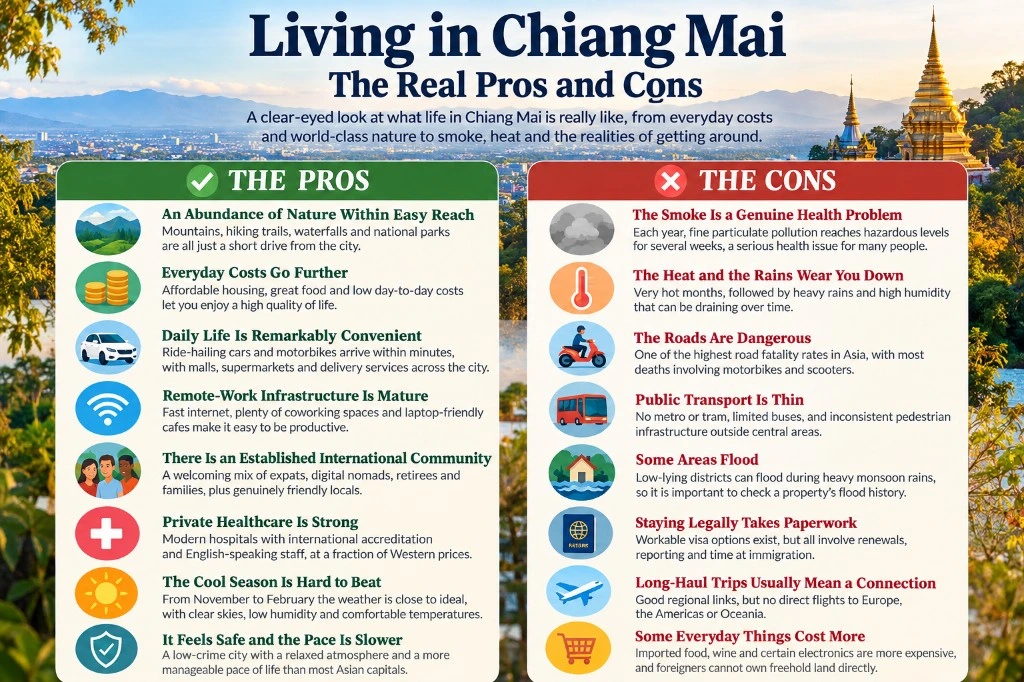
An Abundance of Nature Within Easy Reach
Chiang Mai’s access to stunning nature is one of its biggest lifestyle advantages. From the city, you can be on mountain roads, hiking trails and viewpoints around Doi Suthep in roughly 30 minutes, with waterfalls, national parks and historic towns all within easy reach. That immediate access to beautiful nature and breathtaking views is a major reason people love living here.
Everyday Costs Go Further
Value for money draws most residents in, and it is real. A modern one-bedroom condominium in Nimmanhaemin rents for roughly THB 15,000 a month on current listings, and older buildings across town ask far less. A plate of khao soi at a local Thai shop still costs around 50 to 70 baht, and a massage, cinema ticket or cross-town ride costs a fraction of what it would in Bangkok or Sydney. None of this makes Chiang Mai “cheap”: imported goods and wine cost more than at home, and electricity follows the national tariff of around 4 baht per unit, so heavy air-conditioning use shows up clearly on the bill. Even so, a comfortable middle-class life here costs noticeably less than in any comparable Western city. Price is only part of the appeal: Chiang Mai is also one of Thailand’s great food cities, with northern dishes such as khao soi, sai ua and nam prik noom giving the city a distinctive regional food culture.
Daily Life Is Remarkably Convenient
Ride-hailing cars and motorbikes arrive within minutes almost everywhere, food delivery covers the urban area, and modern malls such as Central Festival and Maya sit alongside well-stocked supermarkets like Tops and Rimping for imported ingredients. Digital QR-code payment is accepted even at street stalls, and a 24-hour convenience store is rarely far. Errands that would eat an afternoon in a bigger city take twenty minutes here.
Remote-Work Infrastructure Is Mature
Thailand’s fixed broadband ranks among the fastest globally in Ookla’s Speedtest Global Index, gigabit home fibre costs around 600 baht per month, with 5G as backup. Dozens of coworking spaces operate across the urban area, most coworking spaces within easy reach of the main residential districts, alongside hundreds of laptop-friendly cafes. The digital infrastructure extends to banking apps and e-wallets that genuinely replace cash. Remote workers are productive from day one, and remote workers on overseas contracts get time zones overlapping both Asia-Pacific mornings and European afternoons.
There Is an Established International Community
Foreign residents have put down roots here for decades, and the community is broad: retirees, teachers, entrepreneurs, families and the digital nomad contingent mix in the same cafes and markets. The famous friendly locals are not a brochure myth, and day-to-day interactions are notably warm. New arrivals find the expats already here generous with practical advice, and if you make an effort to socialise, it is entirely realistic to build a social circle within weeks rather than years.
Private Healthcare Is Strong
Bangkok Hospital Chiang Mai has held Joint Commission International accreditation continuously since 2015, with its current cycle running to 2027, and Chiang Mai Ram is a well-established private alternative; both employ English-speaking staff. Consultations, scans, dental work and minor procedures cost a fraction of Western private prices, so many residents pay out of pocket. The one qualification is depth: highly specialised treatment is sometimes referred on to Bangkok, a trade-off covered honestly in the cons below.
The Cool Season Is Hard to Beat
From roughly November to February the weather is close to ideal: clear skies, low humidity, afternoons in the high twenties and nights cool enough for a light jacket. The mountains turn green, cafe terraces fill and weekends stretch into trips to waterfalls, hot springs and national parks. Residents who endure the smoke and heat will tell you this is what makes the year worthwhile.
It Feels Safe and the Pace Is Slower
Chiang Mai is a placid, low-crime city by regional standards, repeatedly placing among the safest cities in Southeast Asia in Numbeo’s safety index; Thailand sits at Level 1, the lowest advisory tier, on the United States State Department scale, and street crime against foreign residents is rare. Just as valuable is the tempo: traffic moves slowly, temple grounds are quiet and the coffee culture is unhurried.
The Cons of Living in Chiang Mai
These are the drawbacks that hold up, again ordered by weight.
The Smoke Is a Genuine Health Problem
The single biggest downside is the smoky season. Roughly between February and April, though timing shifts year to year, crop-residue burning, forest fires and dry, still air trap fine particulate pollution over the northern valleys. On bad days, PM2.5 readings from the Pollution Control Department’s monitors climb to many times the World Health Organization’s recommended limits, and in late March 2026 Chiang Mai briefly ranked among the most polluted cities on IQAir’s live board. For healthy adults it is an irritant; for people with asthma, heart conditions or young children it is a genuine health risk. It can be planned around with purifiers, sealed rooms and a few weeks away, but never treated as a minor inconvenience. In my experience, the smoke is also the single biggest reason long-term residents decide Chiang Mai is not for them.
The Heat and the Rains Wear You Down
The hot season follows the smoke. April is the peak, with afternoon highs around 36 degrees on the Thai Meteorological Department’s historical averages, some days hotter. From around May the rains arrive: downpours are heavy but short, yet the humidity is relentless, and mould, mosquitoes and damp laundry become background features of daily life. Firsthand, I find the wet-season humidity harder to live with than the peak heat: the hottest weeks are brutal in direct sun but manageable in shade and indoors, while the wet months bring overnight humidity often above 80 to 90 per cent, and the constant dampness wears you down. Anyone picturing a permanently pleasant mountain climate should know the comfortable months are a minority of the year.
The Roads Are Dangerous
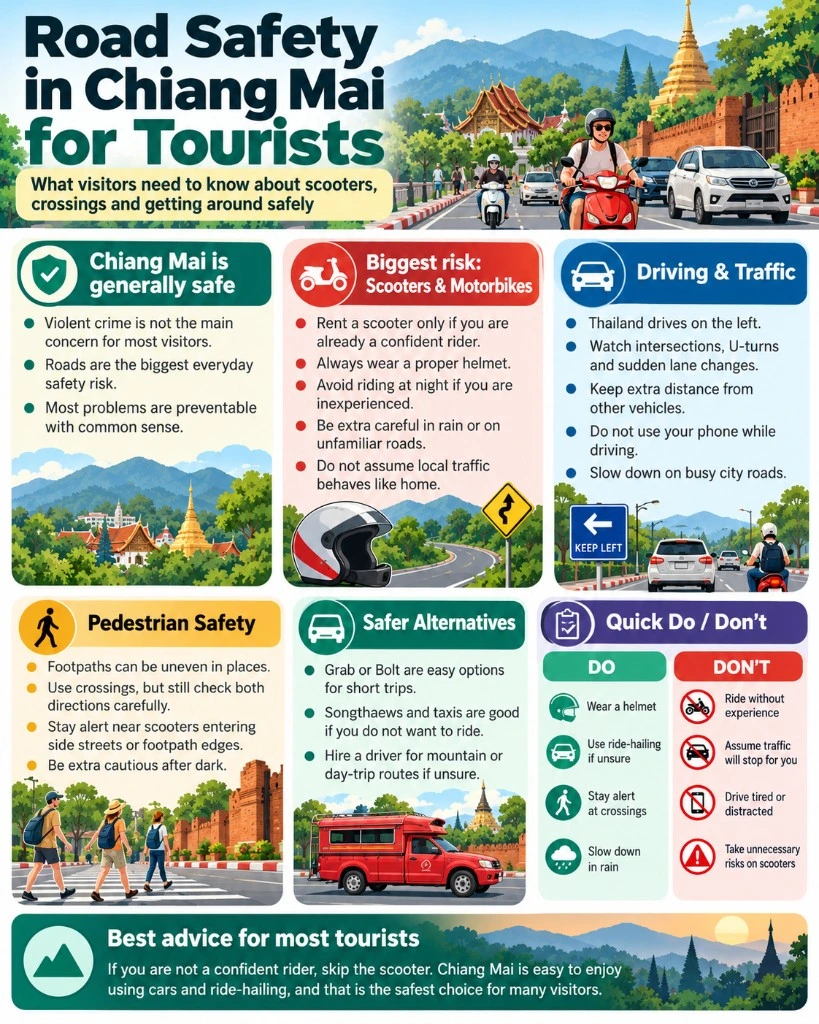
This is the con residents most often underestimate. Thailand’s roads kill around 25 people per 100,000 each year on World Health Organization estimates, one of the highest rates in Asia, and the large majority of those killed are riding motorbikes and scooters. A large number of long-term residents eventually end up on two wheels, because it is one of the most practical ways to get around, junction discipline is loose, and drink-driving remains common. Reduce your exposure with a proper helmet, never riding after drinking and taking cars at night, but the road toll is the largest day-to-day safety risk of living here by a wide margin.
Public Transport Is Thin and Pedestrian Infrastructure Is Uneven
There is no metro, tram or suburban rail; the backbone of public transport is the songthaew, the shared red trucks that run loosely fixed routes and stop on request, plus a limited public bus network. In practice, buses are not part of daily life for most residents I know; Grab, songthaews, scooters and private cars are far more commonly used. The walking environment is a related but separate issue. Much of the city is very walkable for an able-bodied person, particularly in central areas such as the Old City and Nimmanhaemin, and imperfect footpaths are usually manageable. The real problem is consistency: pavements vary from smooth to narrow, broken or obstructed within a single street, with loose tiles, uneven sections, small potholes, occasional obstructions and difficult road crossings. For wheelchair users, older residents and anyone who depends on smooth, step-free pedestrian infrastructure, that inconsistency can be much more serious. Most households solve getting around with a scooter plus ride-hailing, which works well but keeps two wheels at the centre of daily life.
Some Areas Flood
Chiang Mai sits on the Ping River floodplain, and when monsoon rains stall over the northern mountains, low-lying districts flood. In October 2024 the Ping peaked at 5.30 metres at Nawarat Bridge, the worst flooding in half a century, inundating riverside neighbourhoods and ground floors for days. The municipality has since invested in barriers and drainage, but the underlying geography has not changed. This is highly localised rather than widespread, so it works less as a reason to avoid the city than as a filter when choosing where to rent: check a property’s flood history before signing anything.
Staying Legally Takes Paperwork
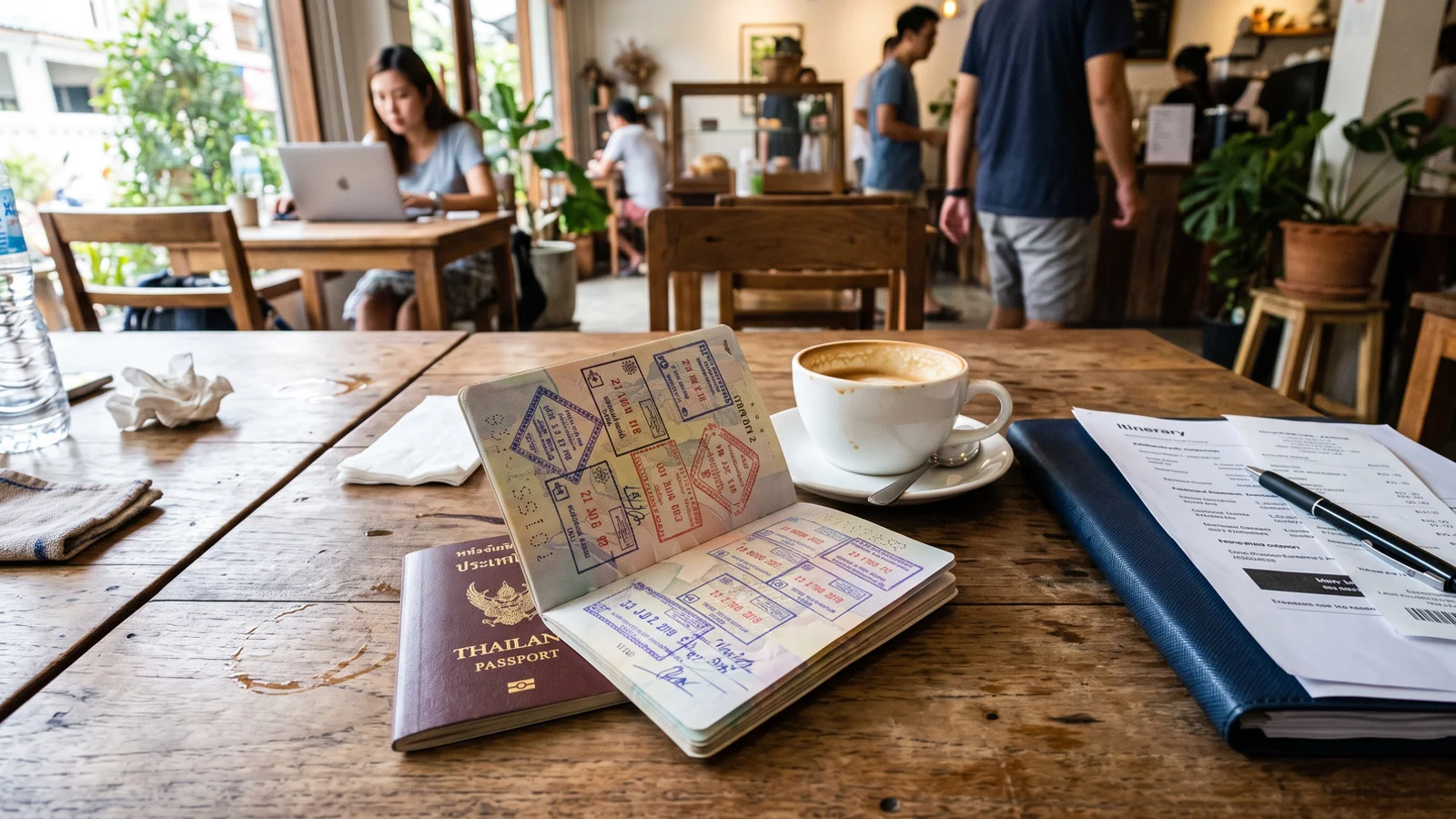
Thailand offers workable routes to an extended stay, but no visa is effortless. Tourist visa entries are short by design; the dtv visa gives eligible remote professionals 180-day stays with a straightforward application; the retirement visa serves over-50s who can show the required funds or income; and the LTR and Thailand Privilege schemes exist for those who qualify or can pay. Depending on the route, staying on can involve renewals, reporting requirements, re-entry formalities and occasional rule changes, plus time at Thai immigration offices. None of it is unusual by regional standards, but people who dislike bureaucracy feel the friction every single year.
Long-Haul Trips Usually Mean a Connection
The airport is a genuine asset for regional travel, with direct flights to around thirty destinations across a dozen countries, including Singapore, Kuala Lumpur, Hong Kong, Taipei, Seoul, Osaka and much of urban China; Etihad’s Abu Dhabi service, launched in November 2025, is the longest route flown from Chiang Mai, at just over 4,600 kilometres. What it does not offer is direct flights to Europe, the Americas or Oceania, so for many long-haul trips residents connect through Bangkok, Singapore or Kuala Lumpur, adding hours to journeys home. Anyone flying intercontinental several times a year feels that friction compound.
A few smaller frictions deserve naming without exaggeration. Imported food, wine and certain electronics cost more than they do in Western supermarkets. Foreigners cannot own freehold land directly, although condominium ownership within the building quota is straightforward. Some specialised services still mean a trip to Bangkok. And because a slice of the international community turns over each year, friendships can feel transient unless you deliberately build local roots.
Who Chiang Mai Suits Best
The city rewards certain profiles disproportionately, and the common thread is portable income plus a realistic plan for the smoke months. Freelancers and other remote professionals get fast internet, coworking on the doorstep, a low cost base, digital services that just work and a community of peers, provided the visa route fits. Retirees who meet the financial requirements often describe the move as buying back time: affordable healthcare, warm weather for much of the year and an unhurried pace. Families get established international schools and housing with space. Slow travellers can test life here for a few months first. In each case the same pros do the work: money goes further, daily life is easy and the community absorbs newcomers.
Who May Find the Downsides Too Much
Honesty matters more than boosterism here. Anyone with respiratory or cardiac conditions, or with very young children, should treat the smoke months as a serious medical question; for some, the honest answer is living elsewhere. People who depend on consistently smooth, accessible pavements or step-free pedestrian infrastructure may struggle, as will wheelchair users outside modern malls and hotels, and the thin public transport is felt most by anyone who cannot or will not ride a scooter. Anyone whose work or family life means frequent intercontinental flying will feel the airport’s limits over time. Beach lovers should note that Chiang Mai is inland, so reaching the coast usually means a short flight or a very long overland journey. And people with little patience for paperwork, or for a humid seasonal climate, will find those frictions constant rather than occasional.
Is Living in Chiang Mai Worth It?
For the right person, yes, and by a clear margin. The pros are structural rather than cosmetic: costs that let savings or a modest income stretch, convenience that removes daily friction, healthcare you can actually access, a community that absorbs newcomers and four months of weather as good as this part of the world offers. The cons are equally real, but most are seasonal, mitigable or matters of personal fit, and the one that is neither, the smoke, can at least be planned around honestly.
The strongest version of the decision: visit across different months if you can, rent before committing, choose your area with the flood map and your routine in mind, and be candid with yourself about smoke, heat and scooters. For the wider picture of costs, visas, neighbourhoods and healthcare, our guide to living in Chiang Mai covers each in depth. Chiang Mai is not a paradise, and it is not for everyone, but for a large and growing number of residents the trade-offs are worth it, and the quality of life is genuinely hard to replicate elsewhere at this cost.
Frequently Asked Questions
Is Chiang Mai a good place to live long term?
For most people with portable income, yes: the digital infrastructure works, healthcare is accessible, the community is established and securing the right visa is part of the decision rather than a barrier. The honest caveats are the smoke, road safety and whether you can accept the climate outside the cool months. Those who go in with open eyes tend to stay.
What is the biggest downside of living in Chiang Mai?
The annual smoke. For several weeks most years, fine particulate pollution rises to levels the World Health Organization classifies as hazardous, a health issue rather than a nuisance, particularly for anyone with respiratory or heart conditions. Road danger is the second most serious drawback and the most relevant day to day. Neither should be minimised when deciding.
How bad is the burning season really?
Bad enough to plan around, but bounded. It typically builds from February, peaks around March and clears with the first proper rains, though exact timing and severity vary each year with burning activity and weather. Pollution Control Department data shows the pattern clearly, and most residents manage with air purifiers, masks, indoor exercise and, where possible, a few weeks of travel during the worst stretch.
Sources
- TAT Newsroom: Etihad’s Abu Dhabi to Chiang Mai service launch (November 2025)
- Joint Commission International: accredited organisations directory
- Bangkok Hospital Chiang Mai: JCI accreditation 2015 to 2027
- World Health Organization: road traffic injuries fact sheet
- World Health Organization: ambient air quality and health fact sheet
- Pollution Control Department: Air4Thai air quality monitoring
- IQAir: live world air quality city rankings
- Thai Meteorological Department: climate data and forecasts
- Chiang Mai University School of Public Policy: lessons from the 2024 flood crisis
- Official Thai e-visa portal: DTV applications
- Board of Investment: LTR programme
- Thailand Privilege Card official site
- Immigration Bureau: extensions and 90-day reporting
- Ookla Speedtest Global Index: fixed broadband rankings
- Numbeo: city safety index rankings
- US Department of State: travel advisory for Thailand
- Provincial Electricity Authority: residential tariff information
- Department of Lands: property and land ownership rules
Stay updated
Get the Chiang Mai Brief
Useful local updates, new guides, openings and practical information for living in or visiting Chiang Mai.