
Getting Around
Songthaew (Red Truck) Fares & Etiquette in Chiang Mai
How to use Chiang Mai's songthaew red trucks — flagging one, standard fares, routes, negotiating and dual-pricing notes.
5 min read
By Daniel Calleja, founder of The Chiang Mai Brief and Chiang Mai resident.
What a songthaew is
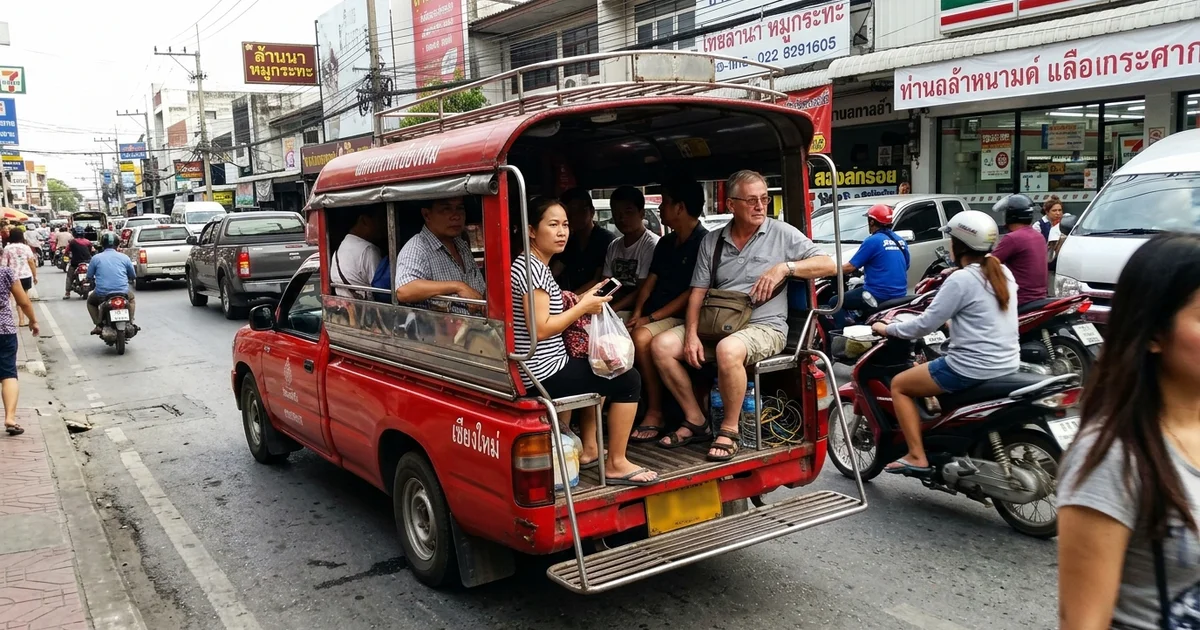
A songthaew — literally “two rows”, locally rod daeng or red truck — is a converted pickup with two bench seats in the covered back. In Chiang Mai they function as shared taxis: flag one down, say where you’re going, and if it suits the driver’s direction you hop in.
There’s no metro and a limited bus network, so red trucks are a substantial part of how the city moves. This guide sits under our getting around hub.
How to use one
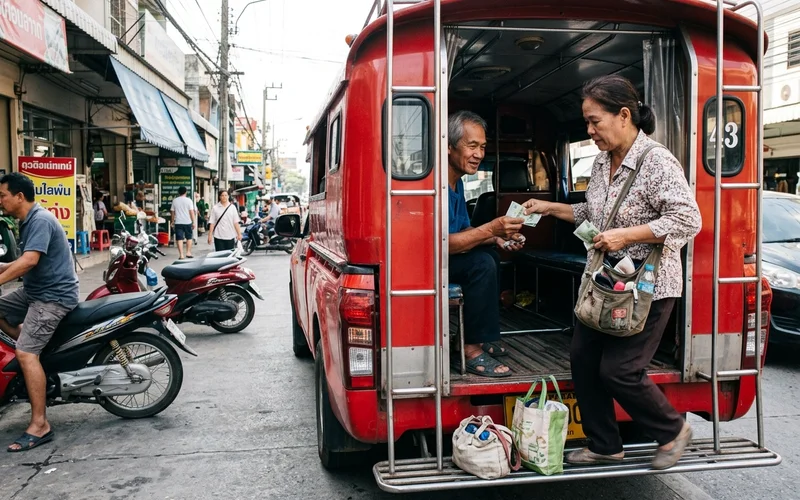
- Flag it down. Stand at the roadside and wave. Most will pull over.
- State your destination. Speak to the driver at the window. Use a landmark rather than an address — a temple, a mall, a gate, a hospital.
- Confirm the fare. Before getting in. “Tao rai?” means how much.
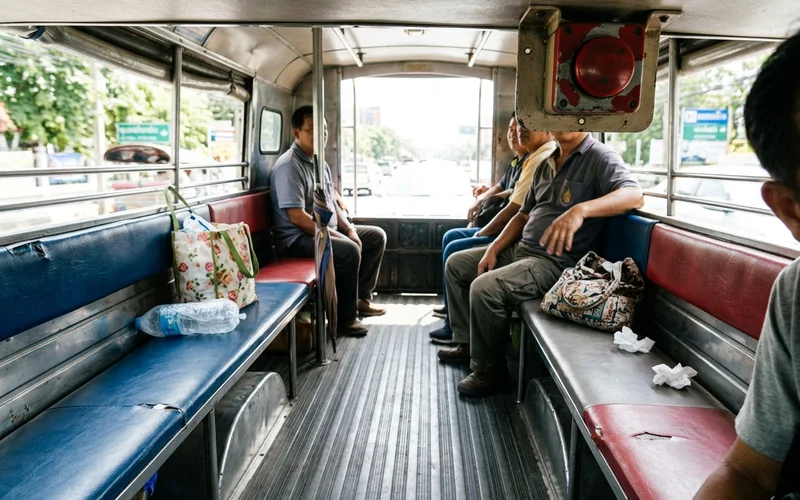
- Get in the back. Bench seats, facing each other. There’s a rail to hold.
- Signal your stop. Press the buzzer on the ceiling or knock on the roof.
- Pay at the window. Walk round to the driver’s door and hand over the fare.
That’s the whole system. It’s simpler than it sounds after the first ride.
What it should cost
| Trip | Typical fare |
|---|---|
| Short shared hop within the city | 30–40 THB per person |
| Longer shared trip across town | 40–60 THB per person |
| Charter, short distance | 100–150 THB total |
| Charter, longer or out of the way | 150–300 THB total |
| Up to Doi Suthep | Higher; agree before departure |
These are working figures rather than fixed tariffs. Fares drift upward over time and rise late at night.
Negotiating
The first quote to an obvious foreigner is sometimes higher than the local rate. This is not aggressive scamming; it’s a test, and it’s handled with a smile.
What works:
- Know roughly what the trip should cost before you flag one
- State your destination and wait, rather than asking “how much to X”
- If the quote is high, say the fare you expect, pleasantly
- If they decline, thank them and wave down the next one
What doesn’t work: arguing, getting annoyed, or making a point of it. Another truck will be along within two minutes, and the whole exchange should take fifteen seconds.
Learning to say numbers in Thai helps more than any other single phrase.
When songthaew is the right choice
Use a red truck when:
- It’s raining hard and every ride-hailing app has surged
- You’re going somewhere central and don’t mind a few stops
- You’re several people going the same way
- You want the cheapest option
Use an app instead when:
- You’re in a hurry and want to go directly
- You’re going somewhere unusual or hard to describe
- It’s late and trucks are thin on the ground
- You’d rather not negotiate
Our comparison of Grab, Bolt and Maxim covers the alternatives.
The other coloured trucks
Red is the city service. Other colours run fixed routes to outlying districts — yellow to Mae Rim and the north, white to Hang Dong and San Pa Tong, blue to Lamphun and the south-east. They leave from designated points, usually near Warorot Market or the bus stations, and they’re extremely cheap.
If you’re heading out of the city and don’t want to drive, these are worth knowing about.
Stay updated
Get the Chiang Mai Brief
Useful local updates, new guides, openings and practical information for living in or visiting Chiang Mai.