
Getting Around
Grab, Bolt & Maxim Ride-Hailing Compared
Compare the Grab, Bolt and Maxim ride-hailing apps in Chiang Mai — coverage, pricing, wait times, car vs bike, and when to use each.
5 min read
By Daniel Calleja, founder of The Chiang Mai Brief and Chiang Mai resident.
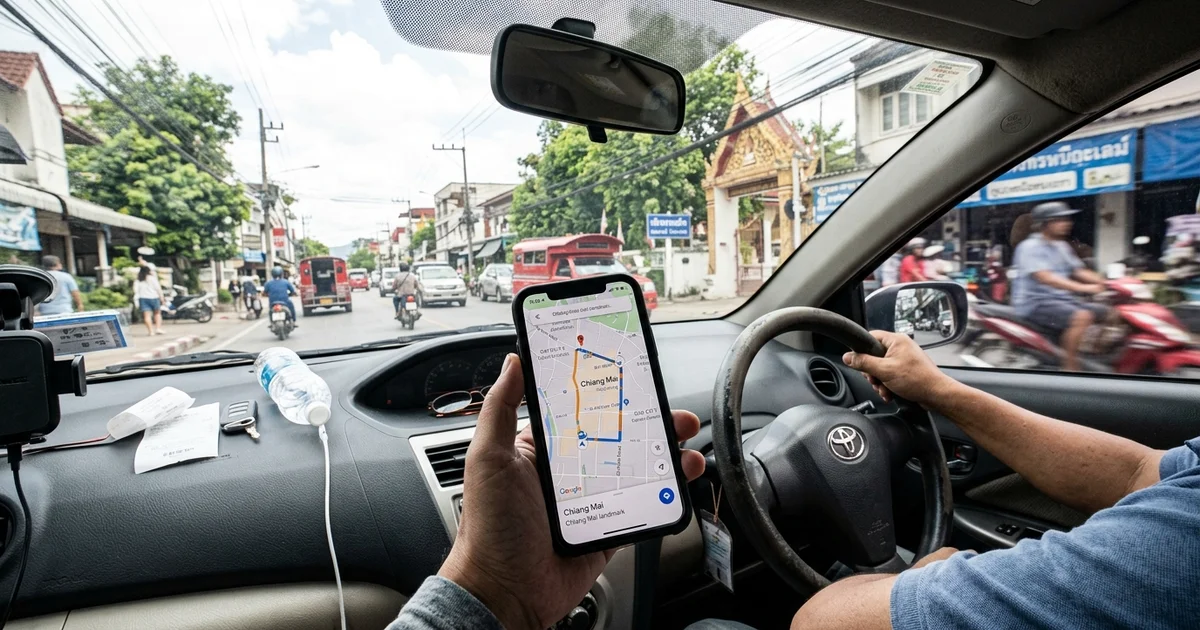
Install all three
That’s the short answer, and it’s what almost every resident does. The apps compete on price, availability shifts by hour and area, and checking two takes fifteen seconds.
This guide sits under our getting around hub, alongside the songthaew guide for the non-app option.
The three, compared
| Grab | Bolt | Maxim | |
|---|---|---|---|
| Coverage | Best | Good | Good |
| Price | Highest | Lower | Often lowest |
| Wait times | Shortest | Moderate | Variable |
| Driver quality | Most consistent | Good | Variable |
| App polish | Best | Good | Basic |
| Food delivery | Yes, extensive | Limited | Limited |
| Payment | Card, cash, wallet | Card, cash | Card, cash |
Grab is the incumbent and the safe default. Widest driver network, shortest waits, most consistent experience, and the food delivery arm that most people end up using anyway. You pay for that reliability.
Bolt competes on price and does it well. Availability is good in the centre and thinner in outer areas. For a routine city trip it’ll usually save you a meaningful percentage.
Maxim is frequently the cheapest, with a more basic app and more variable driver experience. Popular with residents making the same trip regularly and watching costs.
Bikes versus cars
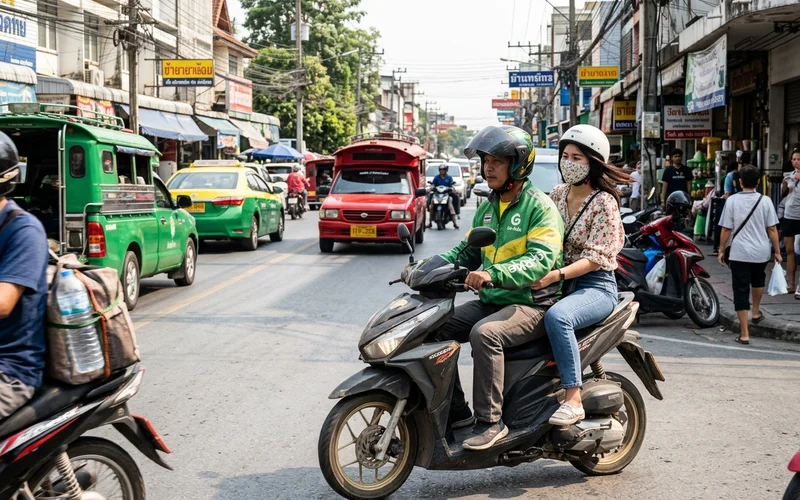
Motorbike taxis are a large part of what makes these apps useful in Chiang Mai. They’re roughly half the price of a car, considerably faster in traffic, and completely normal for short trips.
Take a bike when: you’re alone, carrying little, it’s dry, and you’re comfortable on the back of a motorcycle. Helmets are provided.
Take a car when: you have luggage, it’s raining, you’re with others, it’s a long trip, or you’d simply rather not.
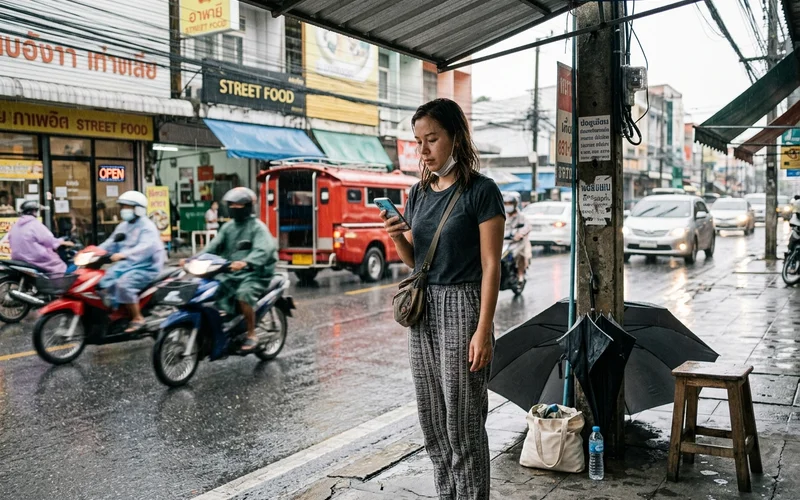
Rain changes everything. When a storm hits, bike availability collapses, car demand spikes, and every app surges simultaneously. That’s the moment a songthaew becomes the faster choice.
Practical notes
Payment. Link a card for convenience, but keep cash. Some drivers prefer it and card terminals occasionally fail.
Pins. Set your pickup pin carefully. Chiang Mai’s small sois confuse map data, and a pin twenty metres out on the wrong side of a one-way street costs you five minutes.
Airport. All three serve Chiang Mai airport. There’s also an official airport taxi desk, which is fine and priced accordingly.
Language. Drivers may call to confirm a pickup. Having your destination written in Thai on your phone solves most confusion.
Tipping. Not expected, though rounding up on a good ride is appreciated.
When to use what
| Situation | Best option |
|---|---|
| Short city trip, alone, dry | Bike on Bolt or Maxim |
| Same but in a hurry | Bike on Grab |
| With luggage or a group | Car, compare all three |
| Heavy rain | Songthaew, or wait it out |
| Late night | Grab, best availability |
| Outer areas | Grab; the others thin out |
| Going somewhere hard to describe | Any app — the pin does the work |
Versus a scooter of your own
If you’re staying more than a couple of months, do the arithmetic. Daily app use of 150–250 THB adds up to roughly the cost of renting a scooter within a fortnight.
That said, plenty of residents deliberately don’t ride — traffic here is genuinely risky — and treat ride-hailing as a permanent solution. It’s a defensible choice, and at these prices an affordable one.
Stay updated
Get the Chiang Mai Brief
Useful local updates, new guides, openings and practical information for living in or visiting Chiang Mai.