
Restaurants & Thai Food
Northern Thai (Lanna) Food Explained
What makes Northern Thai (Lanna) cuisine different — Khao Soi, Sai Oua, Gaeng Hang Lay, Nam Prik Ong, and where to try each.
6 min read
By Daniel Calleja, founder of The Chiang Mai Brief and Chiang Mai resident.
A different cuisine, not a regional accent
Northern Thai food isn’t central Thai food with local variations. It’s a distinct cuisine with its own history, shaped by the Lanna kingdom’s connections to Burma, Yunnan and the Shan states as much as by Bangkok.
The differences are structural. Less coconut milk. Less sugar. More herbs, more fermented ingredients, more bitterness. Sticky rice instead of steamed rice, eaten with the hands. Dishes designed to be shared around a central spread rather than plated individually.
If you only eat pad thai and green curry in Chiang Mai, you’ve missed the point of eating here. This guide sits under our restaurants hub.
The essential dishes
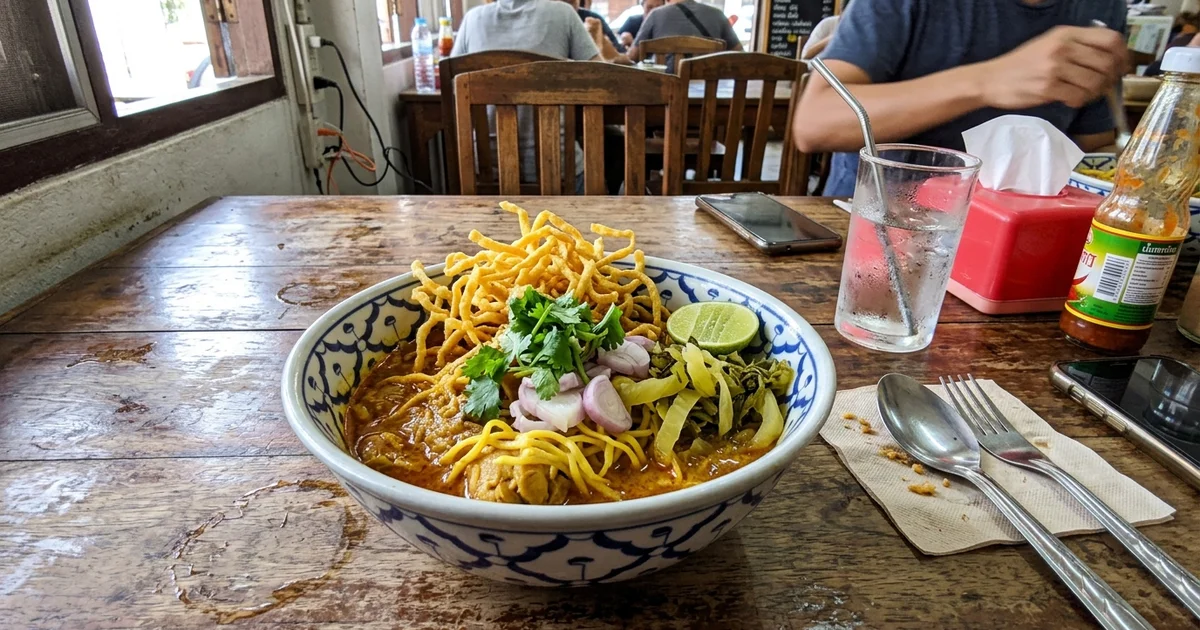
Khao Soi
The signature. Egg noodles in a curry broth built on coconut milk and a northern curry paste, topped with a nest of crisp fried noodles, and served with pickled mustard greens, raw shallot and a lime wedge on the side.
Those condiments aren’t garnish. The pickle cuts the richness, the shallot adds sharpness, the lime lifts everything. Use all three.
Usually chicken or beef. Around 50–70 THB at a local shop. Our guide to the best khao soi covers where to eat it.
Sai Oua
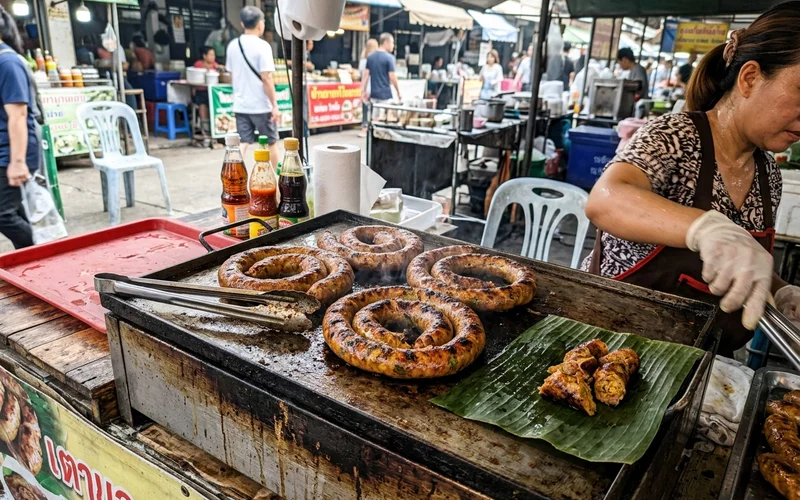
Northern herb sausage: pork with lemongrass, galangal, kaffir lime leaf, turmeric and chilli, coiled and grilled over charcoal. Sold by weight at markets, sliced and eaten with sticky rice and a chilli dip.
It tastes nothing like a Western sausage. The herbs dominate, and a good one is aromatic rather than heavy.
Gaeng Hang Lay
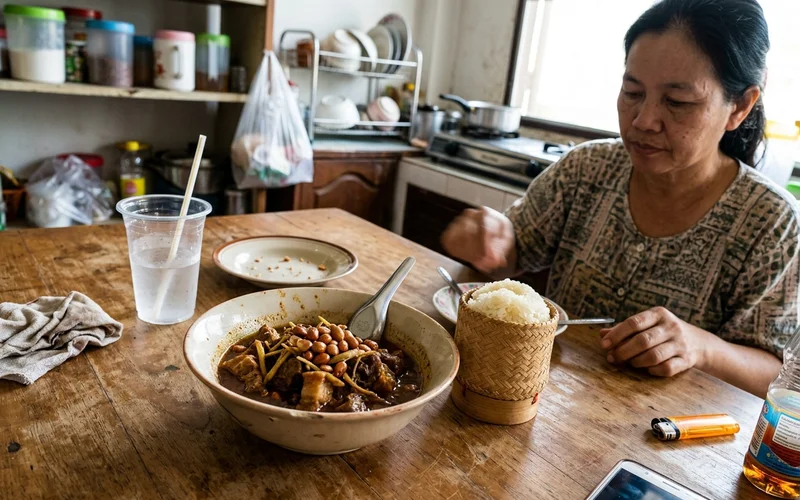
A slow-cooked pork belly curry with ginger, tamarind, garlic and peanuts, Burmese in origin. No coconut milk, which surprises people expecting a Thai curry. Rich, sour and deeply savoury, eaten with sticky rice.
Nam Prik Ong and Nam Prik Num
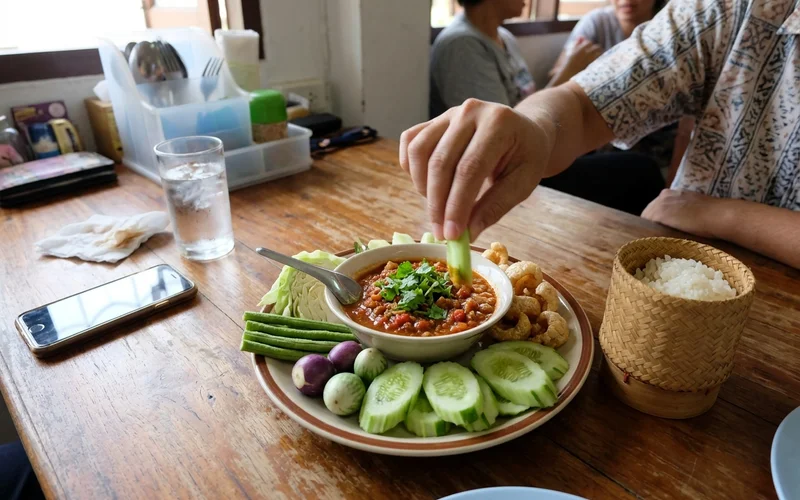
Two chilli dips that anchor a northern meal. Nam prik ong is tomato and minced pork, mild and approachable. Nam prik num is grilled green chilli, much hotter and smokier.
Both come with a plate of raw and blanched vegetables, crispy pork rind, and sticky rice. You pinch the rice, dip, and eat. This is the most characteristically northern way of eating and the one visitors most often skip.
Also worth knowing
- Khanom jeen nam ngiao — fermented rice noodles in a tomato and pork rib broth, a northern breakfast staple
- Larb khua — northern larb, fried with a dark spice blend, quite different from the Isaan version
- Sticky rice — the default carbohydrate, served in a woven basket, eaten with the right hand
Where to try each
| Dish | Best found at |
|---|---|
| Khao soi | Dedicated khao soi shops, usually lunch only |
| Sai oua | Markets, sold by weight — Warorot and Chang Phueak |
| Gaeng hang lay | Northern Thai restaurants, and market food stalls |
| Nam prik | Northern restaurants; look for a plate of vegetables on other tables |
| Khanom jeen nam ngiao | Morning markets and specialist shops |
The general rule in Chiang Mai: the plainer the room, the better the northern food. The best khao soi in this city is served on plastic tables under a corrugated roof.
How to order
A northern meal is shared. Order a chilli dip with vegetables, a curry, a grilled item and sticky rice for the table, rather than a dish each.
Say “mai phet” for not spicy, “phet nit noi” for a little spicy. Northern kitchens will usually adjust, though the chilli dips are what they are.
And take the sticky rice seriously. Pinch a small amount, roll it briefly in your fingers, use it to pick up the dip or the curry. It’s the eating technique the whole cuisine assumes.
Stay updated
Get the Chiang Mai Brief
Useful local updates, new guides, openings and practical information for living in or visiting Chiang Mai.