
Cost of Living
Does Chiang Mai Have Good Healthcare?
Chiang Mai healthcare explained: private and public hospital standards, English-speaking doctors, typical costs and whether foreigners need health insurance.
6 min read
By Daniel Calleja, founder of The Chiang Mai Brief and Chiang Mai resident.
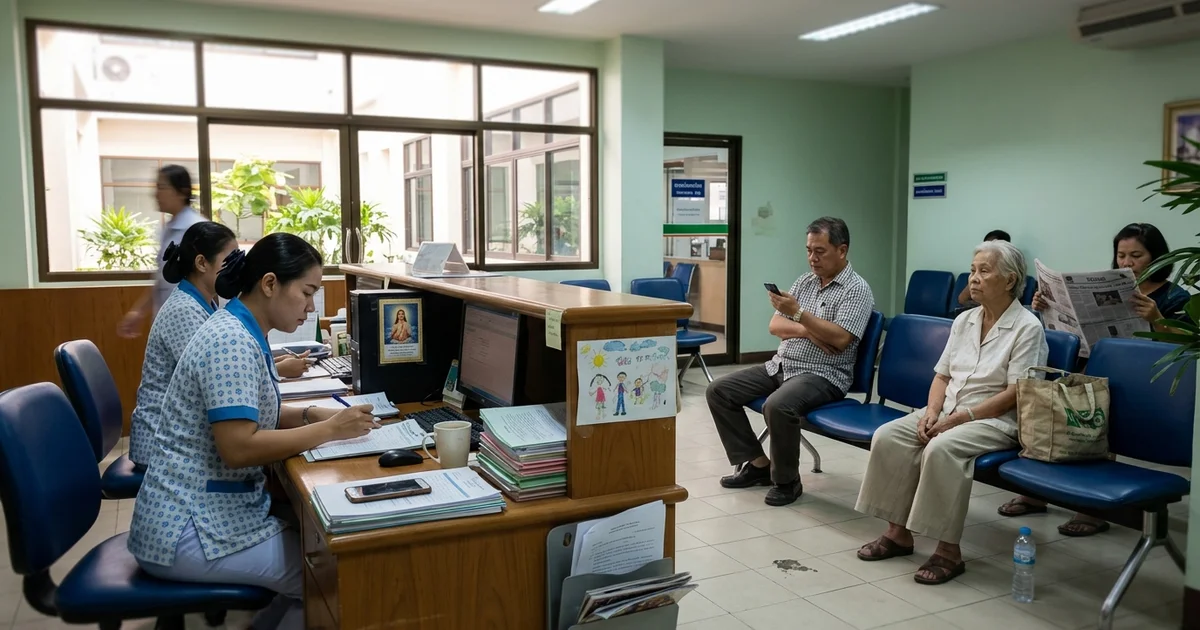
Yes. Chiang Mai has good healthcare by regional standards, particularly in the private sector, where several major hospitals offer modern facilities, specialist departments and English-speaking staff. The city is the medical hub of northern Thailand, and its largest hospitals handle everything from routine GP visits to cardiac surgery.
Quality does vary between hospitals, and the experience differs sharply between the public and private systems. Most foreign residents use private hospitals, where waiting times are short, English is widely spoken and seeing a specialist rarely involves a long referral chain. Public hospitals offer strong clinical care at much lower cost, but with longer waits and less language support. For the full settling-in picture, see living in Chiang Mai; if you are still weighing housing, buying property as a foreigner and which hospital suits foreigners best sit on either side of this question.
Are Hospitals in Chiang Mai Good?
The main private hospitals are genuinely good. Bangkok Hospital Chiang Mai holds Joint Commission International accreditation, the leading international benchmark for hospital safety and quality, and has held it continuously since 2015. Other large private hospitals, including Chiang Mai Ram and McCormick, run full specialist departments with modern diagnostic equipment.
On the public side, Maharaj Nakorn Chiang Mai Hospital, known locally as Suan Dok, is the teaching hospital of Chiang Mai University’s Faculty of Medicine and the main referral centre for complicated cases across the north. Clinically it is excellent; the trade-offs are crowds and queues. For everyday needs, the city also has hundreds of small clinics and dental surgeries that handle routine problems quickly and cheaply. Where hospitals differ most is in waiting times, comfort and language support rather than basic clinical competence.
Is Private Healthcare Expensive in Chiang Mai?
Not by Western standards. A routine private consultation generally costs well under ฿2,000, and even imaging and minor procedures typically cost a fraction of equivalent care in the US or UK. Dental work and annual health checks are similarly affordable, which is why many residents pay for routine care out of pocket. Costs climb with the seriousness of treatment: surgery, intensive care and long hospital stays can run into hundreds of thousands of baht, which is where the private system stops feeling cheap.
Payment works differently from insured systems at home. You usually pay at the counter as you go, receive itemised receipts, and claim back from your insurer afterwards, although the large private hospitals can bill major international insurers directly for planned treatment. Always ask for a cost estimate before agreeing to tests or admission.
Do Doctors in Chiang Mai Speak English?
At the private hospitals, yes, as a rule. Many specialists trained abroad, consultations are routinely conducted in English, and the big hospitals run international patient desks with interpreters for other languages. You can book, consult and pay entirely in English without difficulty.
Public hospitals are different. Doctors are clinically strong and many speak good English, but it is not consistent across departments, and administrative staff often speak little. For anything important at a public hospital, bring a Thai-speaking friend or arrange a translator. Pharmacies are a useful middle ground for minor ailments: pharmacists in the city usually manage enough English for common requests and can say when you should see a doctor instead.
Can Foreigners Use Public Hospitals in Chiang Mai?
Yes. Public hospitals accept foreign patients, and you simply pay out of pocket at rates that remain far below private prices. Suan Dok handles serious and complex cases for the whole region, and Nakornping Hospital is the other large public option. Expect queues, numbered tickets and limited English, but competent care. Some long-term residents use public hospitals deliberately for routine blood tests and monitoring to keep costs down, then switch to private care when speed or comfort matters.
Two things are worth knowing. Foreigners working legally in Thailand pay into the Social Security Fund and are entitled to treatment at their registered hospital without charge at the point of use. And under Thailand’s Universal Coverage for Emergency Patients policy, any hospital, public or private, must treat a critical emergency for up to 72 hours without billing the patient. Once you are stable, normal billing resumes, so cover still matters.
Do You Need Health Insurance in Chiang Mai?
Legally, only in specific cases. Certain long-stay visas require it: the one-year O-A retirement visa requires proof of health insurance valid for the entire period of stay, with a total sum insured of at least US$100,000 or ฿3,000,000 per policy year. Most other residents face no legal requirement.
Practically, the answer is yes for most people. Routine care is cheap enough to pay as you go, but a motorbike accident, cardiac event or serious diagnosis can produce bills of hundreds of thousands of baht. Most long-term foreign residents carry either an international policy or a Thai local plan, and anyone living in Chiang Mai for years rather than months generally treats insurance as a fixed part of the budget rather than an optional extra.
Sources
- Joint Commission International. “Find Accredited Organizations.” Official JCI directory listing Bangkok Hospital Chiang Mai as an accredited organisation. Source
- Bangkok Hospital Chiang Mai. “Joint Commission International, Gold Seal of Approval.” Official hospital page confirming continuous JCI accreditation cycles from 2015 to 2027. Source
- Faculty of Medicine, Chiang Mai University. “Maharaj Nakorn Chiang Mai Hospital (Suan Dok Hospital).” Official page for northern Thailand’s public university teaching and referral hospital. Source
- National Health Security Office, Thailand. “Universal Coverage for Emergency Patients (UCEP).” Official English booklet on the policy guaranteeing emergency treatment at the nearest hospital, public or private, for up to 72 hours without charge. Source
- Royal Thai Consulate-General, Los Angeles. “Non-Immigrant Type O-A.” Official Thai consular guidance requiring O-A applicants to hold health insurance with a total sum insured of at least US$100,000 (฿3,000,000) per policy year. Source
- Social Security Office, Thailand. “Social Security Act B.E. 2533 (1990), English Translation.” Official SSO-hosted translation covering insured employees, including foreign employees, and their medical benefits. Source
Stay updated
Get the Chiang Mai Brief
Useful local updates, new guides, openings and practical information for living in or visiting Chiang Mai.